

I think that turning myself into other characters was really a way to maybe get away from my family, or I felt like, well, maybe they'll like me better if I'm like this character or that character, or maybe I'll be scary.
Cindy Sherman failed her first photography class, but it was not long after that that she reinvented the entire art form. Cynthia Morris Sherman was born on January 19, 1954, in Glen Ridge, New Jersey, as the youngest of five children. Shortly after her birth, the family moved to Huntington, on Long Island. Her father was an engineer at Grumman Aircraft, and her mother was a schoolteacher. Her family wasn’t very interested in art. Even though they lived close to New York City, they rarely went there, and never visited its museums.
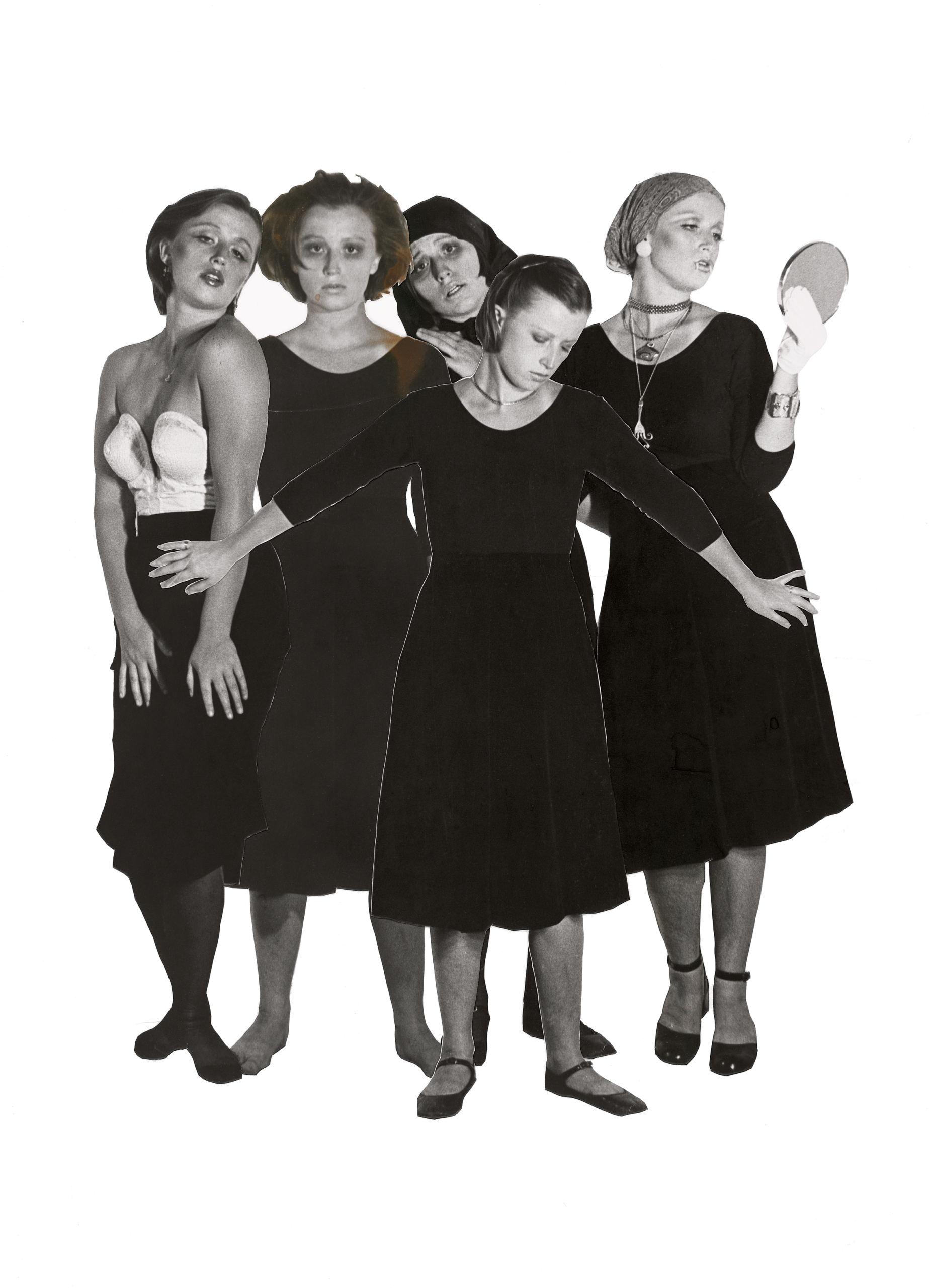
But Cindy was nevertheless pulled to art. She drew constantly, and even as a child, she began to discover the ingenious costuming that would define her photography. She loved finding ways to become unrecognizable and even grotesque, dressing up for Halloween as monsters or old ladies, instead of the usual princesses. She was already fascinated with the ways people become unrecognizable to themselves and society, which would become the focus of her adult work. She made what she called her “That’s Me Book,” filling it with family photographs in which she circled herself on every page and wrote: that’s me. The youngest of five, with siblings old enough to have children nearly her own age, she felt she was growing up as an only child. It was easy to imagine herself as something other than what she was.
In an issue of Life, she saw photographs of Lynda Benglis in her studio, and it occurred to her that women could be serious artists. Cindy decided to become one, and enrolled at Buffalo State University in 1972 as a painting student. Unable to get the hang of its technical aspects, she had to retake her photography class. The second time, her instructor was Barbara Jo Revelle, who introduced her to conceptual art. Cindy discovered that photographs could accomplish everything she wanted in a painting. The image took a fraction of a second, letting her devote more time to the idea. Sherman graduated from college in 1976 and moved to New York, where she made a living as a receptionist and worked on her photography. At first, the city she’d grown up so close to remained intimidating and impenetrable. But her own success in it was soon to follow.
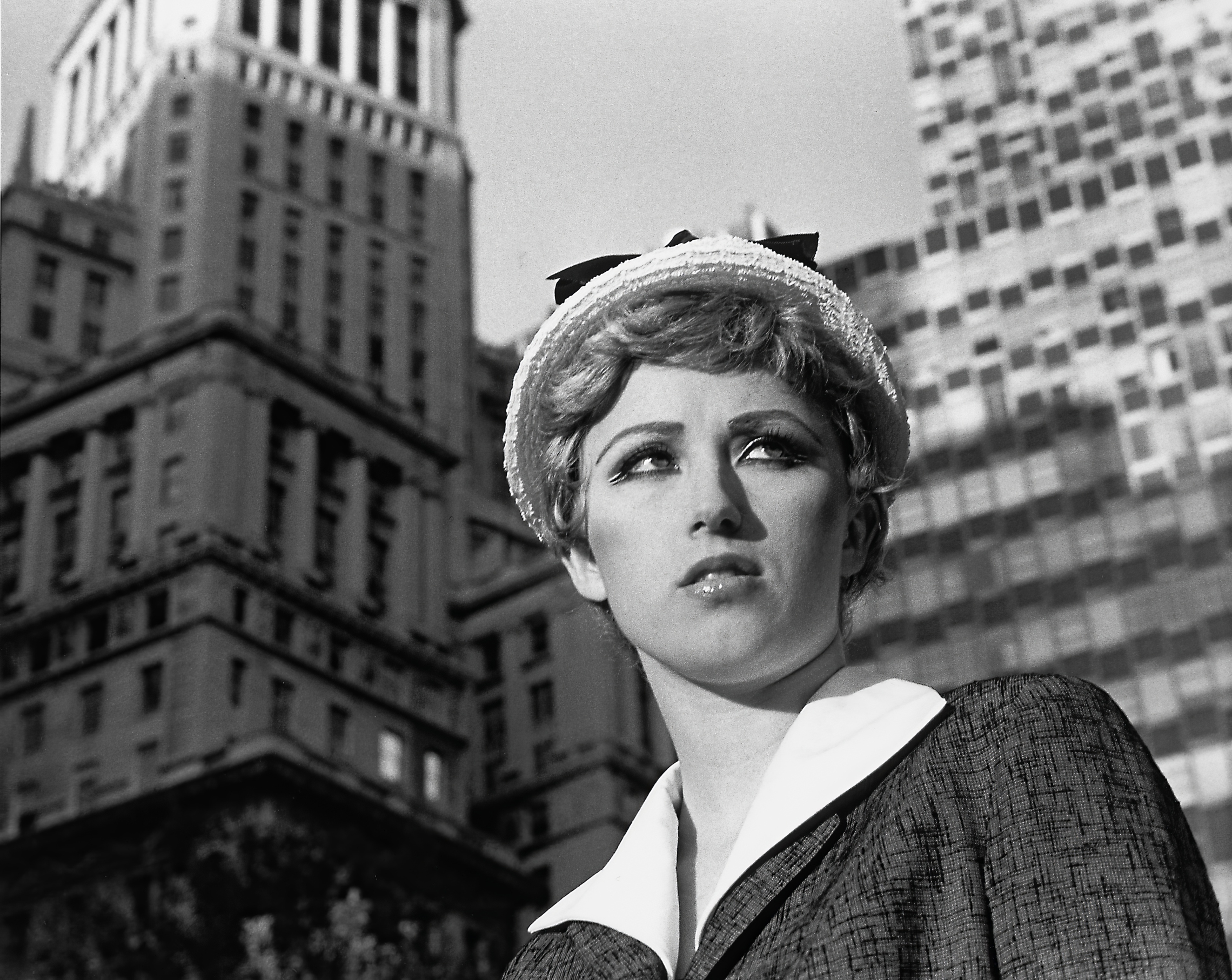
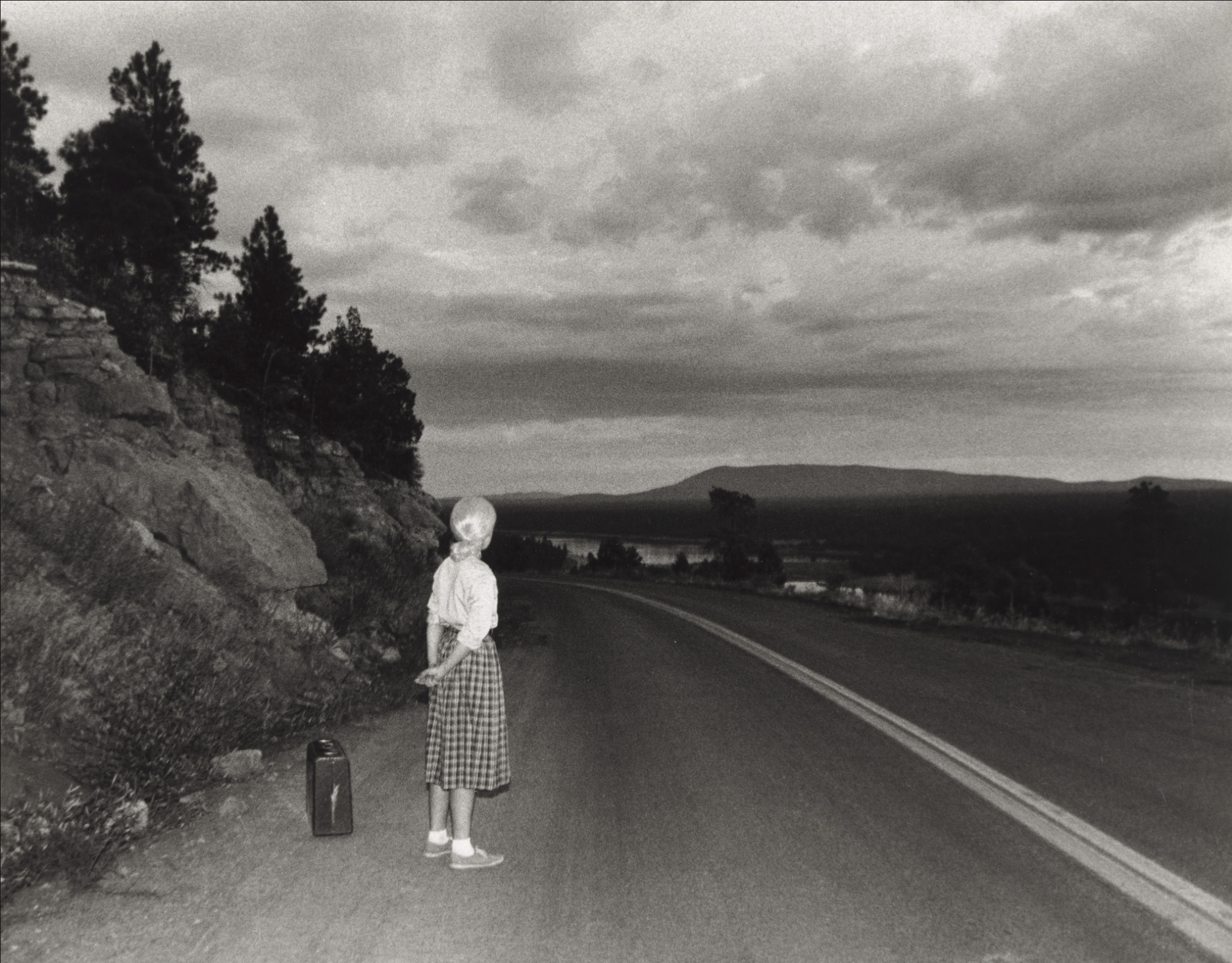
Her breakout was Untitled Film Stills, a series of black-and-white photographs, published between 1977 and 1980, of what appear to be many different women in ambiguous, often uneasy poses and settings. (All of them are Sherman). Inspired by stills taken on movie sets, she used the character shots of herself in disguise to imply the existence of a story for each without revealing what they might be. Her own sets were locations she had access to, while her costumes and props were thrifted from the Salvation Army. Photography made her art political. In the early 1970s, feminist artists weren’t supposed to wear makeup or heighten their appearance. “We were just going to be ourselves,” she recalled. But her photography used makeup to speak to how women are perceived.
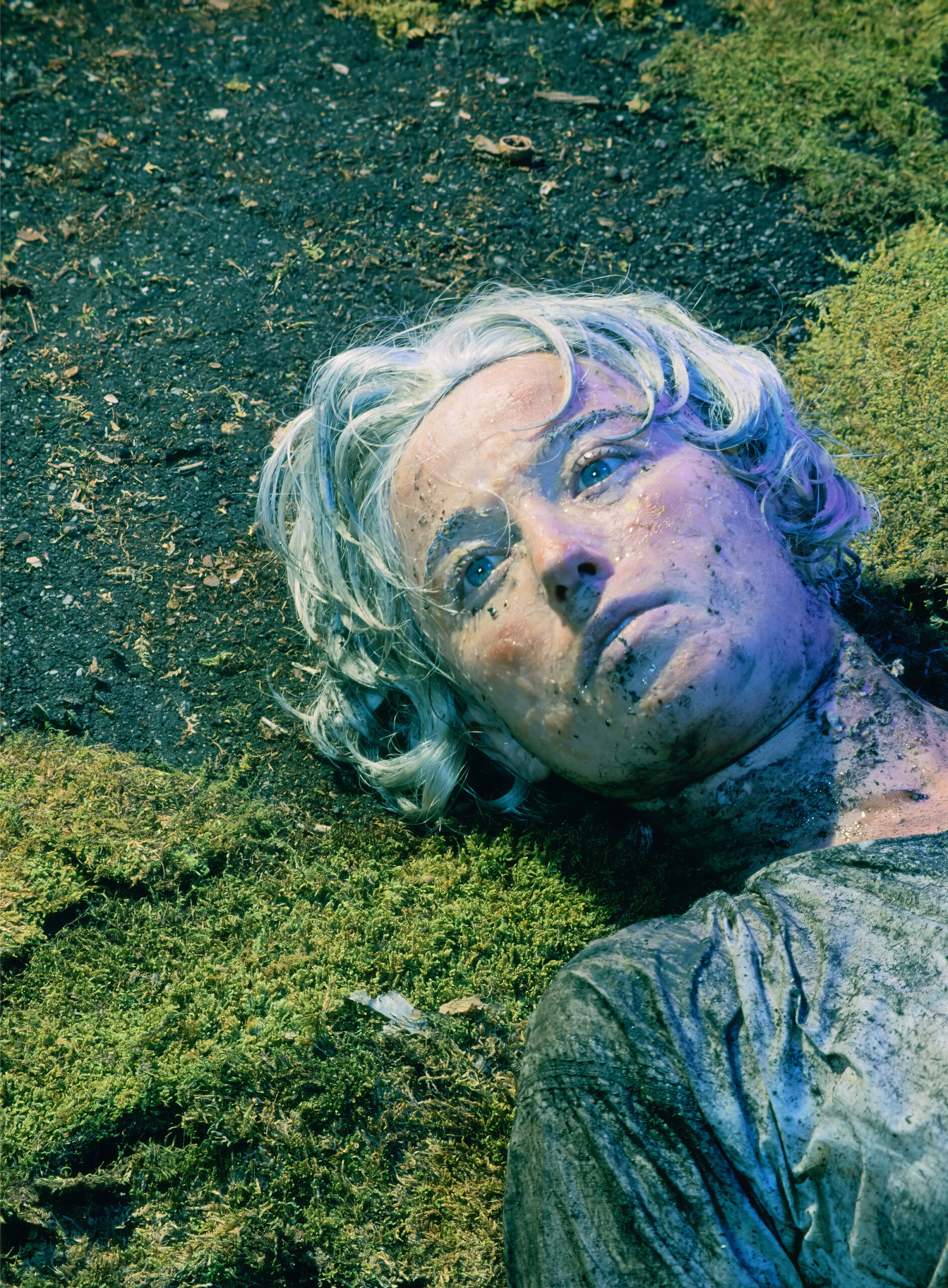
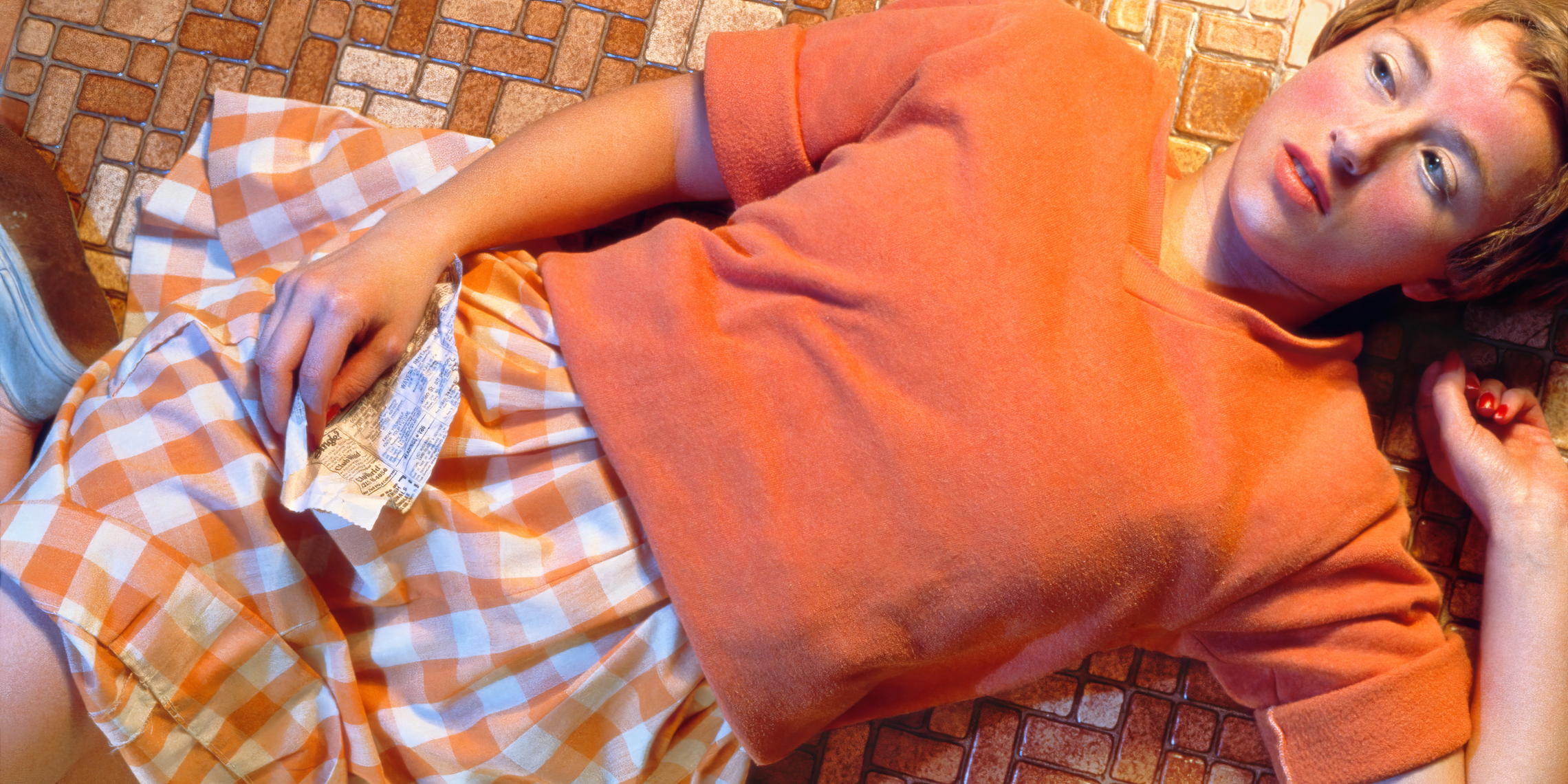
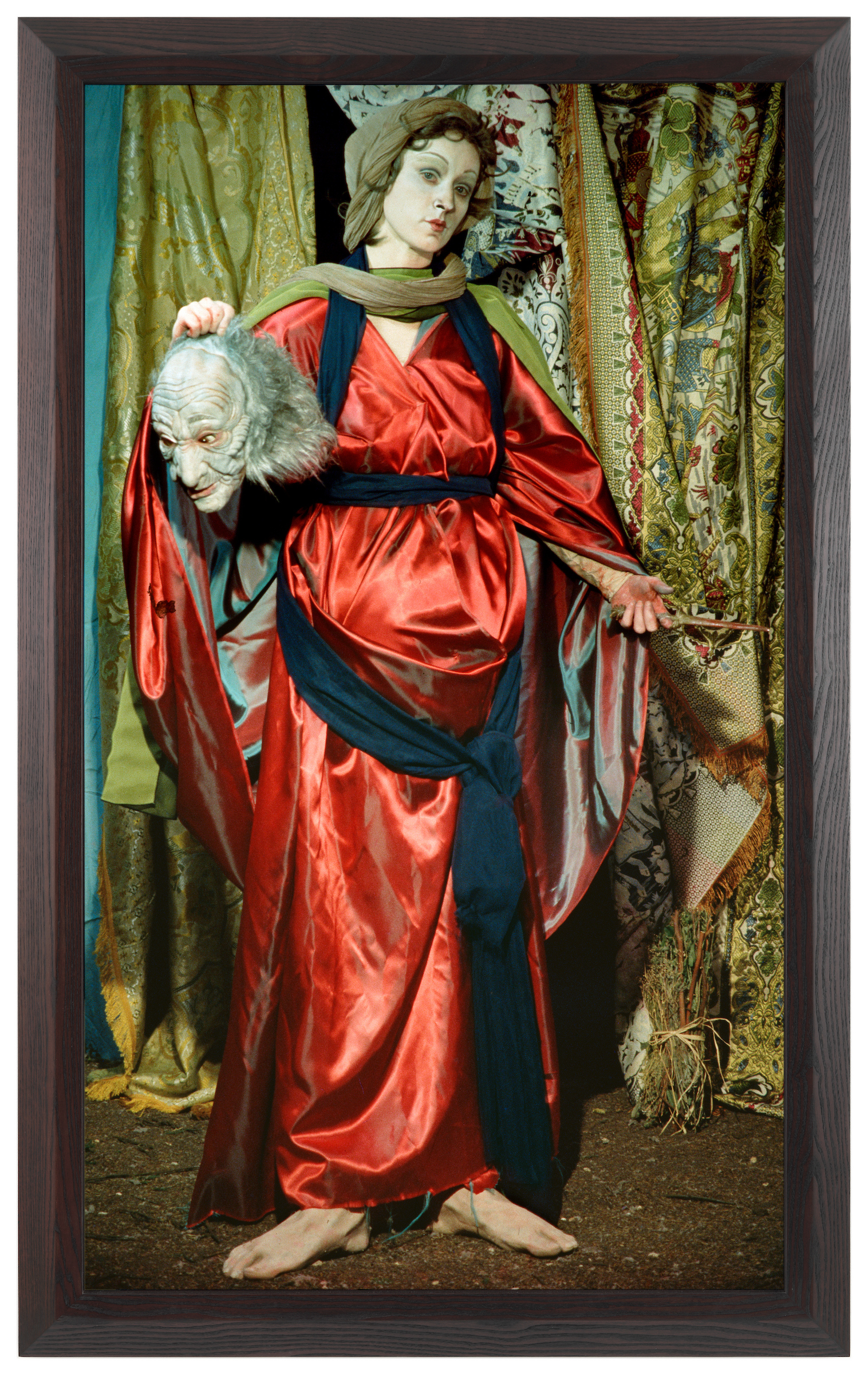
“I’ve never wanted to hammer a message over somebody’s head,” Sherman said. She let the images remain ‘untitled’ so they could make their own meaning. At her first show, she had sold them for fifty dollars each, and some collectors had asked for ten percent off. But they quickly attracted attention, and Sherman established herself as a pioneering artist with her debut. The Museum of Modern Art acquired the prints in 1995 for around one million dollars. Untitled Film Still #21 has been named by Time magazine as one of the 100 most influential photographs ever made. What followed was a forty-year investigation that ranged widely in subject and tone. Some series were whimsical and fun, others more serious, darker, or even frightening. “There’s a little bit of guilt in the pleasurable parts,” she has said. The Centerfolds (1981), twelve large horizontal photographs commissioned but never published by Artforum, showed fully clothed women posing as though in Playboy. It was a commentary on the ways images of women are interpreted. “I wanted a man opening up the magazine to suddenly look at it with an expectation of something lascivious and then feel like the violator that they would be looking at this woman who is perhaps a victim,” she said. In Fairy Tales (1985) and the Disasters series (1986–89) she introduced prosthetics and mannequins, exploring grotesque rather than idealized images. The History Portraits (1988–90) placed her in the costumes and makeup of Old Master classics, inverting painting’s expectation of photorealism by making the photographs resemble paintings. The Sex Pictures of the 1990s assembled medical mannequin parts into uncanny and even scary configurations, making the human body foreign and shocking. Sherman’s forays into body horror even included a feature film, 1997’s Office Killer, starring Carol Kane, which applied Sherman’s distinct blend of humor and disgust to a new medium.
For all her success, Sherman has remained a modest and relatively solitary artist. She doesn’t use assistants. “I wind up worrying too much about them,” she said. With someone else in the studio, she spends time making them feel at home instead of concentrating on perfecting the shot. Though she has a huge global audience, the art she makes is still ultimately for herself, which frees her to experiment. “If I don’t like it,” she says, “nobody has to see it.”
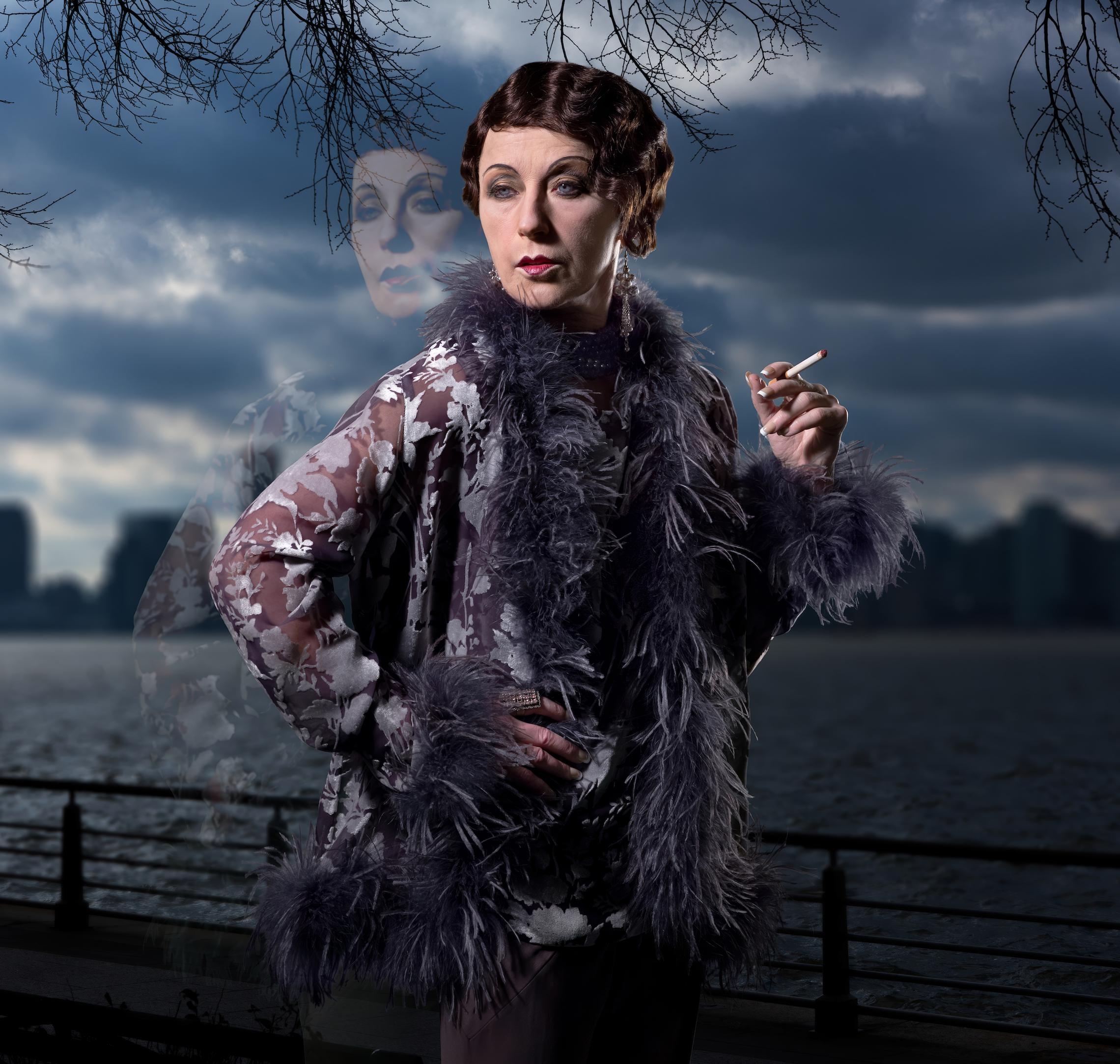
Sherman has little attachment to traditional methods. She was an early adopter of the digital camera, and is now pushing the boundaries of digital art by experimenting with AI-modified images. She made her Instagram account public in 2017, using an unconventional medium to publish distorted selfies. Her work has found new relevance in the age of social media, now that nearly everyone makes, modifies, and shares self-portraits. Sherman’s art reveals the way self-portraiture conceals our identities. “I don’t feel like I’m revealing anything,” Sherman said of her own. “The most successful pictures for me are the ones where I don’t recognize anything of myself.” Even if her body isn’t recognizable in her pictures, her style is, and it’s been in demand all over the world for decades. In 2012, the Museum of Modern Art mounted a full retrospective that traveled to San Francisco, Minneapolis, and Dallas. In 2019, the National Portrait Gallery in London organized a major retrospective, and in 2020, the Fondation Louis Vuitton in Paris presented a career-spanning exhibition. Her work has appeared in five Whitney Biennials, four Venice Biennales, and the 1982 Documenta in Kassel.

Sherman received a MacArthur Fellowship in 1995, a Guggenheim Memorial Fellowship, and the Hasselblad Foundation International Award in Photography in 1999. She received the Praemium Imperiale in 2016 and the Wolf Prize in Arts in 2020. She lives and works in New York.

As a child, Cindy Sherman was fascinated with makeup, costumes, and painting. “I wish I could treat every day as Halloween and get dressed up and go out into the world as some eccentric character.” That fascination was key to her rise to prominence as an acclaimed photographer and artist, who at an early age put on guises and photographed herself, often using creative and evocative props.
After Buffalo, she left for New York City to try to make it as an artist. She never expected it to happen so quickly. Her debut series, Untitled Film Stills, published in the final years of the 1970s, quickly earned her a reputation as a groundbreaking young talent. Shot in dramatic, cinematic settings, the dozens of photographs were all self-portraits. In each of them, Sherman turned herself into a different character, subtly commenting on the ways in which women are distorted by their representation in media.
That theme has persisted across her body of work, whether in her centerfold parodies or even her photographic imitations of Old Master portraits, in which she appears, unrecognizable, as many different women. Despite the stylistic range of her oeuvre, it has a consistent, unmistakable cleverness and a readiness to venture into the grotesque, as she’s done in her ‘portraits’ of dismembered mannequins and AI-distorted selfies.
Though she’s always her own subject, the only part of Sherman visible in her photographs is her mind. Using her own face and body as a canvas for humanity, she has shown the possibility of selfless self-portraiture, becoming everyone but herself.
How often did your family go into New York City when you were growing up?
Cindy Sherman: My family sort of, I guess, had this fear of the city, the big evil city. And we would occasionally come into maybe Radio City during the holidays, but maybe only like two or three times did we do that. We would drive through on our way sometimes to visit relatives in New Jersey. But yeah, my family just had this kind of fear of the city, so we hardly—I never went to a museum. Yeah. I’m really sorry I missed a lot of those cultural moments. Never saw any shows on Broadway or anything. Yeah.
What first drew you to contemporary art — and to its cutting edge?
Cindy Sherman: We had one of these, like, Time Life catalogs or books of the “100 Best Paintings in History” or something like that. And the most contemporary one was a Dali of The Last Supper, and I don’t know when that was, maybe from the 50s or 40s. I don’t know when he painted that, but it was—I mean, that was probably my only exposure to art at that time. But I do remember in the 70s, I guess in the—well, maybe it was actually more in the 60s because it was before I was in college, because we got Life Magazine and Time, of course—but seeing an article about Lynda Benglis in Life Magazine and photos of her throwing, you know, pouring latex on the floor. And it was the first time I had seen the idea of a woman being an artist. And because I was always very creative and doing things with my hands while I was, you know, sitting, doing, watching TV, or something like that. And I just knew that I was going to do something creatively. But I thought at that time being an artist would be somebody who sits on the boardwalk and does caricatures of people, or working in a courtroom drawing people, you know, the courtroom proceedings. So, I really didn’t have much exposure to contemporary art or the art world or knowing any artists or anything.
What did you watch on TV growing up, and how did it shape your art?
Cindy Sherman: I watched the usual kind of shows. “Leave It to Beaver” and “The Donna Reed Show,” and things like that. But also, I was really into the movies that you would watch. And there was one, I think it was called the Million Dollar Movie, that every week, I believe, every night at the same time of day, would play the same movie for a whole week. And so, in some ways, I really got to, you know, study these movies or get to know them very well. I remember one week, one of the Godzilla or King Kong kind of movies was on, and watching it with some neighbor kids, and they were really afraid of it, but I kind of was pointing out to them that this is all faked, you know, like, this is just, you know, I somehow I knew that it was all faked, and it didn’t make me afraid of it, and I kind of liked it. So, I think that was kind of when the idea of movies really got into my head about making something with those kinds of images or that were influenced from those images.
When you decided to study art in college, how did your parents feel about it?
Cindy Sherman: They were OK with it as long as I went to, like, a college where I could learn to, I could get, like, a teaching degree so that I could fall back on that. And so, that was one of the reasons I chose Buffalo State. But luckily, I fell in, my first year or my second year, with some friends who were my age and a little bit older, who lived and worked in this part of Buffalo and wanted to start up an alternative gallery. And it was really through knowing that group that I became more exposed to contemporary art, and going to the Albright-Knox Art Gallery, which was across the street from the school, and that was really my education in art, this group of friends, not so much the college, I have to say, but the friends.
Can it possibly be true that you failed photography?
The reason I couldn’t quite grasp it was because of all of the technical things, of you know, making the perfect black and white print. And I suppose I didn’t really care about that so much, the technical part of it. And then my teacher, when I was retaking the course, was turning me on to conceptual art and minimalist art, and this idea that the idea can be really the art and not so much the—the byproduct would be something that you might put on a wall or show on a video camera, but that you could put more thought into the idea of it. And up until that moment, I had been painting, and then I was kind of majoring in painting at that point, but I was doing very exacting replicas of things, you know, I was copying things, you know, like, photographically. And when I started using a camera, I realized, well, yeah, I can just capture the image in a, you know, split of a second and put much more thought into what I’m going to do with this image or what makes the image, and so that kind of made a lot more sense than this laborious process of painting something so realistically.
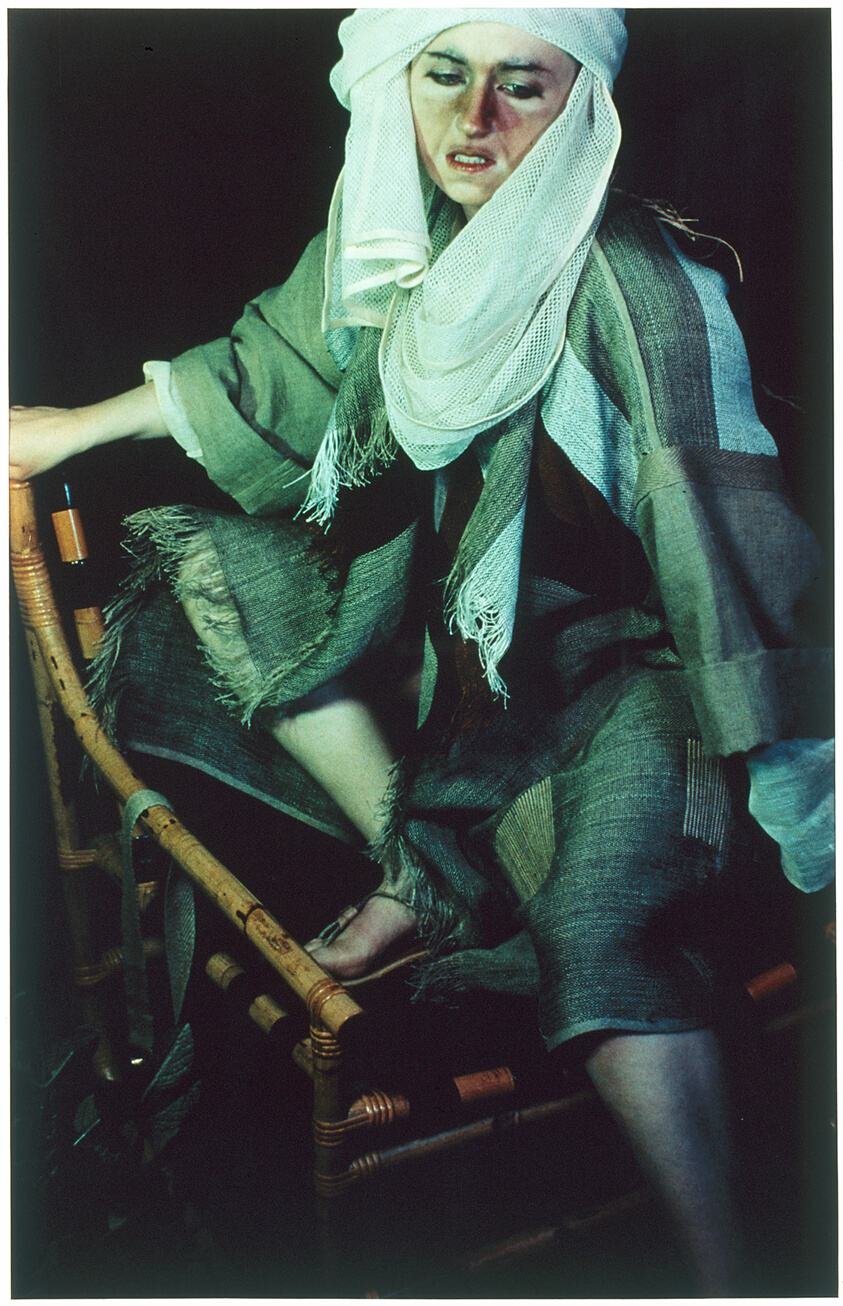
Cindy Sherman: I started using myself in, in college in those early classes, partly because my teacher—there was, like, this rumor, I mean, I think it was true, though—that at the end of every season, you know, the end of every year of her course, all of her students would traipse off into some nice woodland park where there were waterfalls and whatnot, and everybody would get naked and take pictures of one another. And I just was so terrified of that idea that I, as one of the projects—I think she said to confront something that you’re afraid of—and so, I took these pictures of me naked, but kind of really just really, like, stark, like feeling like I’m just stark naked and, like, looking at the camera. And then I started deforming my body, sort of to try to hide myself. And I had also, at that point in my life, outside of college and just growing up, been really fascinated with dressing up and using makeup, but to distort my face, not just to look pretty. And so, it was really my boyfriend at the time who sort of said, “You should combine these.” You know, like. And that’s kind of when I started, just, yeah, using the camera on my face and transforming into different people.
The moment you realized you could photograph yourself — what became, in a way, your life’s work. Where did it begin?
Cindy Sherman: Through some therapy and thinking about it a lot over the years, I started to realize that I think because I was the youngest of five and there was a lot of years between me and the others, to the point that I felt like they had already been a family before I even arrived and had this whole history before I even got there, and so, I think I felt, I kind of felt like I was growing up as an only child, even though I knew I wasn’t. And then also my siblings had children of their own who were just two and three years younger than me. So, I was, to them, I was, like, the oldest and the one that got in trouble for, you know, if somebody else, you know, did something wrong, like, “Well, you should have been watching them.” And so, it was like this weird juxtaposition of feeling like an only child but also feeling like the oldest to these other kids. And I think that turning myself into other characters was really a way to maybe get away from my family, or maybe to maybe I felt like, well, maybe they’ll like me better if I’m like this character or that character, or maybe I’ll be scary. I don’t know, it wasn’t exactly like I was trying to, certainly not consciously trying to, like, get out of my life and be these different characters, but I think that it probably had something to do with it. I definitely feel like in my work, I’m hiding. I don’t feel like I’m revealing anything like some people might think. So yeah, the most successful pictures for me are the ones where I don’t recognize anything of myself, and it literally seems to be, you know, like another character that comes through.
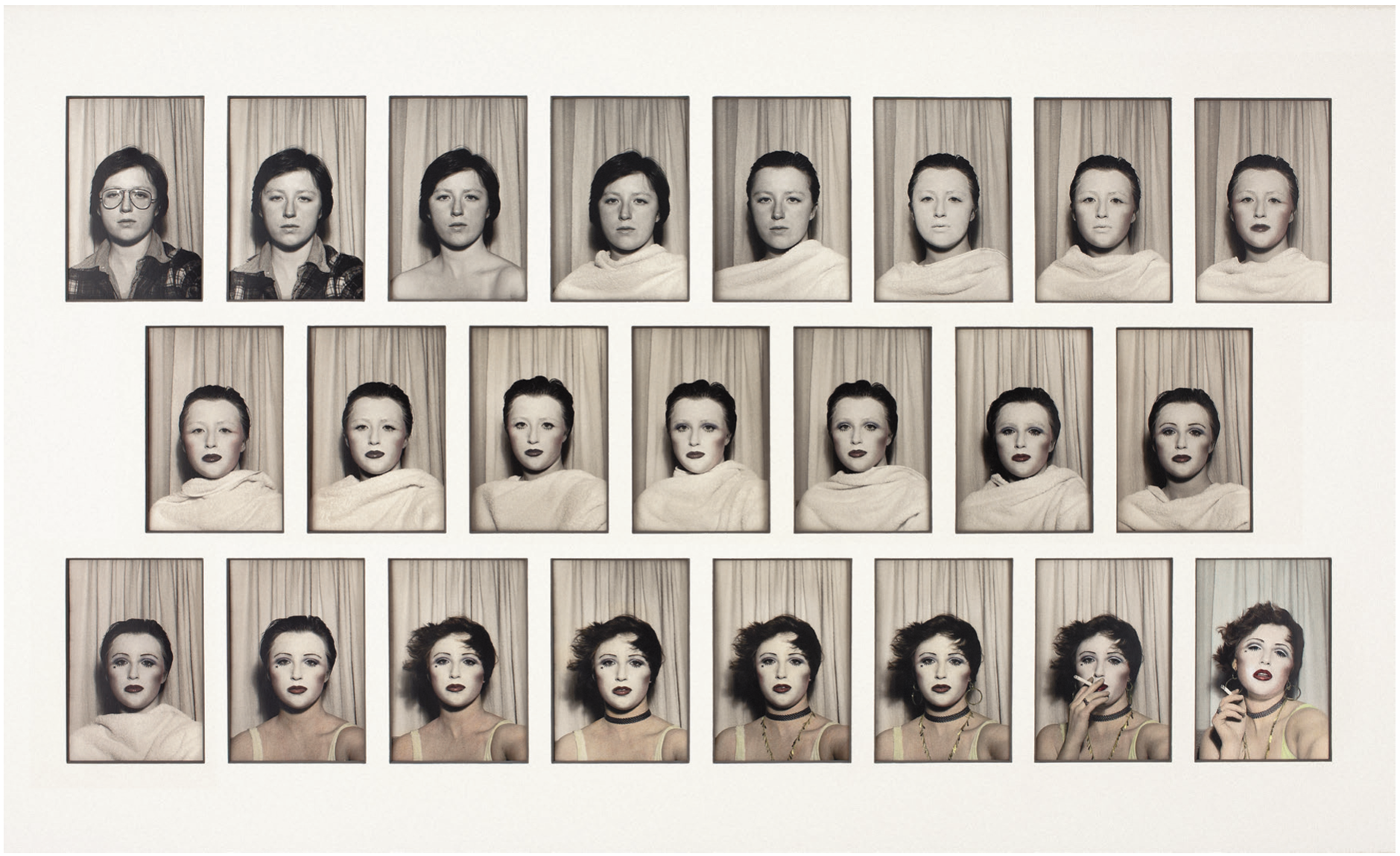
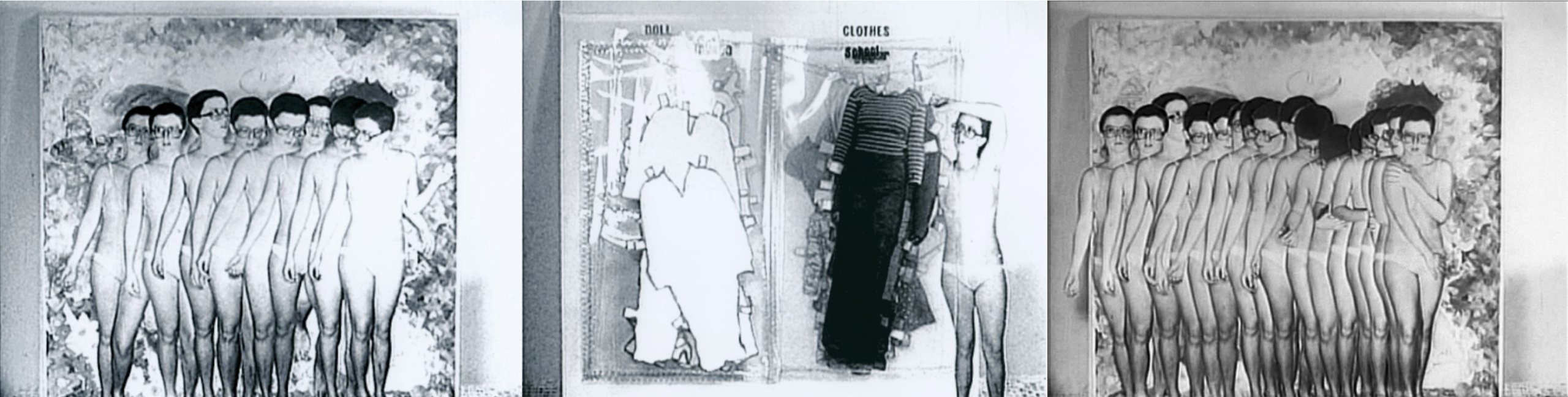
“Untitled #479,” a class assignment and your first serious work, documents a staid-looking young woman in glasses transforming, over some twenty photos, into a femme fatale. Does that point toward the direction that’s captivated you ever since — this idea of transformation?
Cindy Sherman: I think part of it for me was also me coming to terms with how I’ve always had this affection and affinity for makeup and transformation. And yet, in the early mid-70s when I was in college, it was kind of not cool for women, you know. We weren’t, like, going to, we weren’t going to wear bras, we weren’t going to wear makeup, we were just going to be natural and not dye our hair or do anything that would at all try to heighten our appearance. We were, we were just going to be ourselves. And so, I think it was this guilt that I felt for still liking makeup and this artifice. And I think that that series in particular, because it starts out with how I actually looked like—I wasn’t trying to look frumpy that day, that’s actually how I looked—and then gradually each image goes on to add a little bit, to take a little bit more away from myself, and to add a little bit more of this other vampy character at the very end. So, I think it also just kind of reflects my state of mind. And it also then allowed me to play with this stuff that was really fun to do, and yet I wasn’t supposed to really like it anymore, you know?
Today, there’s much more openness about fluidity of identity, gender identity — and you were playing with different identities and transformation long before that became fashionable.
Cindy Sherman: It is kind of funny that right now everybody’s, or a lot of young people are certainly very confused or maybe even obsessed with identity. And maybe because we make too much of it because of the internet or, you know, social media, but. But yeah, I mean, I guess I was always questioning who I am and especially where I fit in my world, in my family. And I did this really early, very early book that—it’s called the “That’s Me Book,” and I think I started it when I was maybe, I don’t know, 8 or 10 or something. And on every page, I had taken a photograph, a family photograph where I’m in it somewhere, starting as a baby and then a toddler, and then it’s like a 10-year-old birthday party or something, and under each one, I’ve written, “that’s me,” and circled wherever I am in the photograph. And I think that was also just this very early on, trying to just figure out my place in the family at that point, but also then just in the world. I guess, yeah, I mean, I wasn’t ever questioning my gender at that point, I’ve never had an issue with that, but I think I just was imagining, imagining being all different kinds of people or in different places, and gender was not really a question about it.
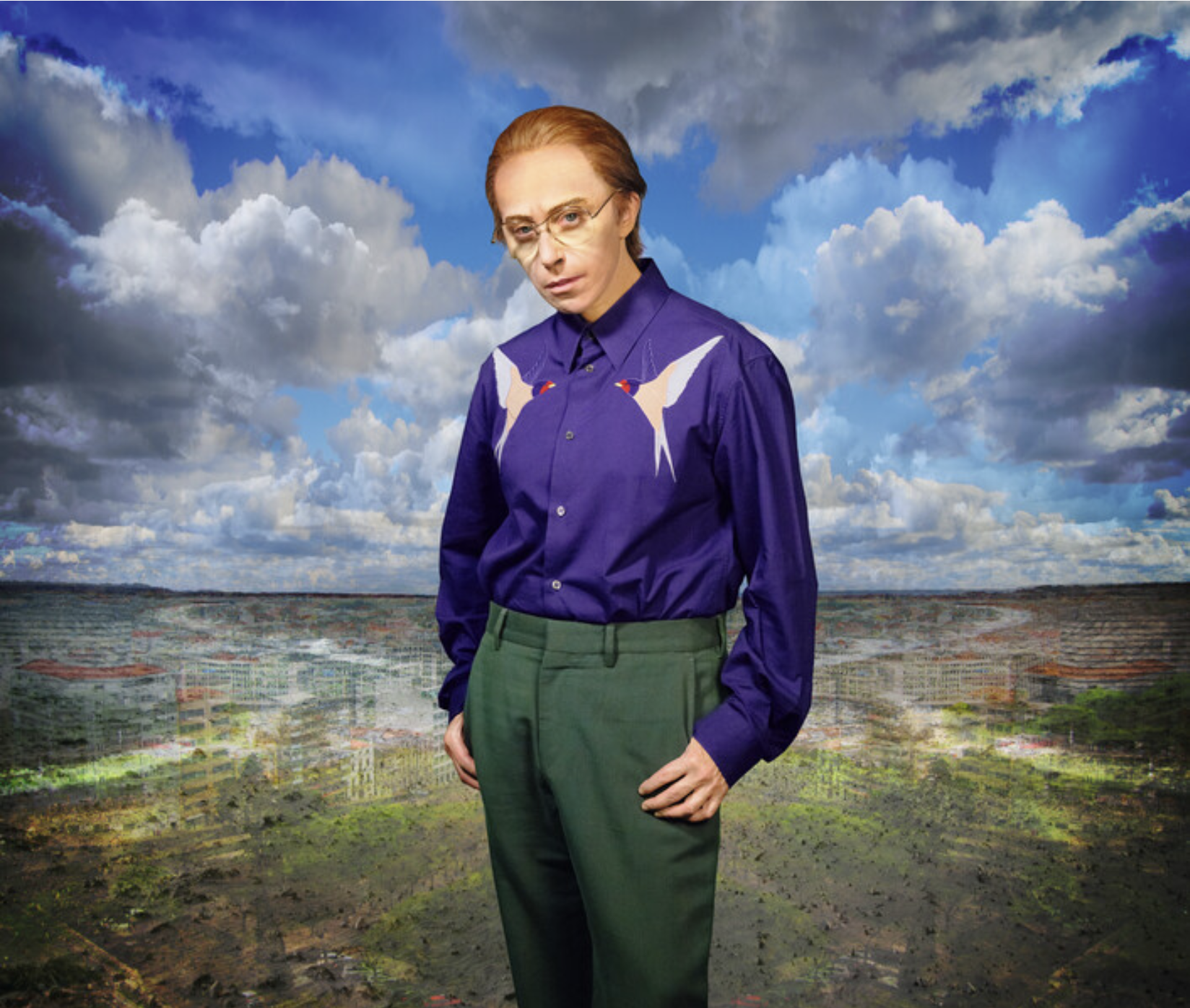
Let’s turn to the Untitled Film Stills, which have become iconic in the contemporary art world. How did the series begin?
Cindy Sherman: Before that, when I was still living in Buffalo, I had been doing a couple of series where I was basically making paper dolls from shots of myself in different characters, and I’ve cut them out. And then I started putting them together and make little scenarios of the different characters. And when I got to New York, I was tired of this laborious process of cutting things out, and I thought, how can I still, like, use the camera to sort of tell a story where I could still be working alone in my studio and have it seem like it’s not just me sitting alone in my studio? And I went with Robert Longo to David Salle’s studio downtown, and really not, because I think, I don’t know, I was just tagging along, really, I didn’t really know much about David’s work at that point. And so, Robert and he are kind of talking, you know, art stuff. And I’m just kind of wandering around his studio and looking at things. And apparently, he had worked for one of those, I think, like a telenovela kind of publication, and had all the photographs, the outtakes that were not used, just scattered around on a desk or something. And that’s when I got the idea that, yeah, if I just take a picture that looks like it’s from a movie where something has happened or is about to happen, I can, you know, capture that idea that I was looking for. And yeah, that’s when I started shooting those series. I just shooting where we lived, it wasn’t a real studio per se, but it was just a kind of funky loft downtown. And I would turn the bedroom into something that looked like it could be from a motel from the 50s or something because a lot of the stuff that I had, like bedspreads and whatnot, was stuff from Salvation Army, so a lot of it was from the 50s anyway, and a lot of the clothing that I got that I actually wore was also from Salvation Army’s and vintage. So, I could just use what I already had available to create these vignettes that looked like they were from some 50s or 40s movie, and then I started getting wigs and things like that.
Did it start as a small idea, or did you always know it would be a long series?
Cindy Sherman: Originally, I did just one roll of film, and my idea was it was just going to be this one blonde actress’s, like, span of her career. So within this one roll of film, I shot, I think, six or seven different vignettes of her, with different wigs on, some of them trying to look like she was very young and then getting a little bit older, so her hair, the blonde hair gets longer in some and is very short in others. And the idea was that it would just be these six—I wound up with just six images at that point—that were just telling the sort of the life of this, you know, would-be or has-been actress. And yeah, after I shot it, then I just kept, just try to keep going and doing other kinds of wigs. And I was doing a lot of research of, of movie stills from European movies. Yeah. I just kind of kept going, but then at a certain point I stopped when I realized I was starting to repeat some of the ideas of some of the earlier shots, like there was one of a woman with a black scarf that we see the city behind her. And it looked just like very early one that I did of a woman, like, in a little suit with the city behind her, as if she’s starting out to work. And so yeah, that’s when I sort of decided it was time to stop that.
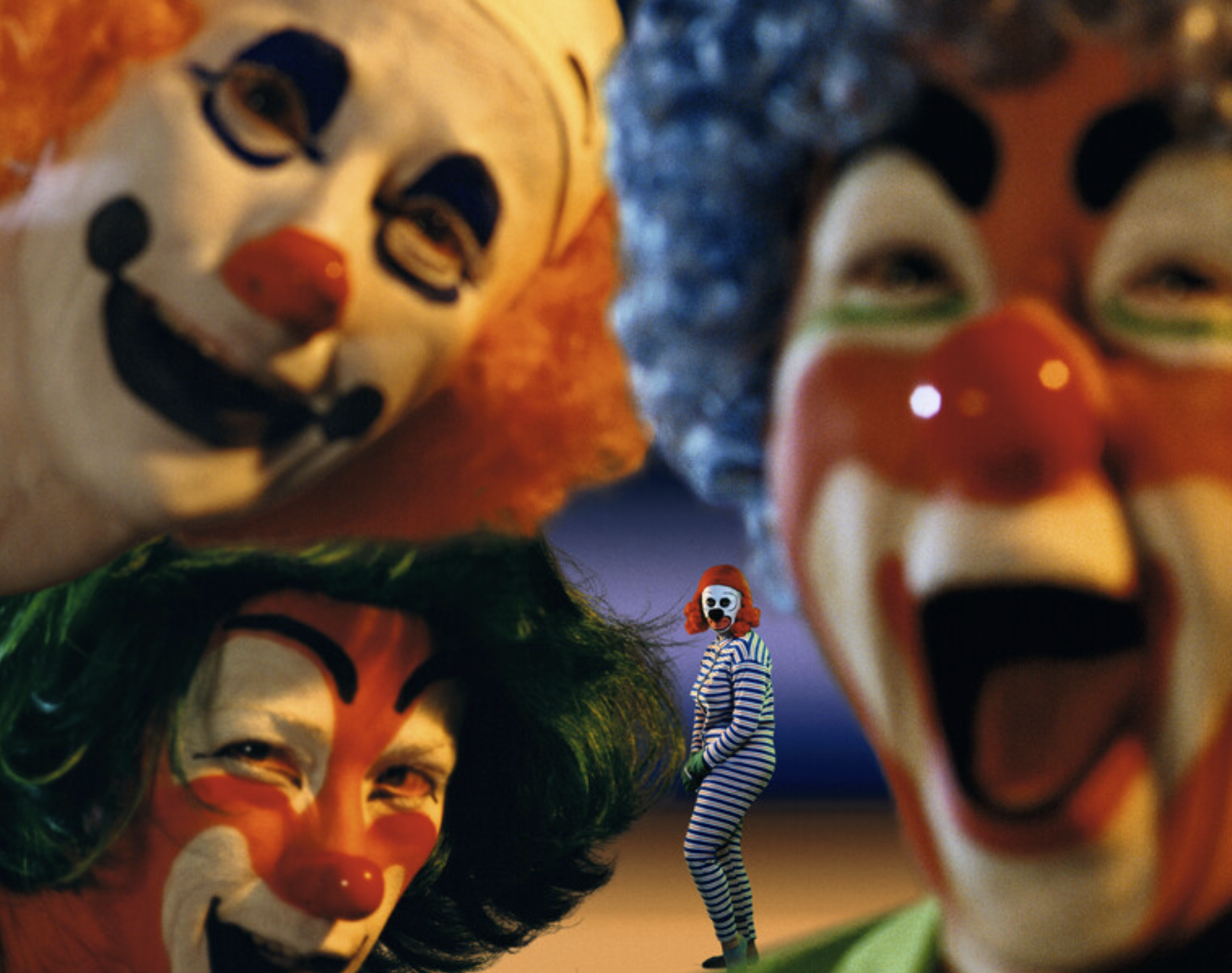
How did they become so well known — and did that recognition come as quickly as it seems?
Cindy Sherman: Well, I think that with the theorists and the, you know, people who were looking for to try to define the art that was going on within my generation, I think it’s sort of somehow maybe easily really showed like it was just — I don’t know, like a good, a good example of what they were trying to say. And because it looked like something we all recognized from a movie, like, you don’t have to have an art degree to recognize that, oh, that’s a movie still. And so, I think it just illustrated the point so much clearer. I suppose, a lot of times, I felt like my images from a group show were the ones that were used within an article to review the show or something. And so, I think that kind of helped the, you know, the attention that I was getting at that time. But as a result, I also felt because I felt sort of singled out from my friends that I started to feel like animosity, you know, like, “Oh, she’s getting all the press,” or she’s getting this or that. And so, that was like a weird position to be in, so it wasn’t always great.
Not many artists become a sensation with their first series. Did that put pressure on you?
I didn’t really feel like it was like a sensation. I mean, I feel like the attention was more over time. I mean, in the beginning, yes, I got some good little reviews, but I feel like it’s only later as I’ve done other things that people, like, still go back to that early work and like hold it up as this thing. Yeah, at the time, I certainly didn’t feel like I was like a sensation or, you know, a big success. You know, I was selling them for $50 apiece at the first show I had, and then had some collectors want 10% off. So yeah, I didn’t really feel like it was like suddenly overnight, like just rolling in money or anything, that happened, you know, it was like that was slow going. Especially in the 80s, I felt more competitive, and I guess was jealous of a lot of the male artists who were also considered within that same appropriation group that were doing, you know, fabulously and selling and making lots of money.
You leave these works untitled, so the narrative stays open — is that ambiguity what you’re after?
Cindy Sherman: I’ve never wanted to like hammer a message over somebody’s head like, this is how you’re supposed to, you know, picture what I’m trying to say. I kind of like that there is an ambiguity about what’s going on in the image. And that people can have completely different concepts of what they think is going on. And it’s not always, you know, something that I’m happy about, like, you know, like some of the early stuff I did from this series called The Centerfolds were considered too close to being, like, kind of titillating images that one might find in, like, a true detective magazine from those days. And I could see the point, but I also felt like if I, because somebody at one point back then was saying, “You should have like a, you know, label next to the image explaining so people understand you’re not trying to propagate this, you know, sexist imagery. You’re, you know, trying to criticize it.” And I just felt like I, you know, if I have to tell people, you know, what it’s about then, you know, like I’m — Well, what it really did is it made me, encouraged me to try to figure out the next series that I’m doing to try to make it seem a little more obvious what I’m trying to say and not seem egregious or something like that.
Usually the series, because I always shoot in series, so maybe anywhere from 10 to 20 or 30 images, and then I usually take a break because I feel like I’ve gone through the whole range of what I wanted to say within that series, and usually there is something that connects one, like, or as a trajectory from one to the next, and often it’s something that I feel like I didn’t say quite clearly enough in the previous series. So maybe I need to, you know, tweak it this way. But also sometimes it’s just been, like sometimes I’ve done very kind of difficult series that people wouldn’t necessarily want to buy and put on their walls and in a way it was kind of intentional, and that was one of the things I started doing in the 80s when there was a lot of hype within the art world and when I was starting to get some attention, but I didn’t want to feel like just the art world’s flavor of the month. So, I intentionally did a series that I knew was going to be really difficult, that people wouldn’t necessarily want to put over their couch or, you know, over their bed or something. And that’s when — they were called The Disaster Series, kind of loosely called that. And I’ve found that every time I’ve done a series like that, that’s really challenging for me, and I know it’s going to be challenging for viewers sometimes, I then feel like I want to play the next, you know, the next thing I do, I want to just have fun and that’s right after that I did the kind of History Portraits and that was fun. It was just like kind of, it seemed almost kind of easy, maybe too easy to mimic these classical paintings. And then after that, I did the Sex Pictures, which were also disturbing and, you know, difficult for people to want to buy. And I feel like I’ve done that many times, like doing something really fun and then kind of feeling guilty about it, I suppose, because it’s too much fun and maybe it became too popular. And so, then I do this really difficult series, but I think I really enjoy the difficult parts more than, even though the makeup and, you know, vamping is kind of fun, it’s also really fun when I can really challenge myself to do something that’s very difficult.
It seems counterintuitive: you’d achieved rare success in the art world, and then you brought your audience the antithesis of those beautiful images of fake actresses in Hitchcockesque and Antonioniesque films that never existed — fake vomit that looks real, graphic sexual images. That jump, from something pleasing to something cringeworthy — is it a kind of rebellion?
Cindy Sherman: I mean, as I said earlier, there’s a little bit of guilt in the pleasurable parts, but I guess I just feel more — I like the challenge of those kinds of difficult things and projects that maybe people don’t want to see, but I also have a soft spot for horror and horror movies and things like that. So, I kind of — It’s almost like, to me, it’s kind of funny and fun to be scared and to see these disgusting things when you know it’s fake. I mean, and that’s one of the other things I always kind of want to be sure that nothing ever looks so realistic that you really are believing any of it, even from the fake nudity that I’ve used in images. And that’s because I know that there’s enough reality out there that it is truly horrific, and I don’t want to — can’t compete with that. So, there is kind of, this kind of fun, I think, I actually have fun with the kind of disgusting aspects of it. And that’s why I also think that there’s a lot of humor in the work because a lot of that difficult stuff, I also don’t really take so seriously.
You’ve said you try not to come too close to showing what you really look like — that if an image looks too much like you, it’s probably cut. You’re the subject of every photograph, yet you don’t want to show yourself. How do you reconcile that?
Cindy Sherman: Well, because I’ve been aware that people can easily assume that this is just some egotistical thing about — you know — me, me, me. So, yeah, I’m not really prone to even doing interviews. Or, I mean, I’m not against having somebody take my picture if I happen to be somewhere, but it doesn’t happen that often that it really worries me, anyway. But, yeah, I work alone and use myself, I think, because I just — well, that’s kind of maybe how I grew up. I grew up kind of alone and depending on myself for everything. And I’ve tried having, it, like, an assistant in the studio to help me, or hiring models, but I feel like then I wind up worrying too much about them: “Would you want some tea? You know, are you OK? Is this taking too long?” Whereas with myself, I can just push myself, you know, as long as I can deal with it, and take it to difficult places if I feel like I need to. And, like I said, in that book — that catalog — if I don’t like it, nobody has to see it. So I can really experiment with what I’m doing. Yeah, so that’s why I work alone and why I use myself. Yeah. So it’s not really about me; I guess it’s trying to — like I’ve said — I think I’m trying to hide myself, and hopefully something else comes out.
Technology has changed enormously since you started in the ’70s. How have you used it — were you an early adopter, or slower to come around?
Cindy Sherman: The first time I ever tried a digital camera, you know, like a serious digital camera, I just completely stopped working with film, and I would never go back. It just made the process so much easier for me because working alone, in the past, I would, well, there was a point where I could keep the makeup on and keep everything set up if I needed to reshoot it. And I would develop the film, and then I could check it right away. And if I was still in makeup, then I could just redo it. But then something happened with the chemicals, and I couldn’t get them right anymore, and so I had to take off the makeup, then go to the lab, wait two hours, come back, and then I’d realize, ugh, they’re all out of focus or even though I was doing, you know, test print Polaroids, but the Polaroid, you can’t quite get the color right, so that’s sometimes wrong, and you can’t really tell looking at a little Polaroid, you know, close up if it’s really in focus or not. So yeah, once it was all digital and I could just check my computer like every 20 shots or however many shots I felt like I could take at a time, and then just keep shooting and keep shooting, and then I would also, I could just like add like on top of the character, I could just like the character, caricature, the character could evolve over time too. And so, while I’d be shooting one character, it like literally would turn into a different one. Yeah, it just opened up so many doors. And the idea of then putting two characters together or more characters in one image was so much easier because of Photoshop and taking the background out and just, you know, inserting something, it was just, it’s just — yeah. I was worried at first that there would — shooting digitally and working with Photoshop that it would be almost too broad of a spectrum of what’s possible and that I felt like at least shooting with film and, you know, shooting everything in my studio set up the way I want it to be, it at least gave me the limitations that I needed to — so that I knew, I could figure out what I wanted. And I was nervous that digitization and Photoshop would mean that, like God, you know, I could use, I could, you know, shoot myself in a bathing suit and yet be on the North Pole or something, which people would do for ads, but I still found ways to limit it so that it wasn’t quite so intimidating as it was when I first began.