
The American Academy of Achievement invited an extraordinary array of preeminent leaders and innovators to share their personal journeys and experiences with scores of outstanding young scholars, scientists, and entrepreneurs in Washington, D.C. at the 56th International Achievement Summit, June 23-25, 2026.
The 2026 International Achievement Summit celebrated creativity, imagination, innovation and individual leadership as America approached the 250th anniversary of the signing of the Declaration of Independence. The Academy’s young scholars, scientists, technology entrepreneurs and public servants gathered to exchange ideas with outstanding leaders in the arts, sciences, business and public service, including 28 new recipients of the Golden Plate Award and returning honorees serving on the Awards Council.
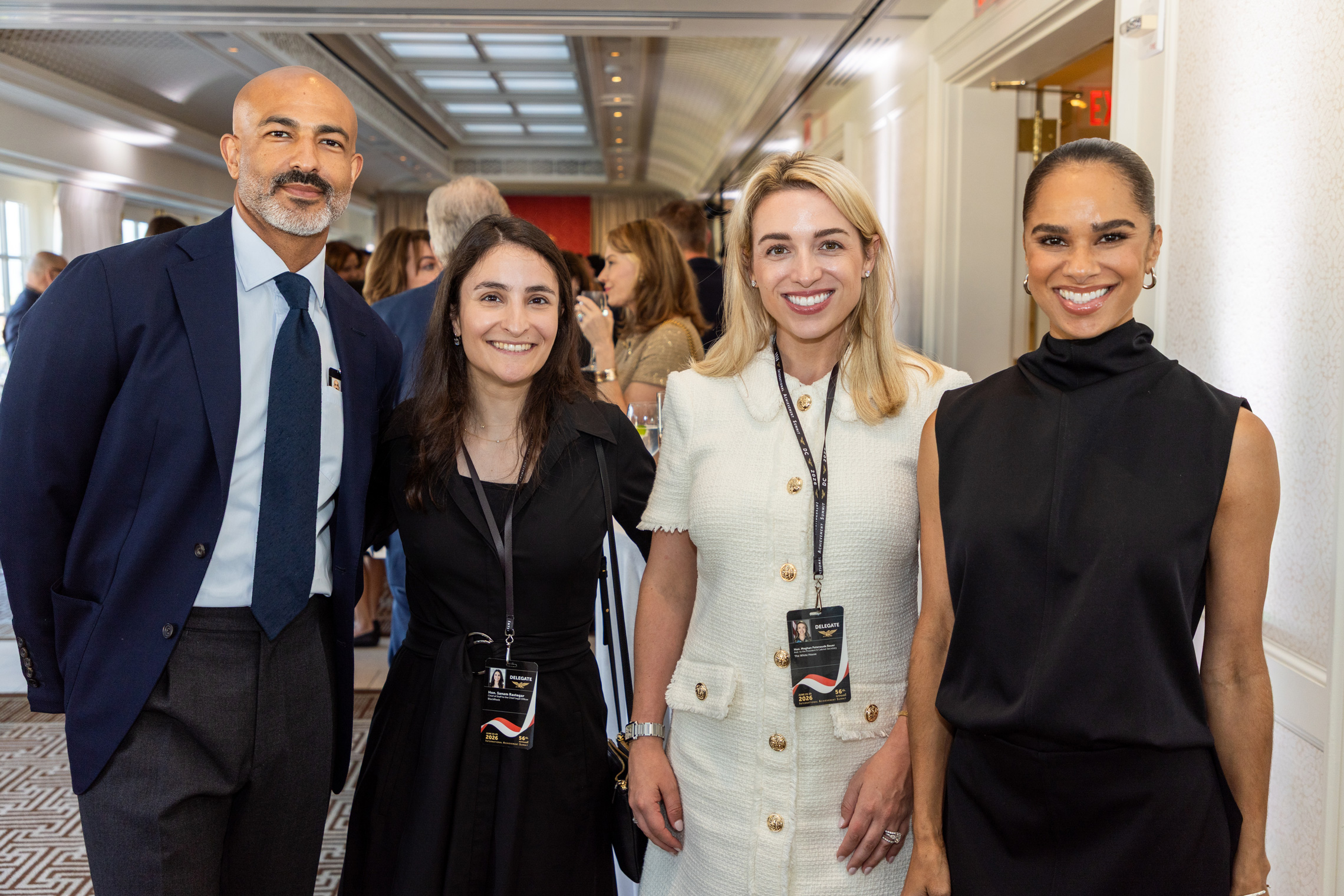
Delegates attending the Summit for the first time included Paul and Daisy Soros Fellows, Rhodes Scholars, Marshall Scholars, Schmidt Science Fellows, young physicians and researchers from the Harvard-MIT Medical Scientist Training Program, Knight-Hennessy Scholars from Stanford, and McConnell Scholars from Harvard Law School.
The Co-Hosts of the 2026 International Achievement Summit were Catherine B. Reynolds of the Catherine B. Reynolds Foundation, HH Sheikh Nasser bin Hamad Al Khalifa of the Kingdom of Bahrain, John Overdeck of Two Sigma Investments, and Yash Sandesara of 205Capital.
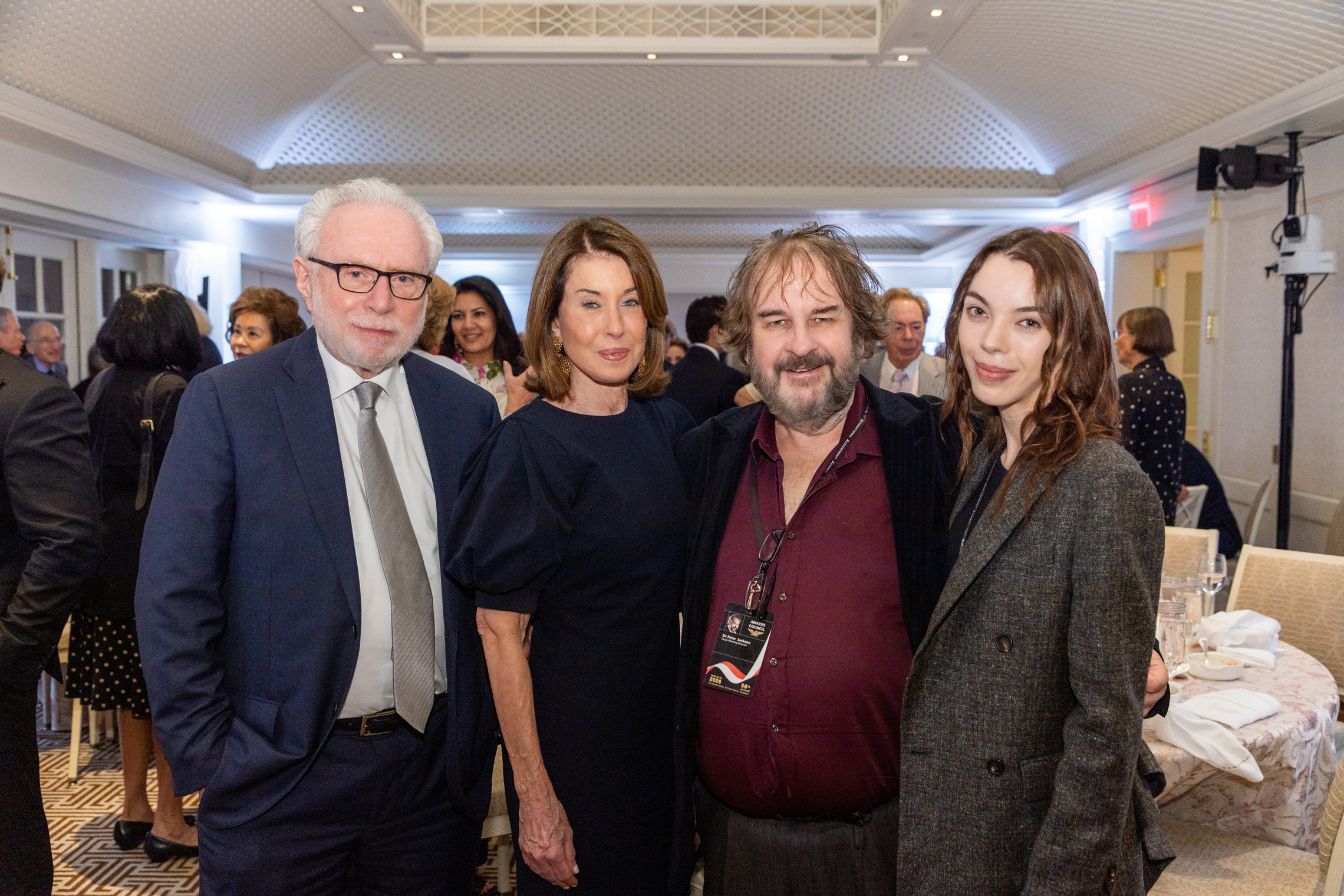
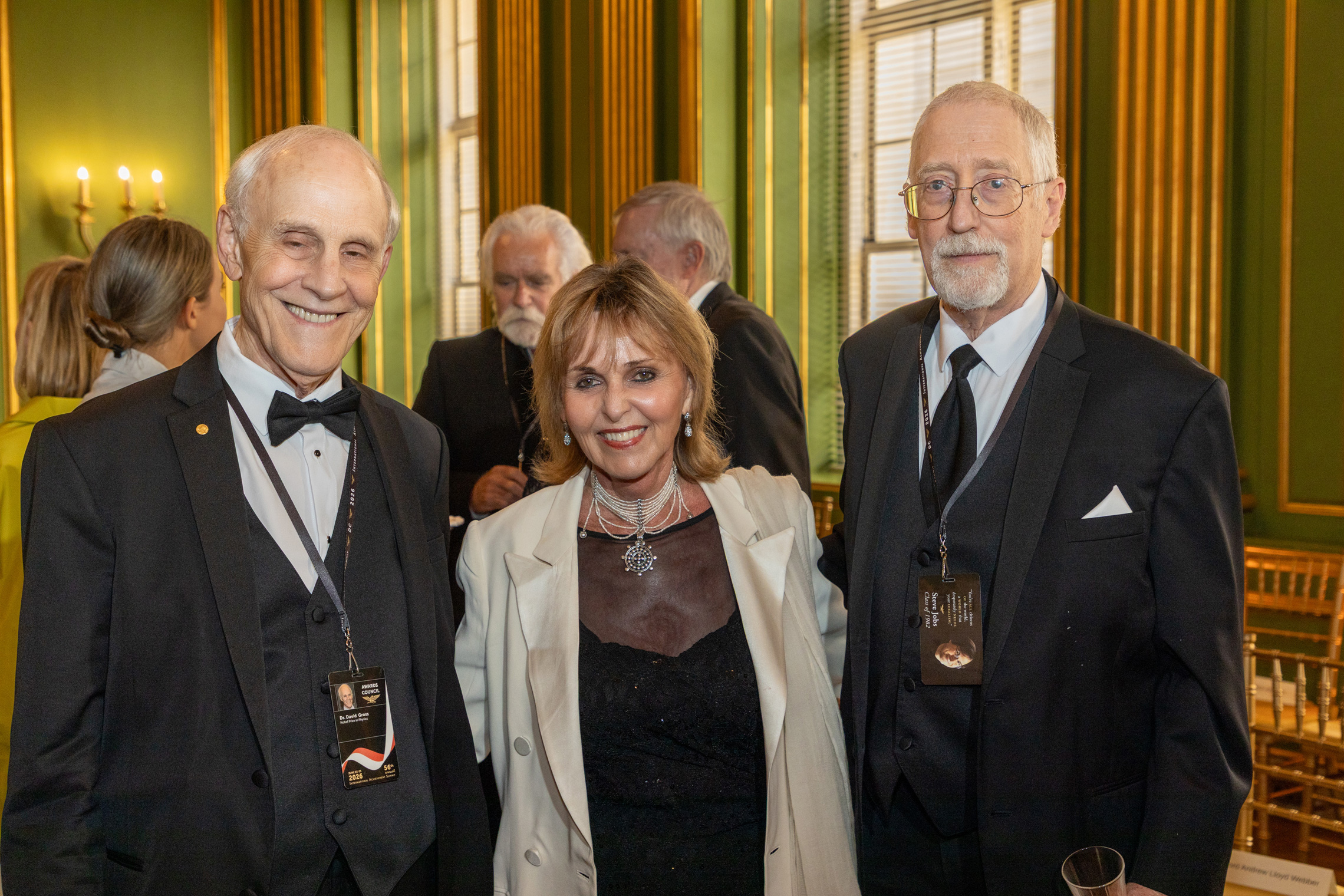
Among the Awards Council members who came to Washington to honor the Class of 2026 were Nobel laureates Dr. Frances Arnold, Dr. Peter Agre, Dr. David Gross and Dr. Saul Perlmutter; Justice Amy Coney Barrett; Senators Susan Collins and Edward Markey; General David Petraeus; Dr. Benjamin Carson; Dr. Steven Rosenberg; Dr. Robert Langer; Donald Graham; Joshua Bell; Denyce Graves; Andrew Lloyd Webber; Bartlett Sher; Jeff Koons; Sir Peter Jackson; David Doubilet; Beverly and Dereck Joubert; Lee Berger; Rick Atkinson; Walter Isaacson; Cal Ripken, Jr.; and Tara VanDerveer.
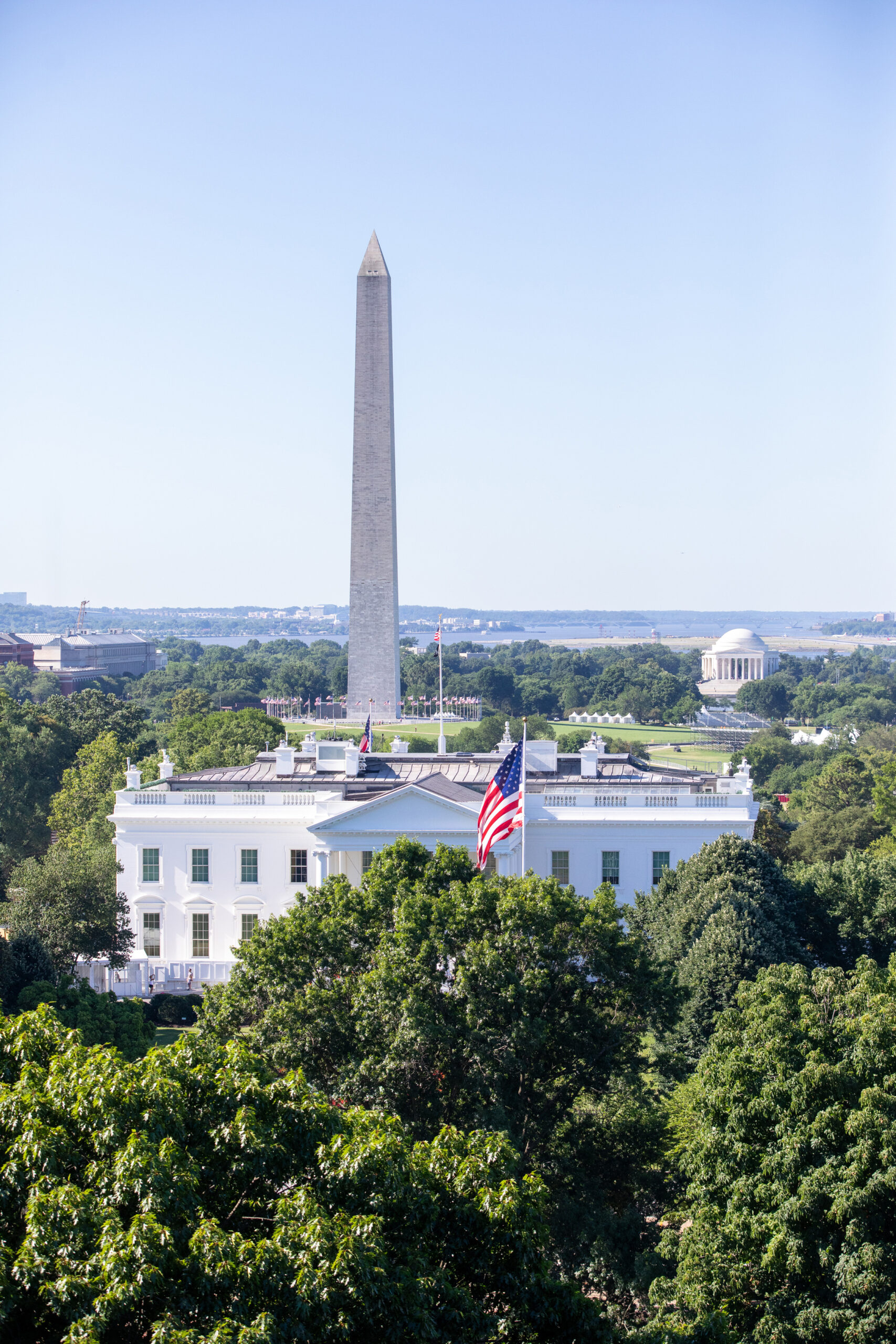
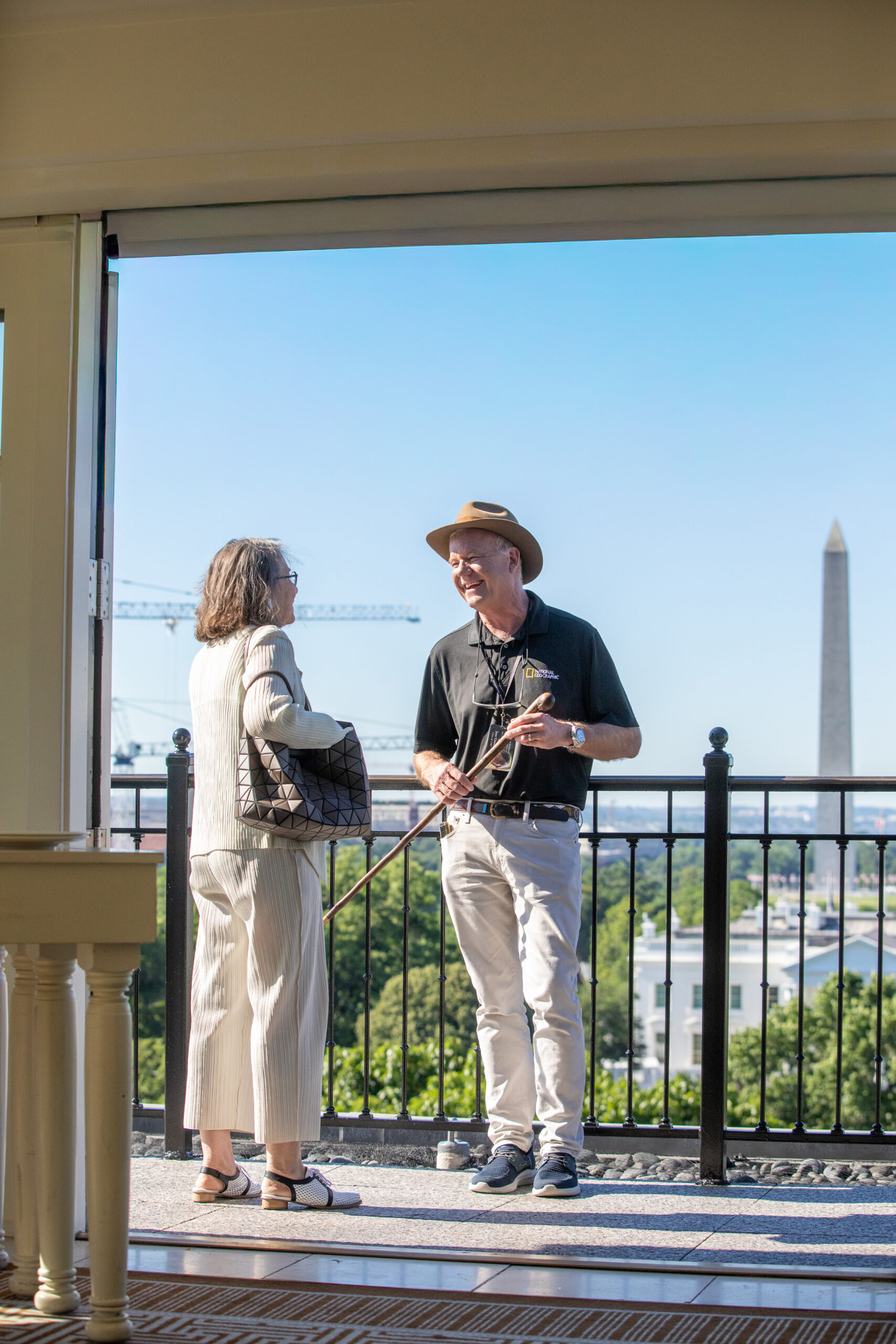
Members and honorees stayed at the elegant Hay-Adams Hotel, facing the White House across Lafayette Park, and gathered in the Top of the Hay, where the rooftop view extended from the East Wing and Washington Monument toward the reflecting pool and Lincoln Memorial. Catherine B. Reynolds, an Academy Patron who has led the International Achievement Summit programs since 1999, hosted the Summit for the twenty-seventh time. Emmy Award-winning television news anchor Alison Starling presided over the evening ceremonies.
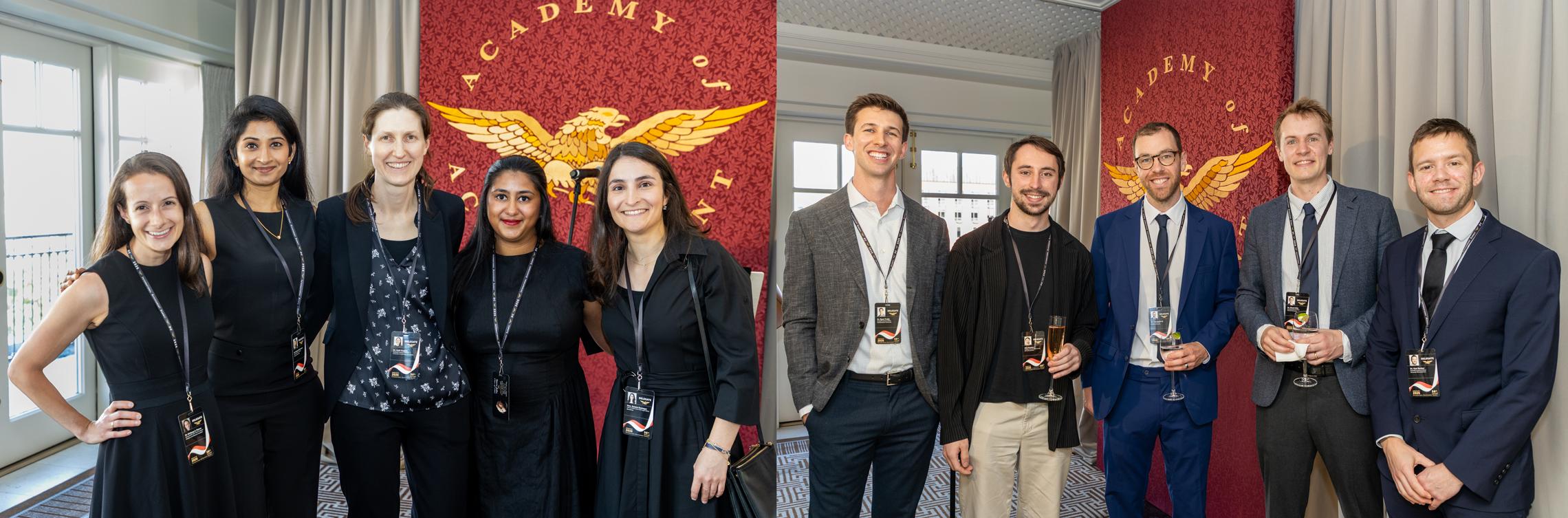
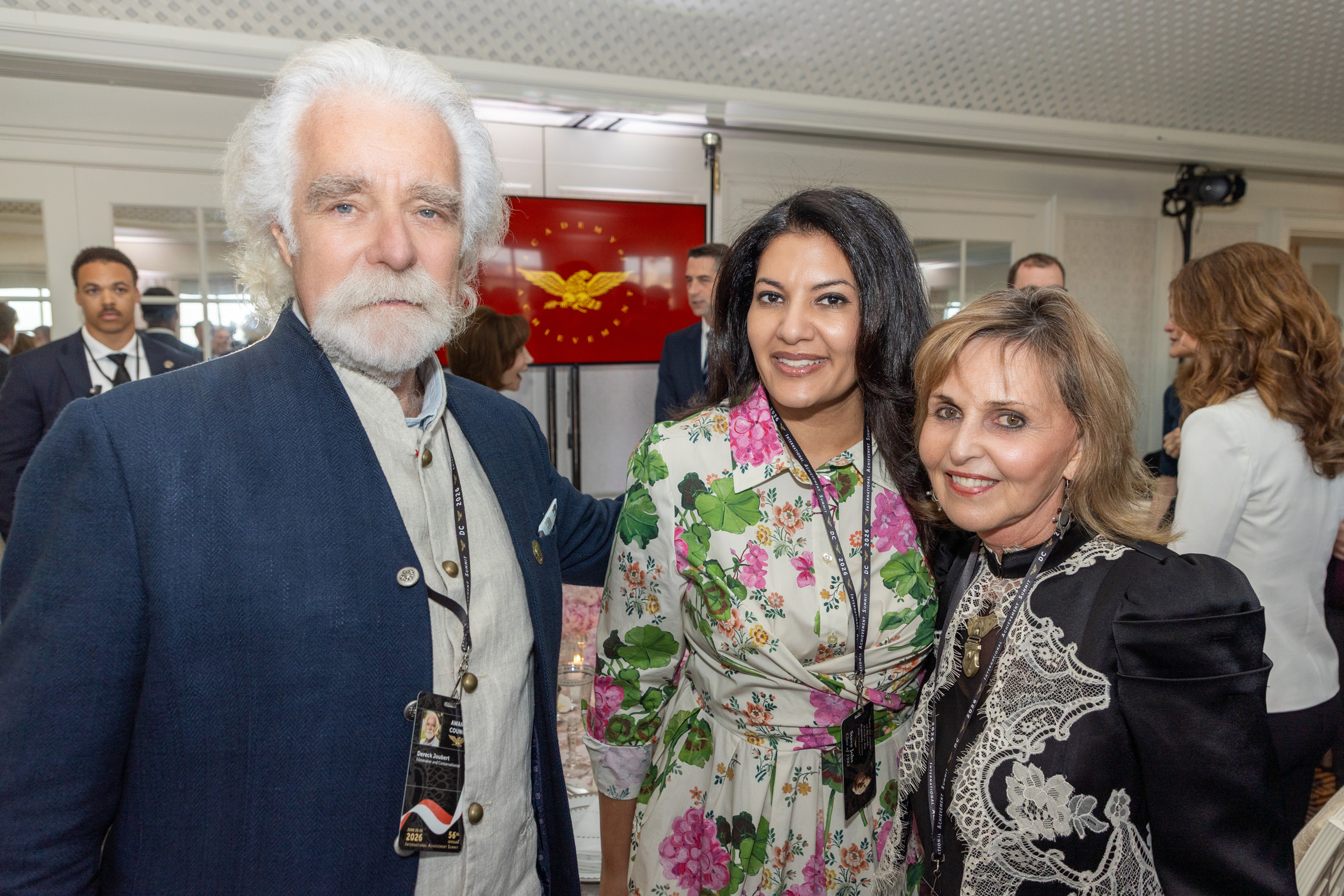
The 56th International Achievement Summit opened on a warm Washington evening with a reception at the Top of the Hay. Catherine Reynolds recalled that the hotel stands where the homes of John Hay, Lincoln’s private secretary and later secretary of state, and historian Henry Adams once helped create the Washington salon — a world of ideas, letters, diplomacy and argument. Tonight, she said, that tradition continued in good company, interesting lives and conversations worth remembering.
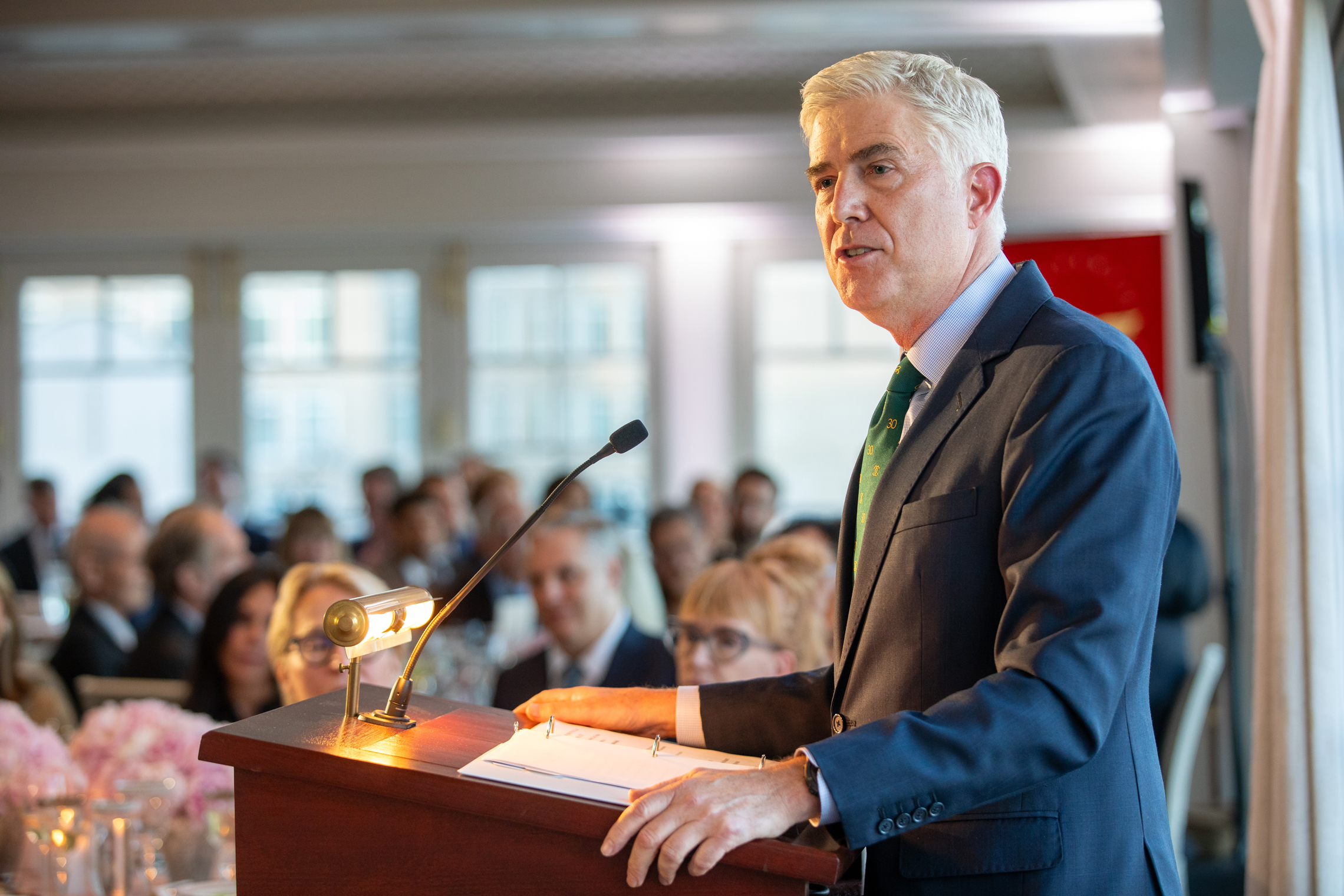
The room then quieted for Justice Neil Gorsuch of the United States Supreme Court, a member of the Academy’s Class of 2017. His introduction traced an unlikely path from the front desk of a Howard Johnson’s to Columbia, Harvard, Oxford, judicial clerkships and the Supreme Court. On the eve of the nation’s 250th year, Justice Gorsuch spoke not of doctrine but of people: the human stories behind the founding, the private sacrifices of those who made the Revolution, and the ideals they set down in the Declaration of Independence.
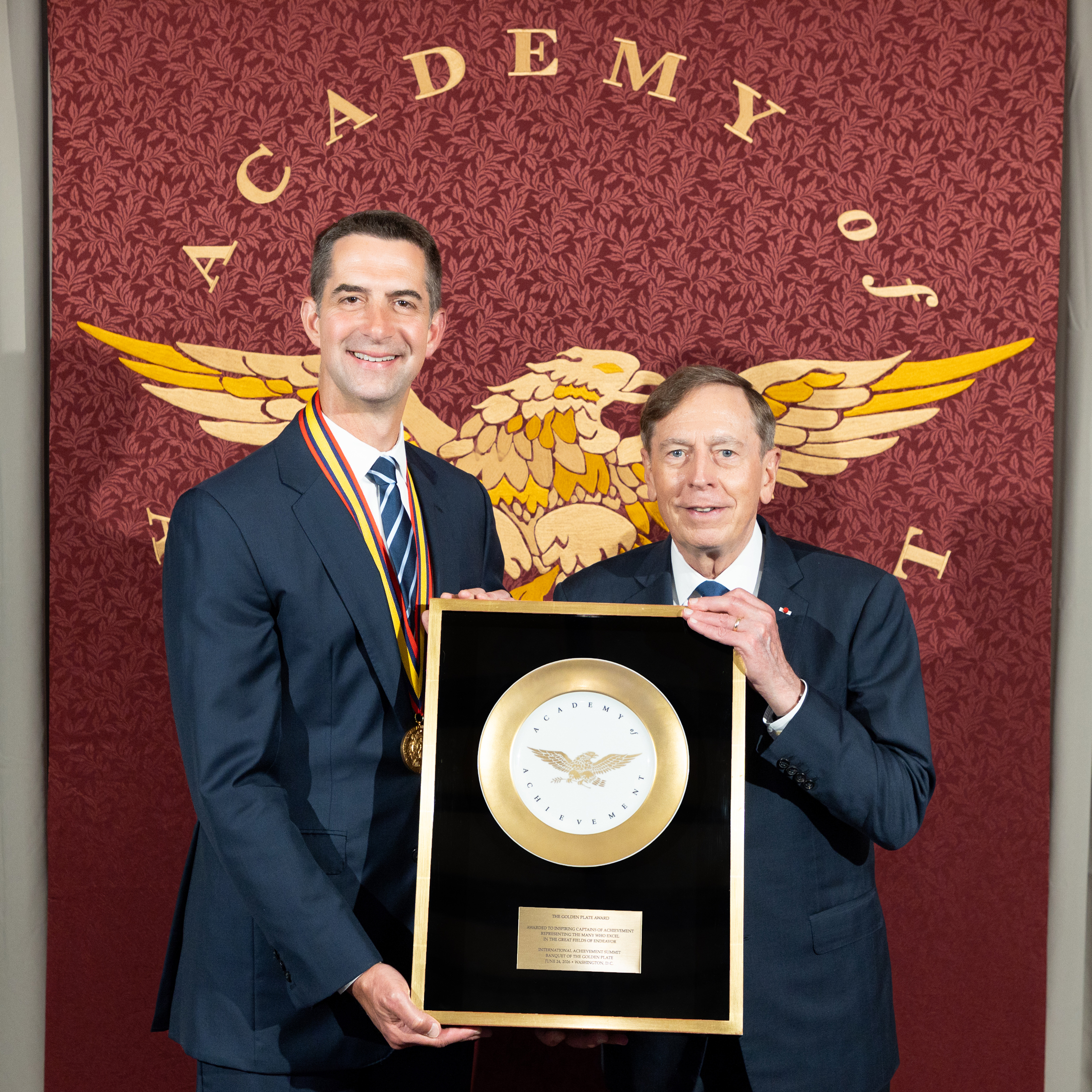
Two new members were inducted that night. General David Petraeus, Class of 2012, presented the Golden Plate Award to Senator Tom Cotton, who grew up on his family’s cattle farm in rural Arkansas learning to watch where he stepped — a skill, the Academy observed, that has served him well in Washington. A Harvard Law graduate, decorated Army officer and former congressman, he now chairs the Senate Intelligence Committee. He spoke about the road that had carried him there.
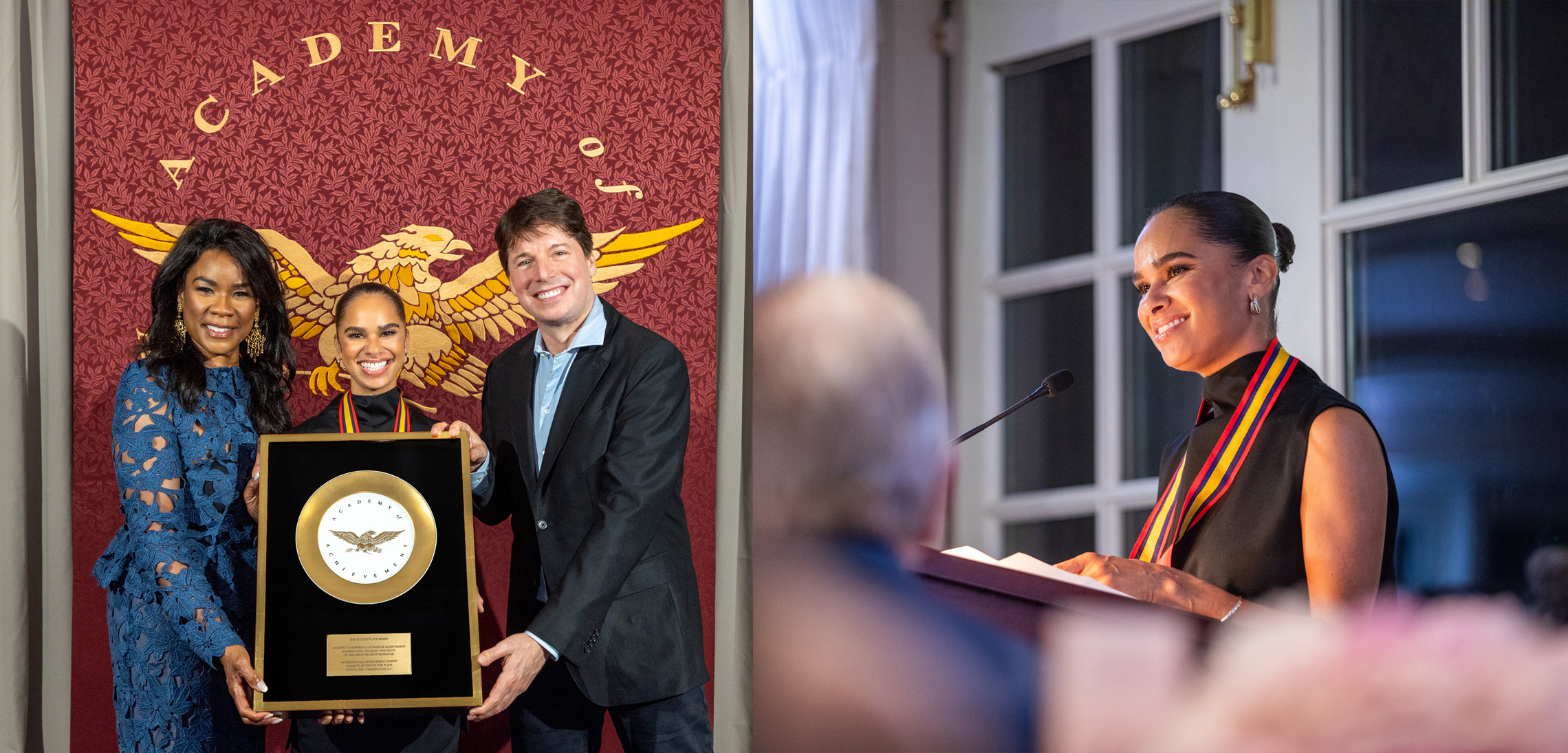
Toward the end of dessert, the lights dimmed for a short film before Academy members Denyce Graves, Class of 2019, and Joshua Bell, Class of 2008, presented the gold medal and Golden Plate Award to Misty Copeland. From a crowded motel room shared with five siblings, she rose to dance ballet’s greatest roles and become the first African American woman named principal dancer of American Ballet Theatre. She spoke to the delegates about that journey, and the evening ended with the room on its feet.
The next morning, the delegates filled the Top of the Hay for a day that carried them from the drafting table of the Declaration of Independence to the far edge of the observable universe. The opening symposium of the 2026 International Achievement Summit included presentations by three Academy members and acclaimed authors: Rick Atkinson, recipient of Pulitzer Prizes for history and journalism; Erik Larson, best-selling author of “The Devil in the White City” and other historical nonfiction books; and Walter Isaacson, biographer and National Humanities Medal recipient.
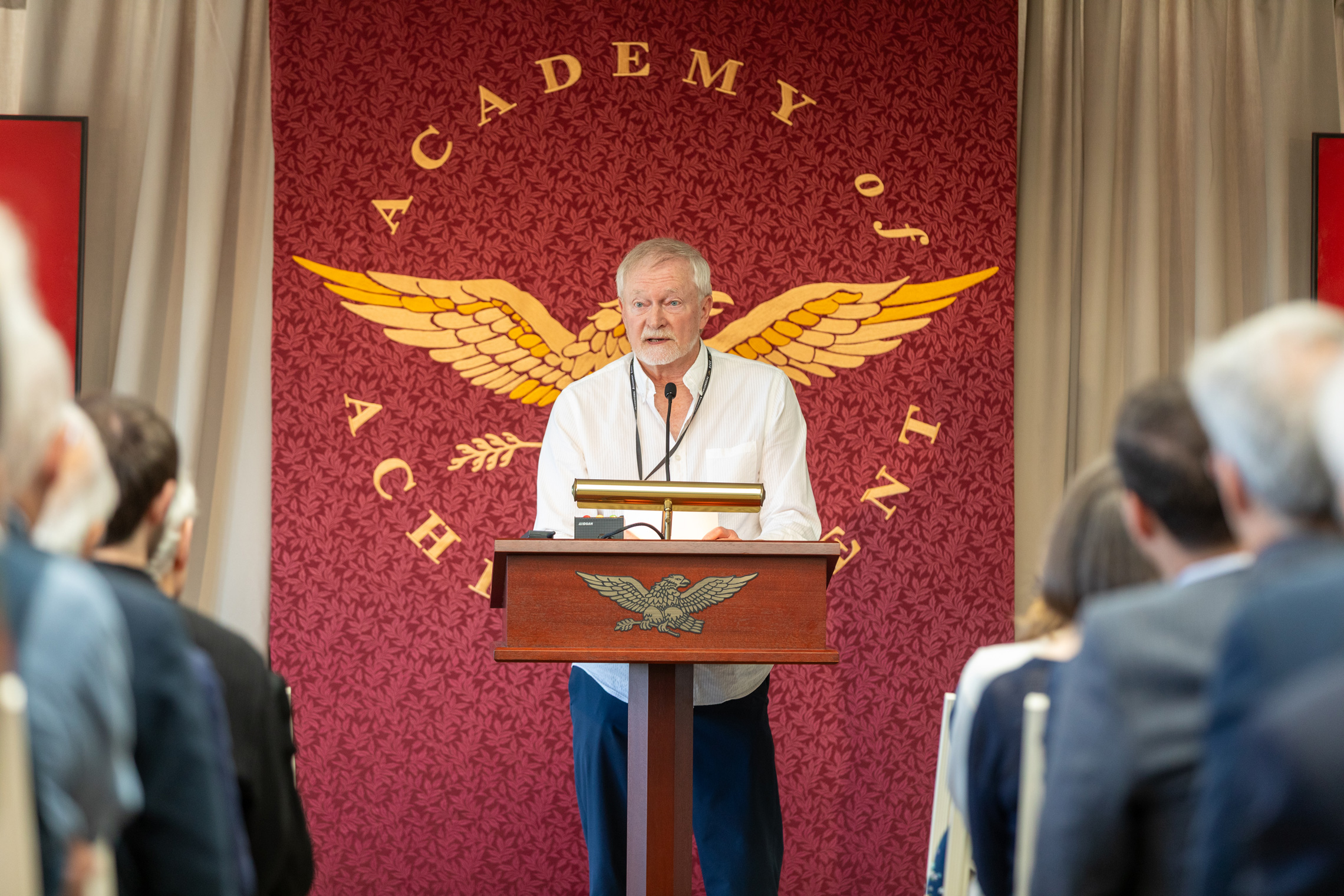
Fittingly, in a semiquincentennial year, the symposium began with the founding. Rick Atkinson, Class of 2008, reminded the delegates that Jefferson’s words did not apply to the enslaved — one in five people in the thirteen colonies — nor to women or Native Americans. The Declaration was aspirational, and the founders left its unfinished work to generations yet unborn. Recognizing the imperfections in our imperfect union and striving to make it better, he said, is the highest form of patriotism. The dream endures, but so does the struggle.
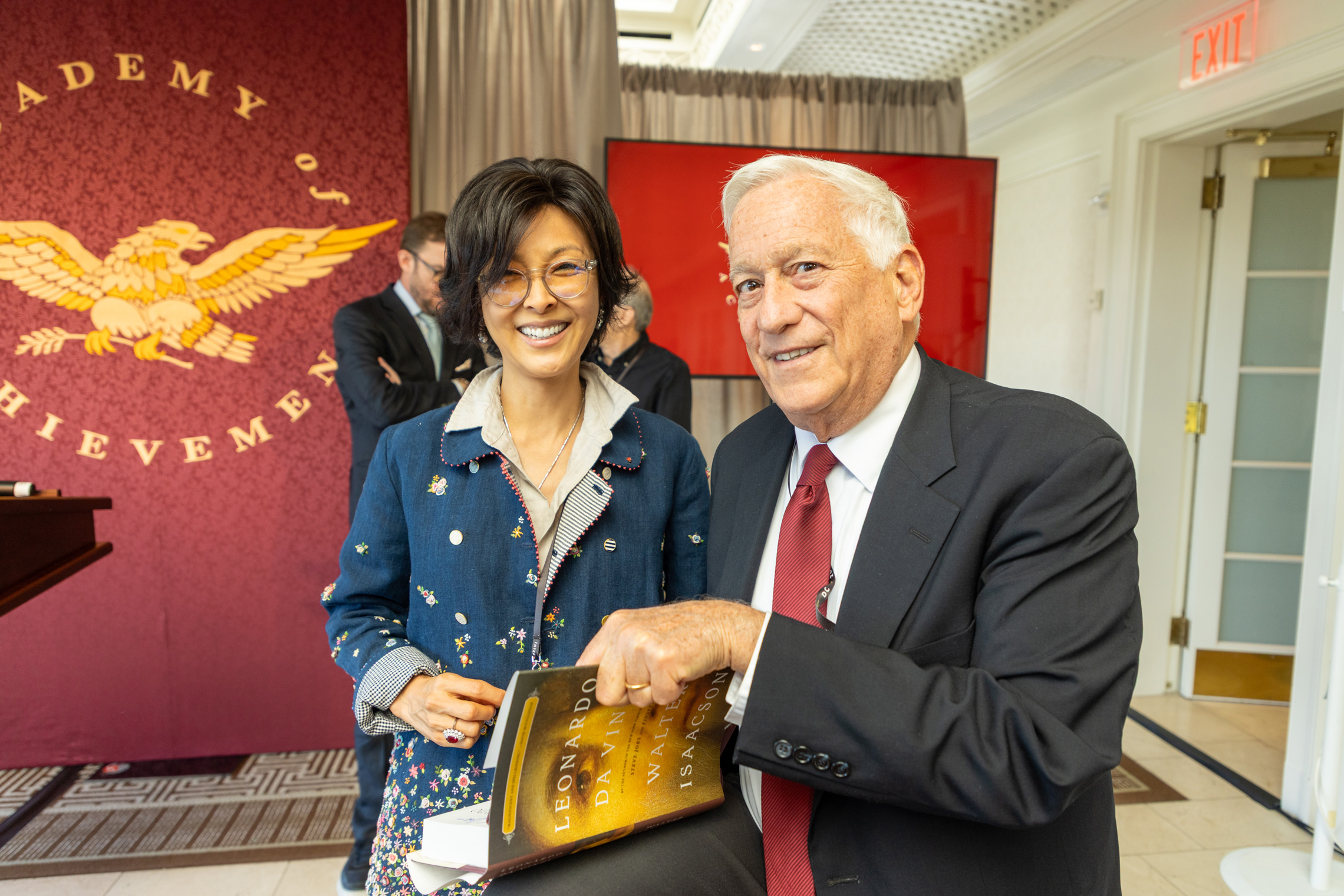
Walter Isaacson had visited the Library of Congress the previous day to see the rarely displayed first draft of the Declaration. Jefferson called its truths sacred; Franklin replaced the word with self-evident, and John Adams restored the phrase “endowed by their Creator.” In half a sentence, Isaacson said, five men in a rented room balanced providence against rationality. The sentence was not true when written, but became a forcing mechanism at Seneca Falls, Gettysburg and the Lincoln Memorial. The arc of history, he concluded, does not bend by itself.
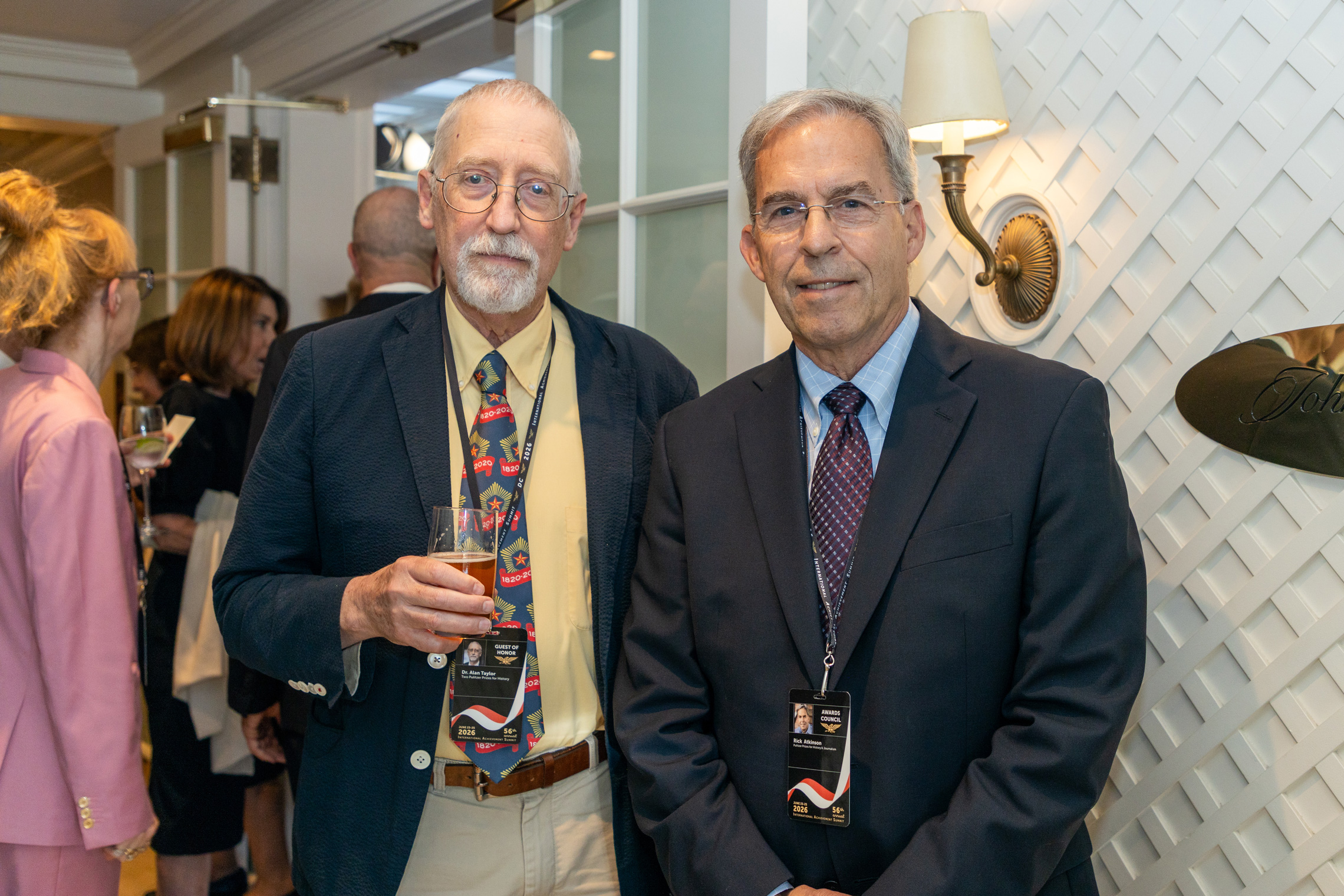
Professor Alan Taylor offered a harder view of the Revolution through a Nathaniel Hawthorne tale. An ambitious young man enters town expecting his powerful kinsman’s name to open every door, only to see that kinsman paraded through the streets, tarred and feathered — and joins the crowd’s laughter. Our memory of the Revolution favors Trumbull’s stately canvases, Taylor said, but at least a fifth of Americans were loyalists, and public violence forced people to choose. Hawthorne’s coda held the larger meaning: a shrewd youth could rise without his kinsman’s help. The Revolution created not merely a new flag, but a new social order.
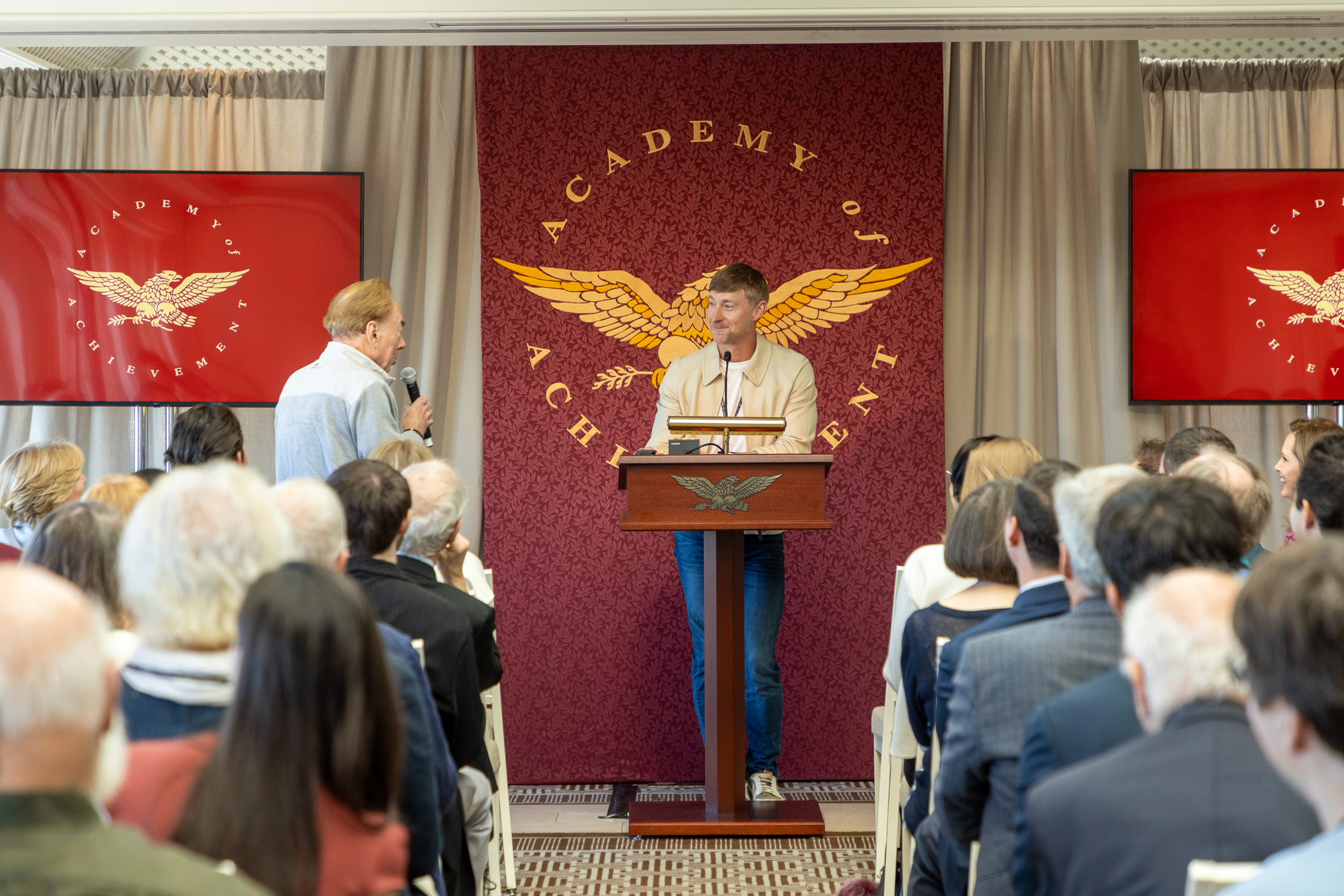
Erik Larson described the accidental birth of The Devil in the White City: an encyclopedia of murder that failed, an abandoned poisoning case, a detour into a Galveston hurricane, and finally a tedious history of one pavilion at the 1893 World’s Fair. Its footnotes yielded Juicy Fruit, Cracker Jack, the zipper, Buffalo Bill and Clarence Darrow — and, within twenty-four hours, his title. Whatever you are reading, he told the delegates, always read the footnotes.
Ashley Gorley, who has written more number one songs than anyone alive, grew up in a Kentucky town of seventeen thousand, knew no one in the music business and still cannot read music. His father urged him to find a way to earn a living doing what he loved. With roughly 100,000 songs released each day, Gorley said, commercial success is largely beyond a writer’s control. He measures achievement instead in friendships across the writing table and in hearing one of his songs mark a wedding, graduation or other lasting memory.
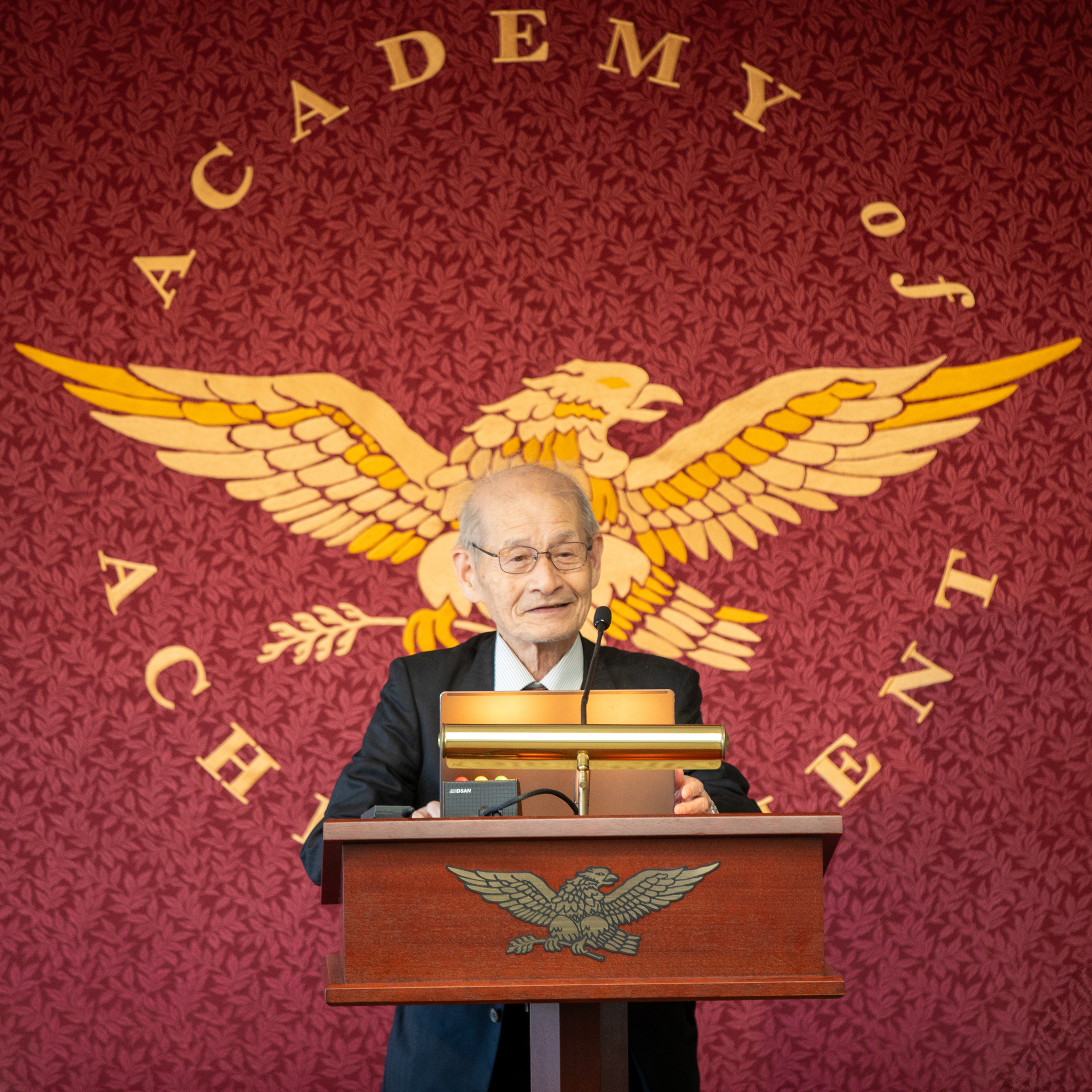
Dr. Akira Yoshino traced his career to a fourth-grade teacher in Osaka who gave him Michael Faraday’s The Chemical History of a Candle. Wanting to make something practical for the world, he failed for years before finding the carbonaceous material that worked as a battery anode. The invention was the easy part: lithium-ion batteries barely sold until demand suddenly took off in 1995. No one then imagined they would power automobiles or store energy for a grid. Battery technology, he told the delegates, is vital to humanity.
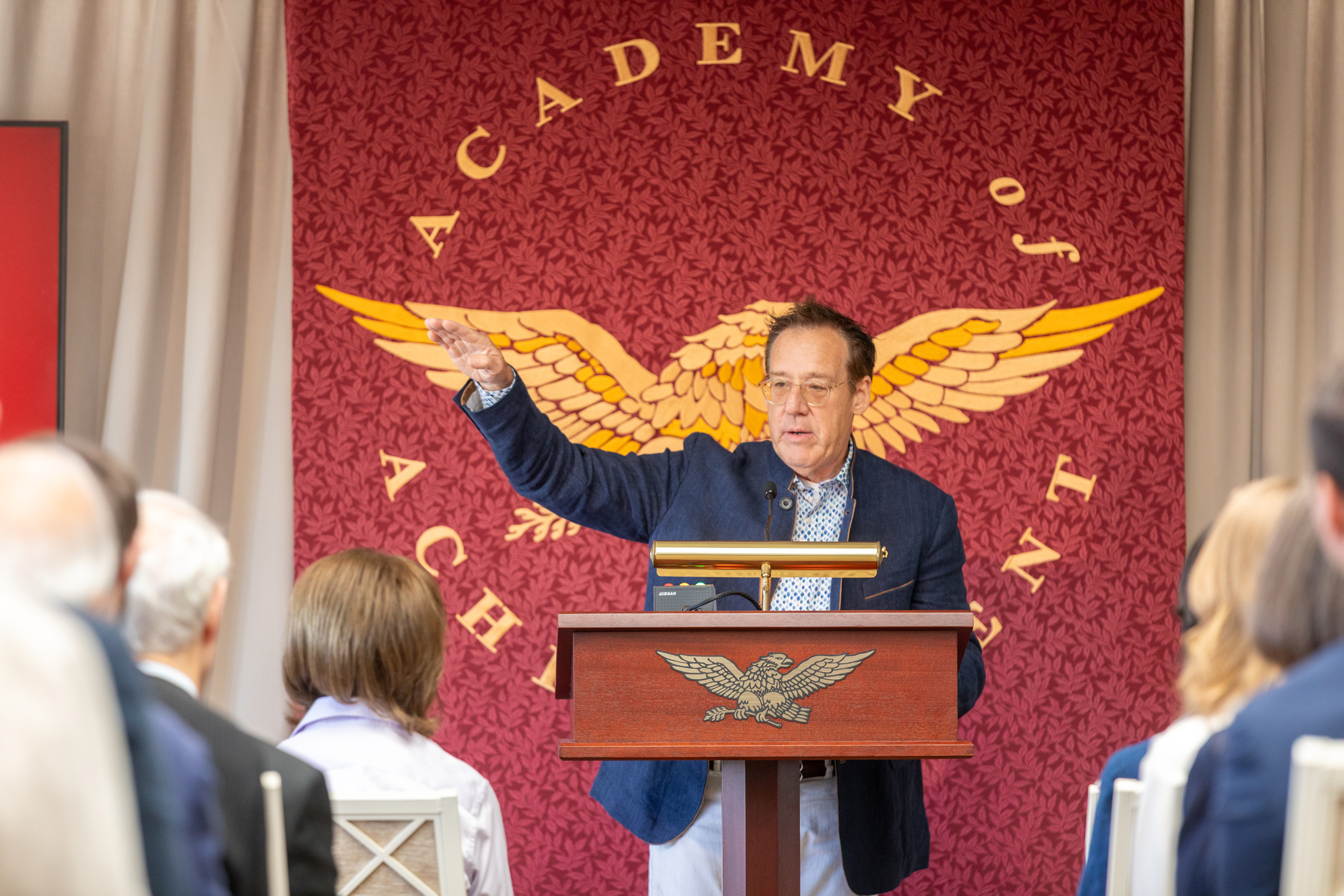
Dr. Gregory Verdine’s story began when his father was paralyzed from the neck down and the five-year-old became his hands, helping him build boats. A guidance counselor applied to college for Verdine and found a judge to pay the tuition; his father did not speak to him for years. Organic chemistry led him, eight years later, to a Harvard professorship. When three proteins behind some eighty percent of human cancers were declared undruggable, Verdine refused the easier targets. Two have now fallen. At a recent oncology meeting, nine thousand people rose in spontaneous tribute to a drug that has doubled survival for patients with pancreatic cancer.
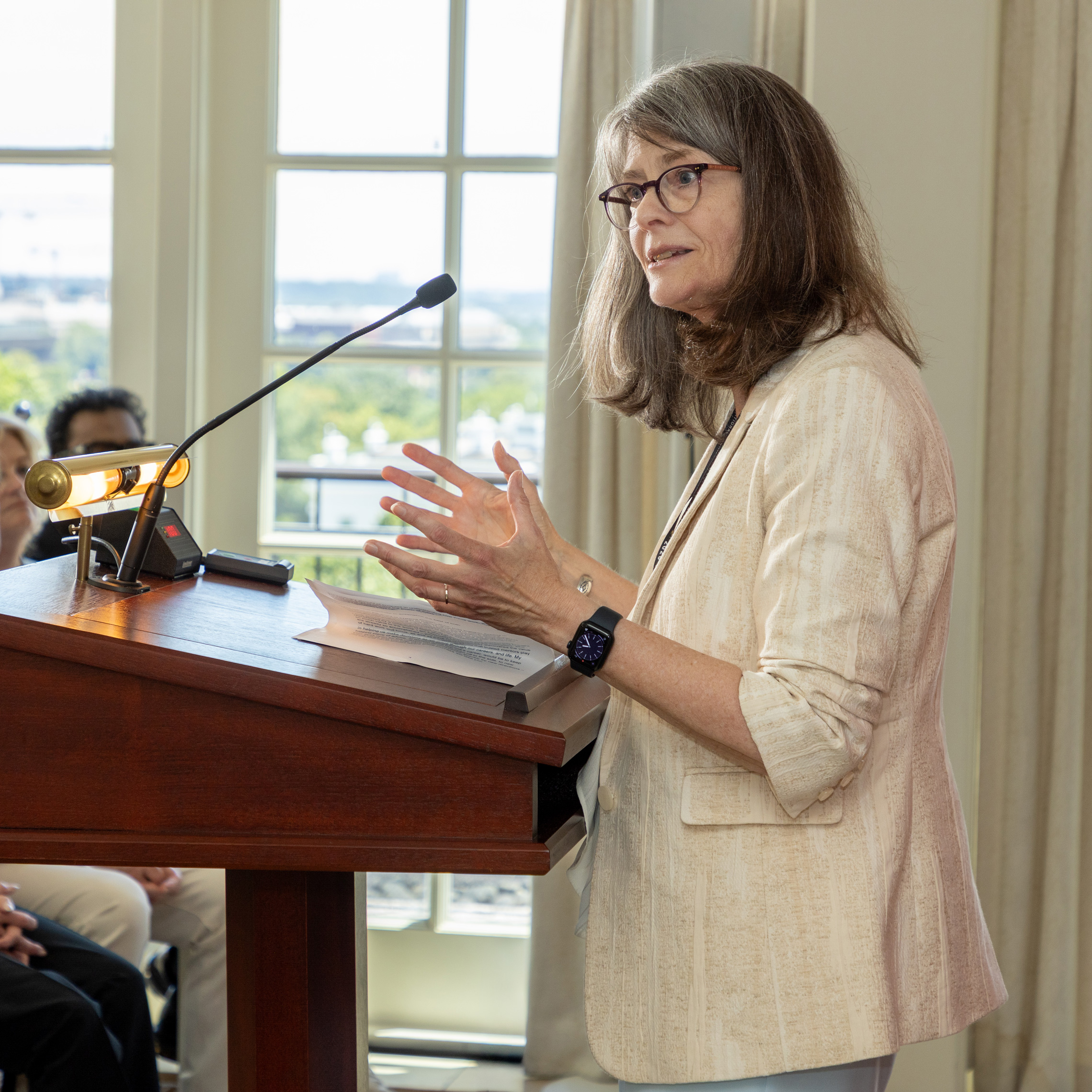
Dr. Mary Brunkow learned she had won the Nobel Prize from an Associated Press photographer on her porch at 3:15 in the morning; she had silenced what she assumed were spam calls from abroad. The prize honored work done more than twenty-five years earlier by a small Seattle team that traced a devastating autoimmune condition in mutant mice to a single gene. That private team, she stressed, depended on publicly funded academic science. Brunkow had once planned on medical school until a favorite professor opened an unexpected door into the laboratory. Watch for those doors off to the side, she told the delegates.
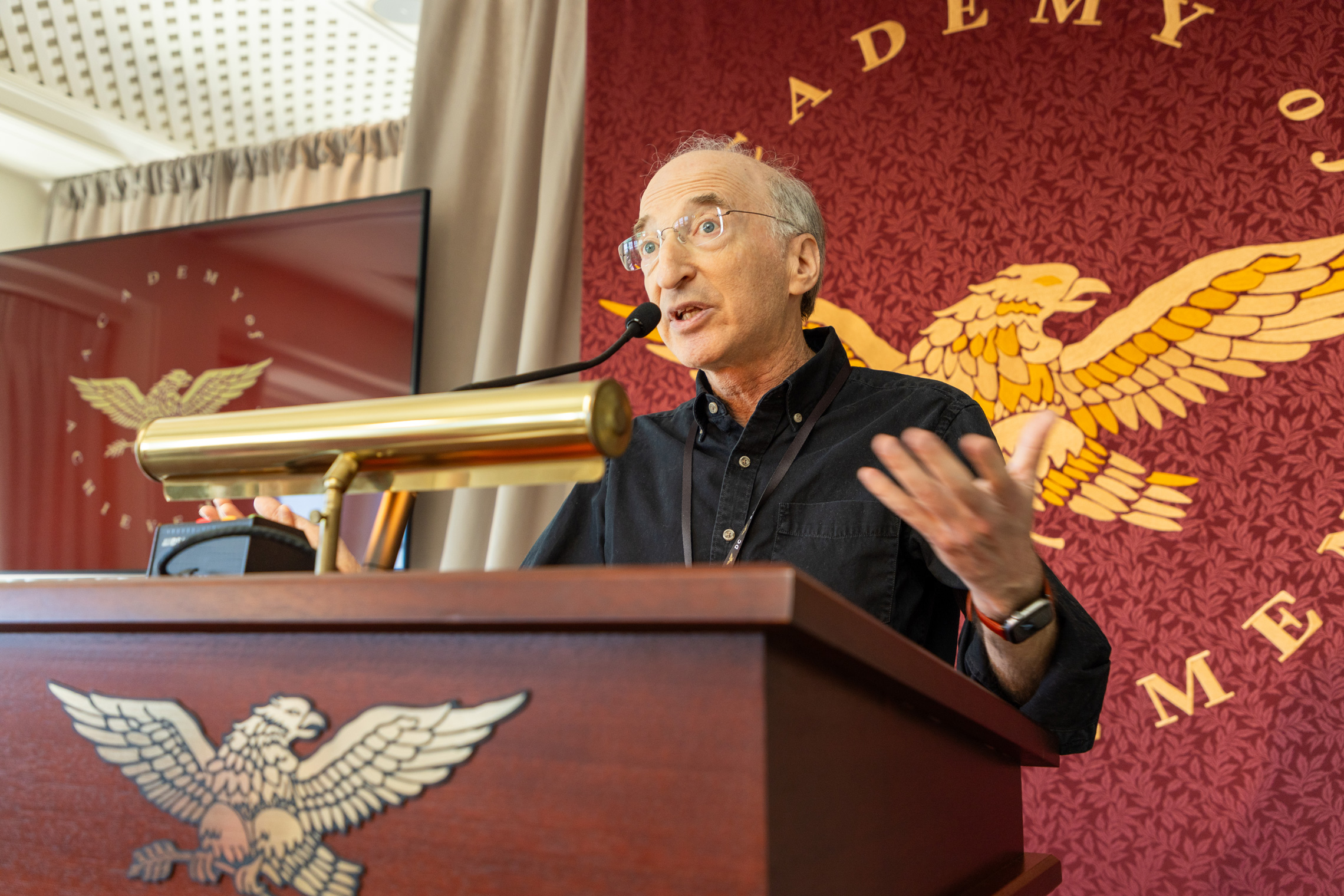
Dr. Saul Perlmutter, Class of 2014, set himself four minutes to explain how to measure the fate of the universe. A certain exploding star always reaches the same brightness, so its apparent faintness reveals both distance and time. His team spent ten years collecting forty-two such supernovae and discovered that the universe’s expansion was not slowing under gravity, but accelerating. One path to a Nobel Prize is genius, he said; another is to measure carefully and receive a very interesting surprise. This generation can stop pandemics, steady the climate or feed eight billion people. The remaining impossible problem is learning to think and talk together long enough to do it.
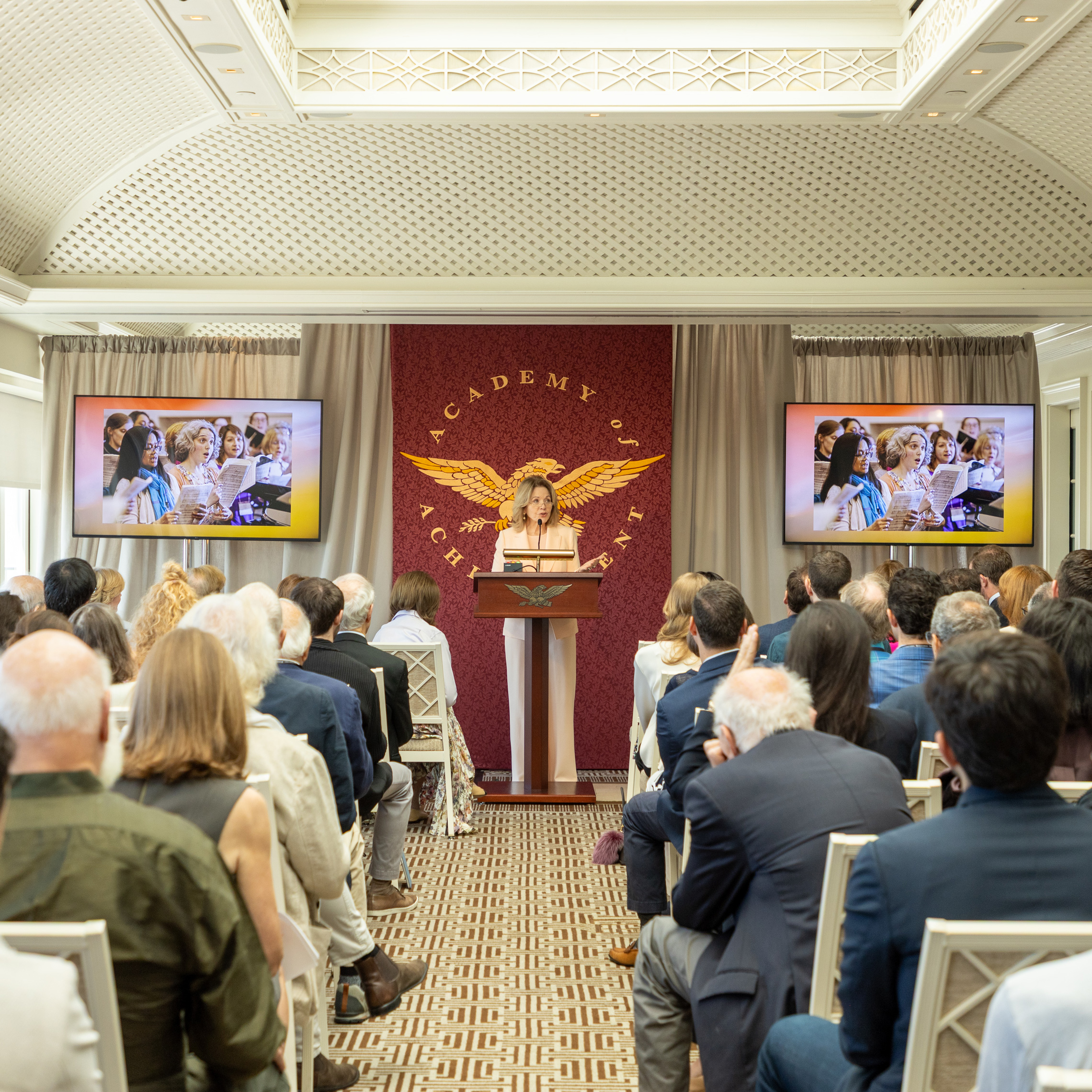
Renée Fleming would not let the room sit still. She divided the delegates into three sections, taught them a chord and held it until they heard the pitches unite. Singing together, she explained, aligns brain waves, raises oxytocin and lowers cortisol. Her subject was neuroarts — not ornament, but a moral imperative. She showed how music can calm a child before seizure testing, restore speech after catastrophic injury, animate a dementia choir, or help a woman with Parkinson’s rise by imagining herself a dancer. These therapies are low-cost, non-invasive and non-pharmaceutical, and Fleming looks toward the day patients routinely ask whether creative arts therapies are right for them.
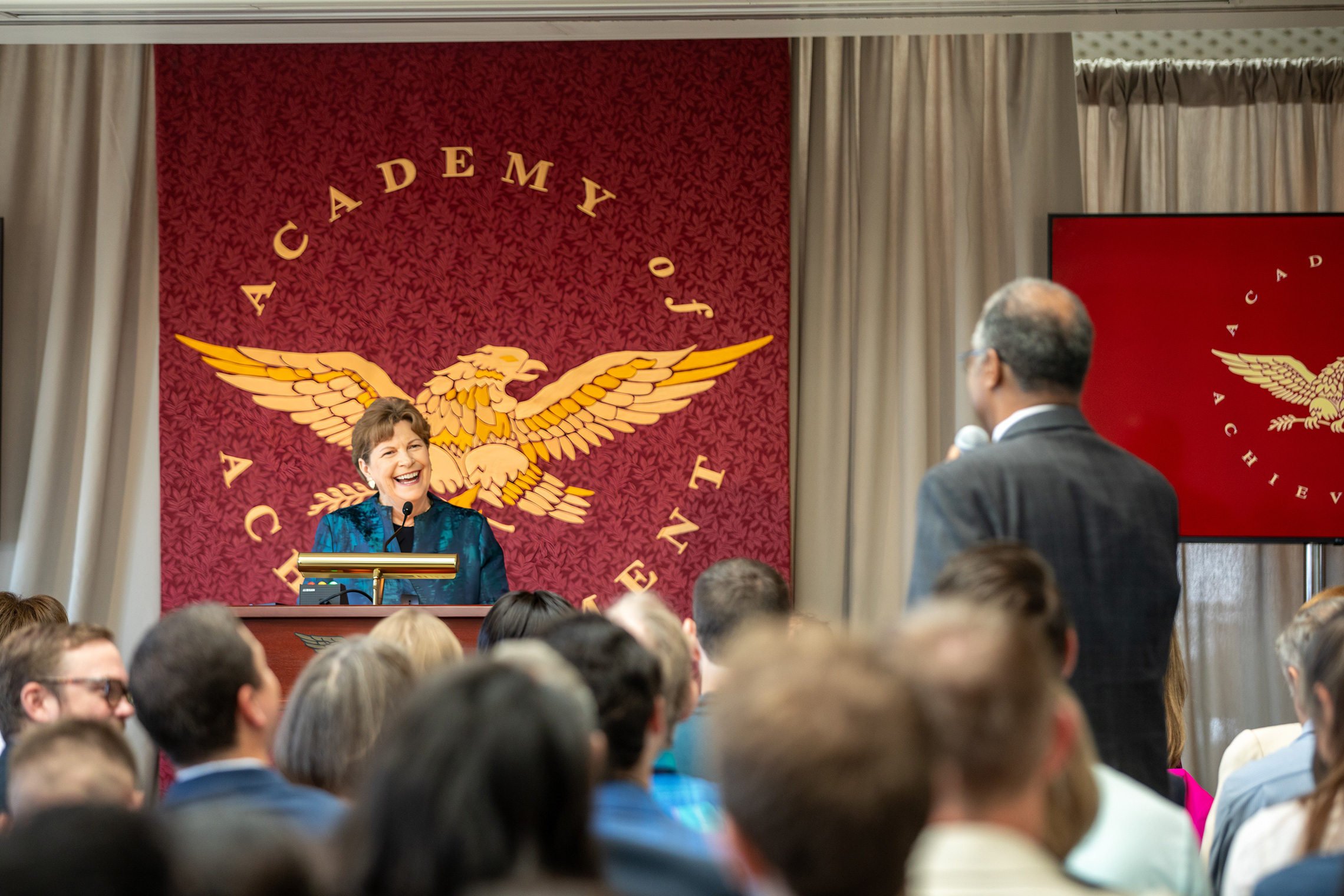
Senator Jeanne Shaheen of New Hampshire spoke bluntly about a politics that can no longer decide anything. Both parties punish members who work across the aisle, she said, while the country faces problems no party or ideology can solve alone. The founders agreed on little — federal power, taxation or trade — but understood that without compromise their new country would not survive. Her advice to the advocates who fill her office: stop visiting only the people who already agree with you.
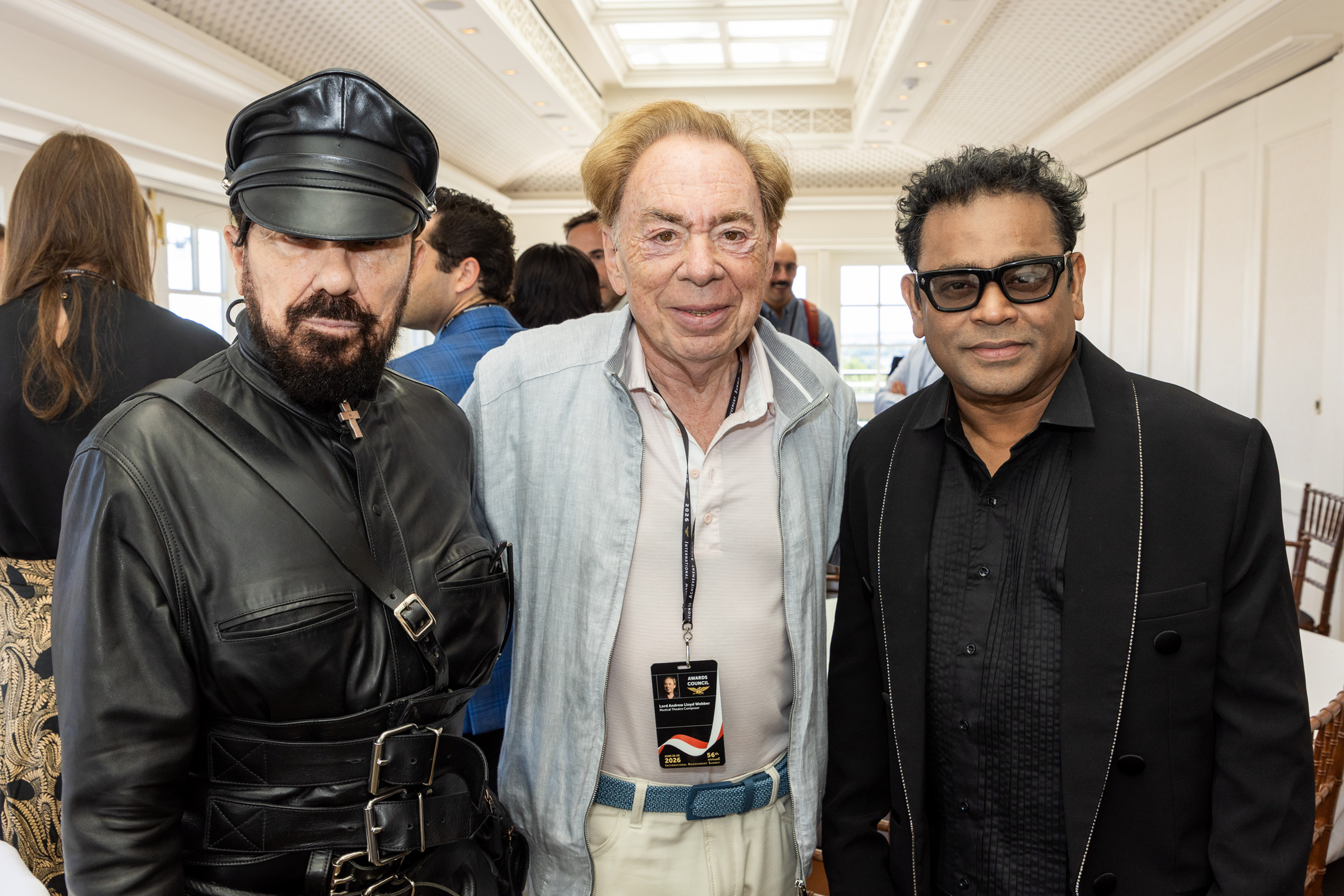
After lunch, composer A. R. Rahman opened with Rumi’s field beyond wrongdoing and rightdoing. This gathering, he said, was that field. He was nine when his father died, and his mother defied advice to place him in his father’s musical profession. After the Oscars for Slumdog Millionaire, Rahman was told it was all downhill; he chose to see the foot of a larger mountain and founded a conservatory now producing astonishing young musicians. His life has taught him one simple truth: giving often gives us more than receiving.
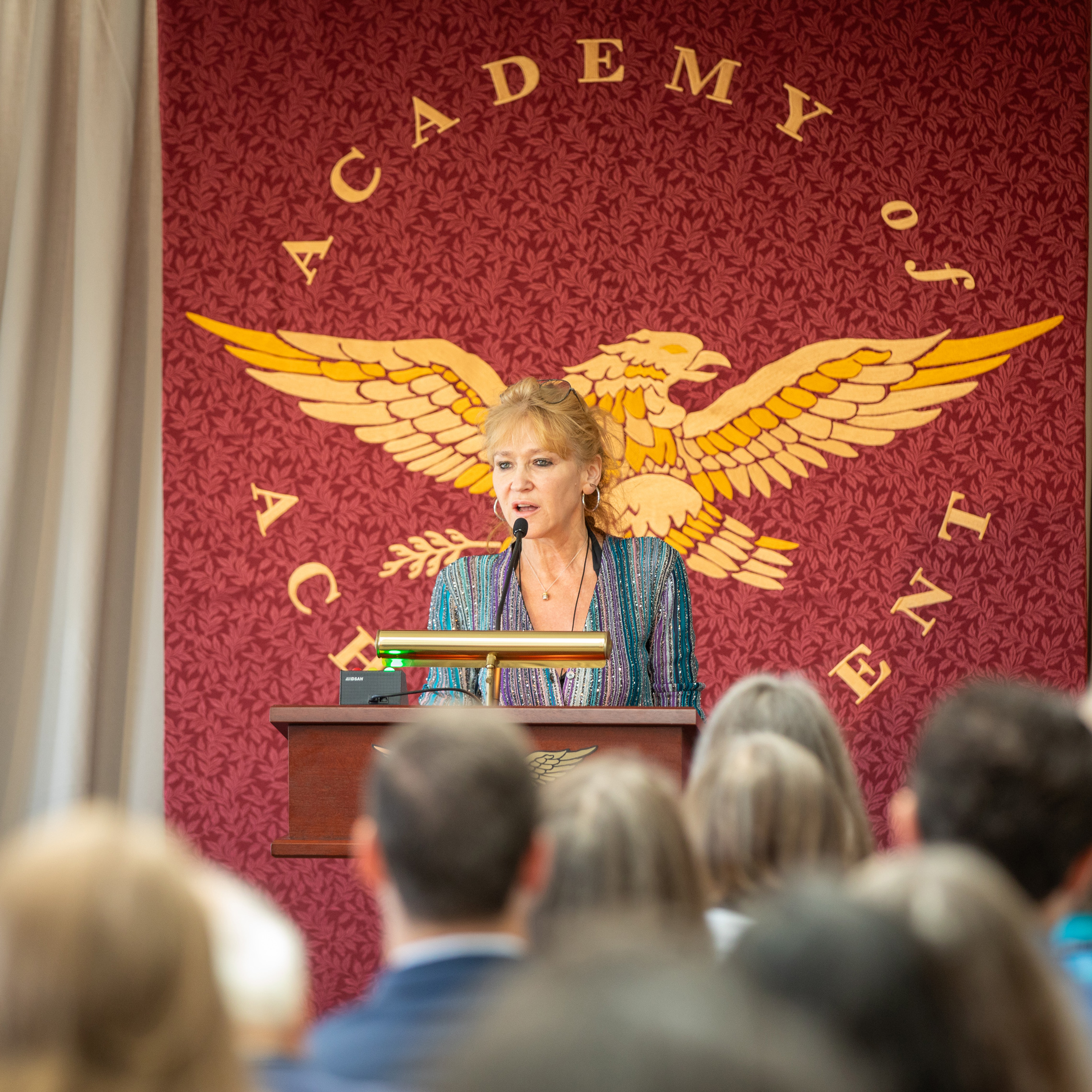
Sonia Friedman had heard one word recur through the previous evening — connection — and observed that theatre is about nothing else. Only when the world’s theatres closed in 2020 did she fully consider what they give to communities, economies and mental health. Take culture out of a society, she said, and there is no society. Raised with three siblings in a home where the children wrote and recorded stories instead of attending school, Friedman has returned throughout her career to home, safety and belonging. A producer, she said, fills the room with the best people, then steps back to become their first audience.
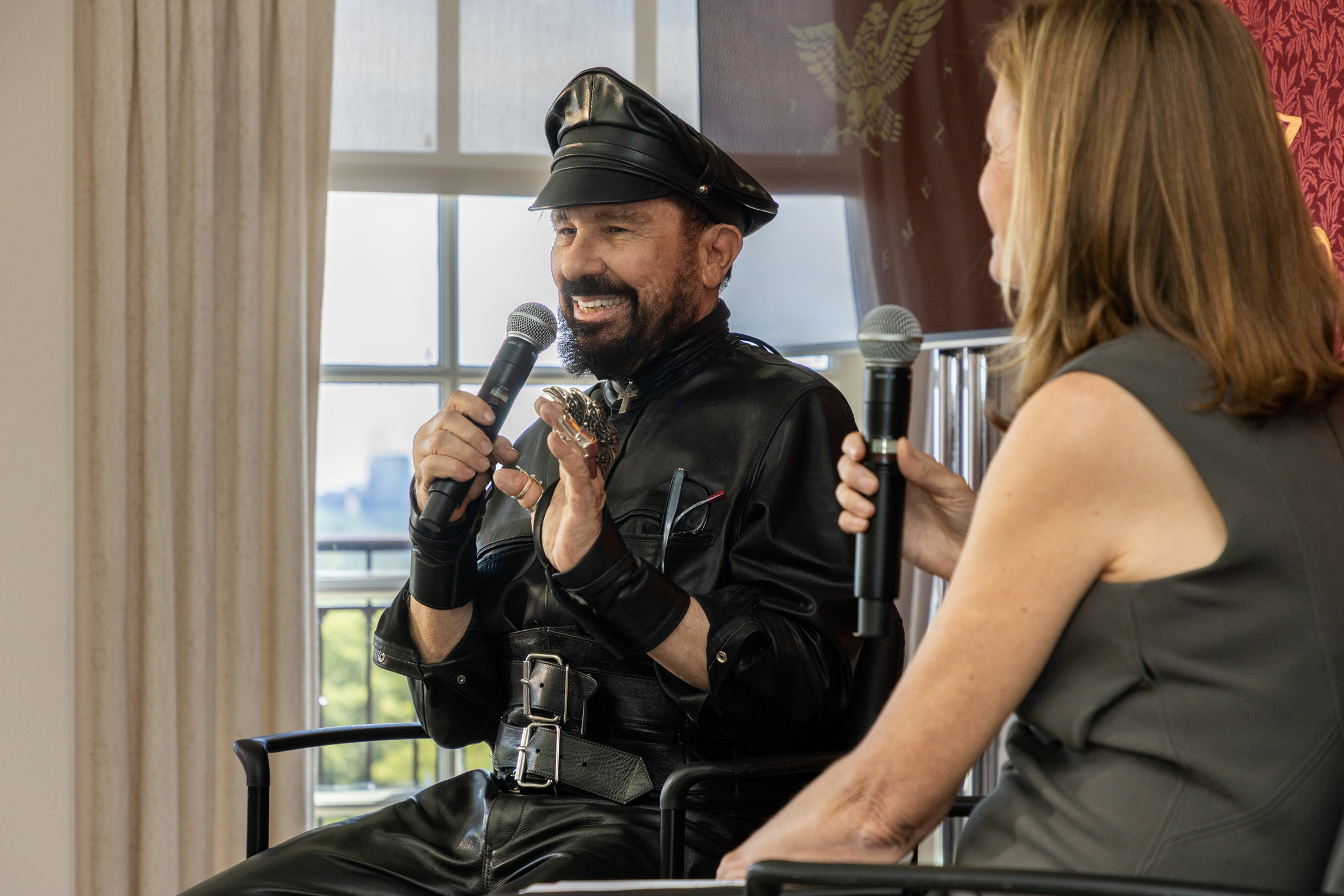
Architect Peter Marino appeared in conversation with Pulitzer Prize-winning journalist Mary Jordan. He grew up in Queens playing piano and drawing, and in 1966 won a mayoral gold medal for a cracked martini glass glued to canvas. To avoid repeating himself, he follows the French idea of l’inattendu — the unexpected — as the artist’s obligation. He spoke candidly of major projects lost to financial collapse, political change and renewed bombing. Asked how he balances creative vision with commercial pressure, Marino said he welcomes the pressure: give him eleven months and a budget. Boundaries help artists.
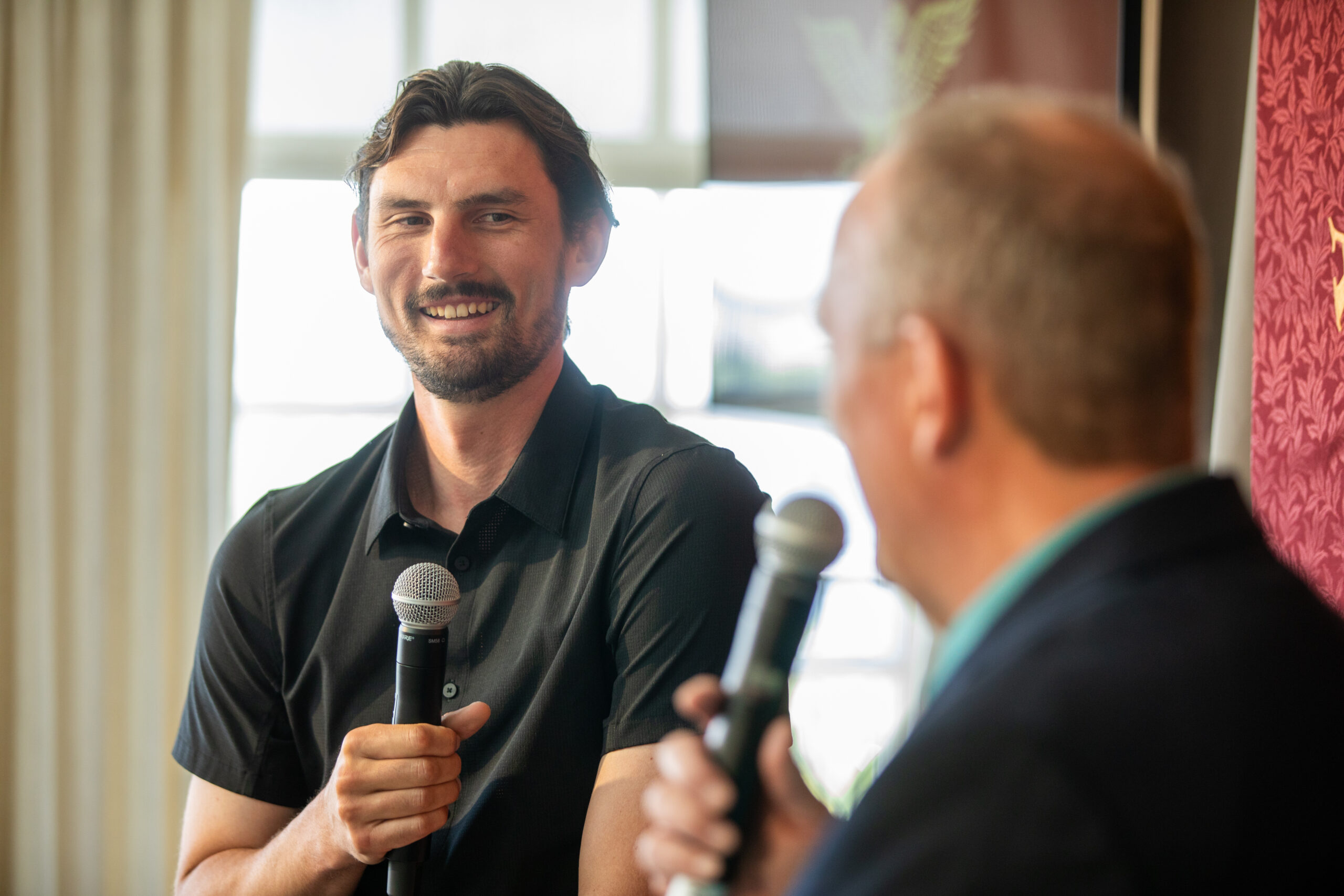
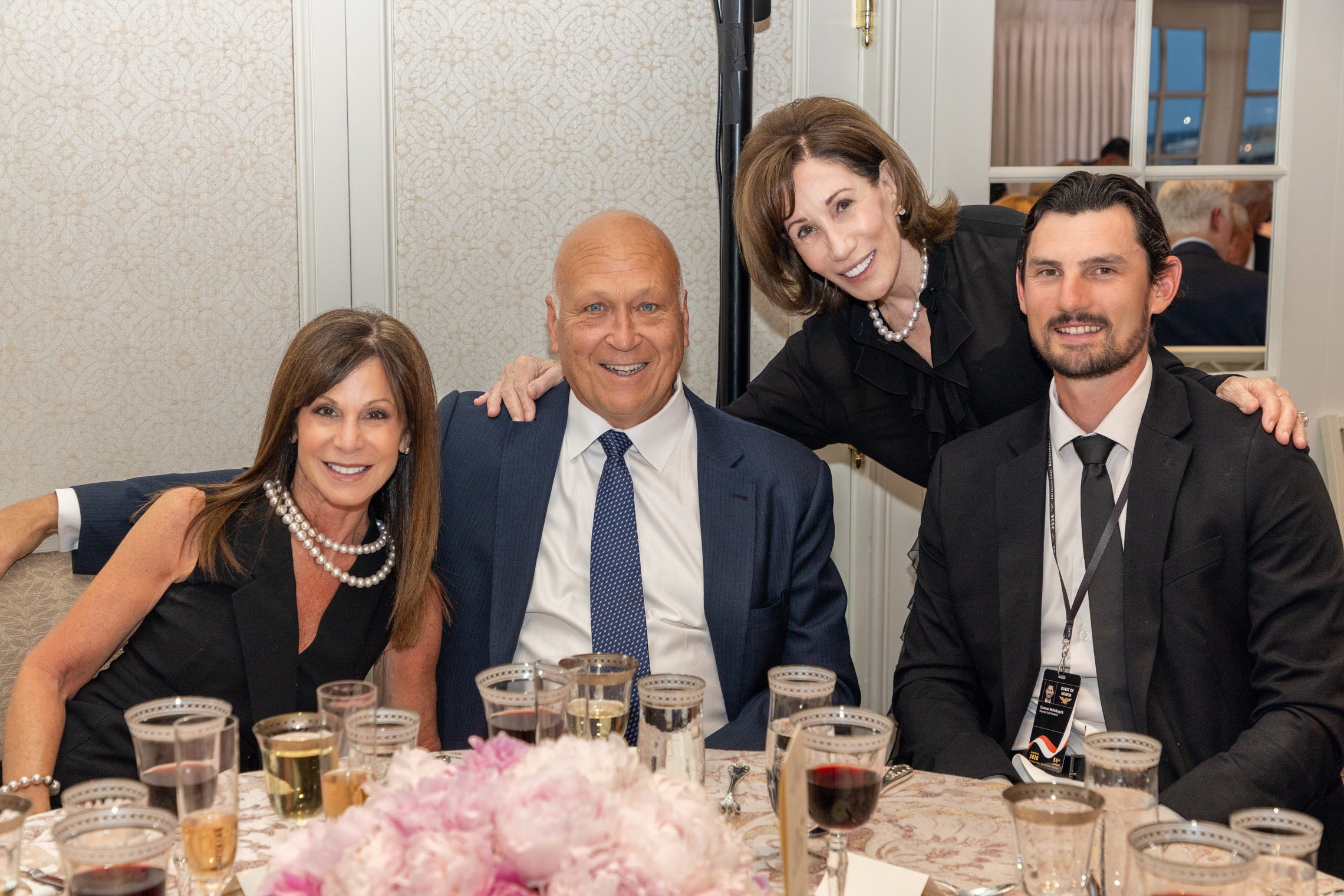
Connor Hellebuyck joined Pulitzer Prize-winning journalist Kevin Sullivan, who asked who chooses a profession in which very large men fire half a pound of frozen rubber at one’s head at 100 miles an hour. A skater can erase a mistake by scoring, Hellebuyck said; a goaltender’s mistake reaches the scoreboard and eighteen thousand people cheer. Sullivan returned to the gold medal game in Milan, where the United States defeated Canada 2-1 in overtime for its first Olympic hockey gold since 1980. Hellebuyck remembers less of the game than the homecoming, when everyone wanted to say where they had been standing when the United States won.
Lee Berger, Class of 2012, arrived with news — a coincidence of timing scientists rarely enjoy. Since 2013, more than two hundred colleagues have explored South Africa’s Rising Star cave system, reaching chambers through chutes seven and a half inches wide. The team argued that the small-brained Homo naledi buried their dead, placed tool-shaped stones with children and carved symbols above the graves, claims many colleagues considered impossible. Four and a half hours before Berger took the podium, the journal Cell published a result he had doubted and repeatedly tested: every individual recovered from those burial chambers is female.
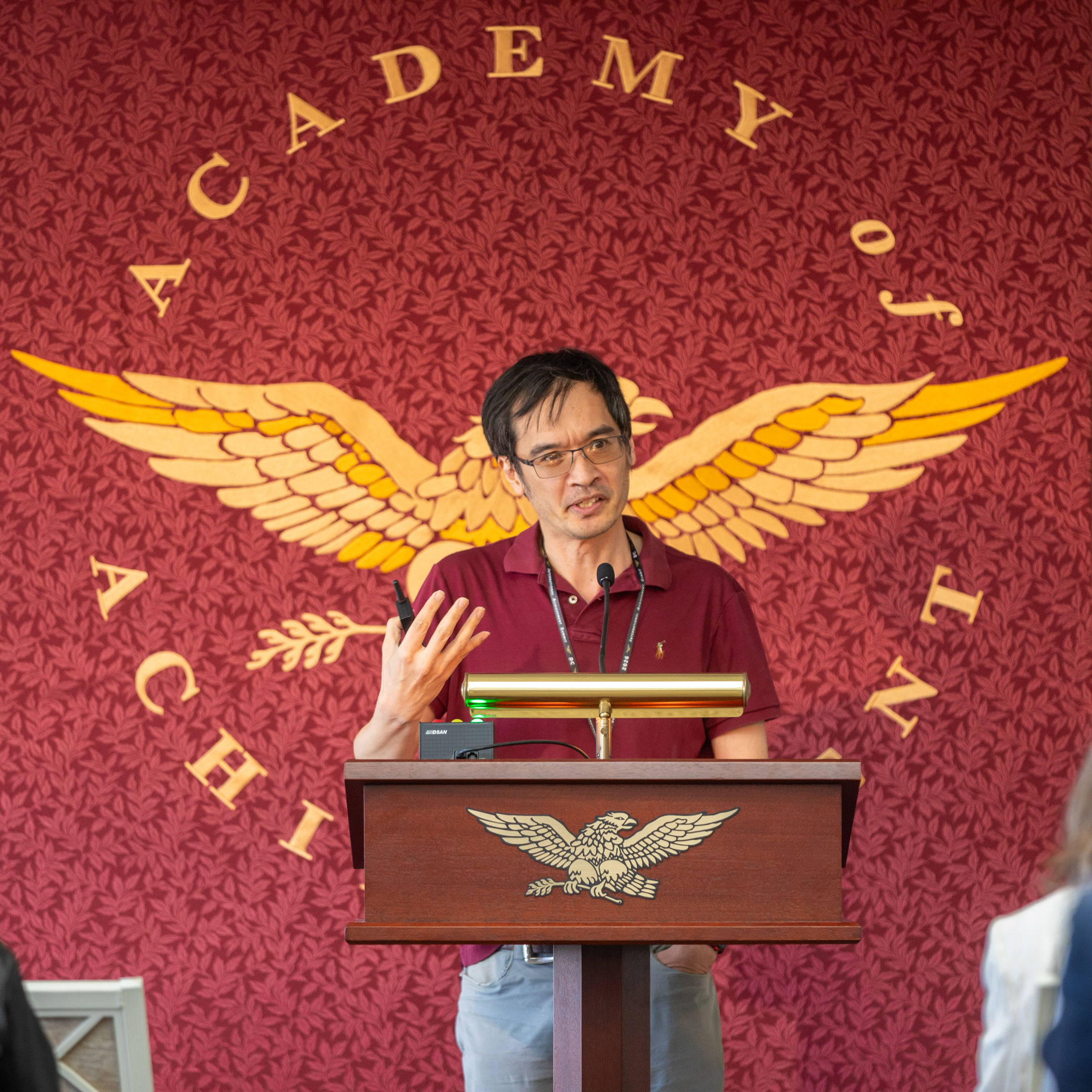
Dr. Terence Tao opened with a line he had long believed came from Lenin: there are centuries in which nothing happens, and there are years in which centuries pass. It is not Lenin’s, he noted, but it suits the moment. Technology converts scarcity into abundance, and every conversion creates new trouble: the Green Revolution ended famine and brought diseases of plenty; the internet ended information scarcity and brought overload. Artificial intelligence is now ending cognitive scarcity, with an even more uneven ledger. Having achieved many conventional mathematical goals, Tao has ventured onto a presidential advisory council and into public defense of university research. The work is stressful, unexpected and deeply meaningful. Go beyond your comfort zone, he told the delegates, and try new things.
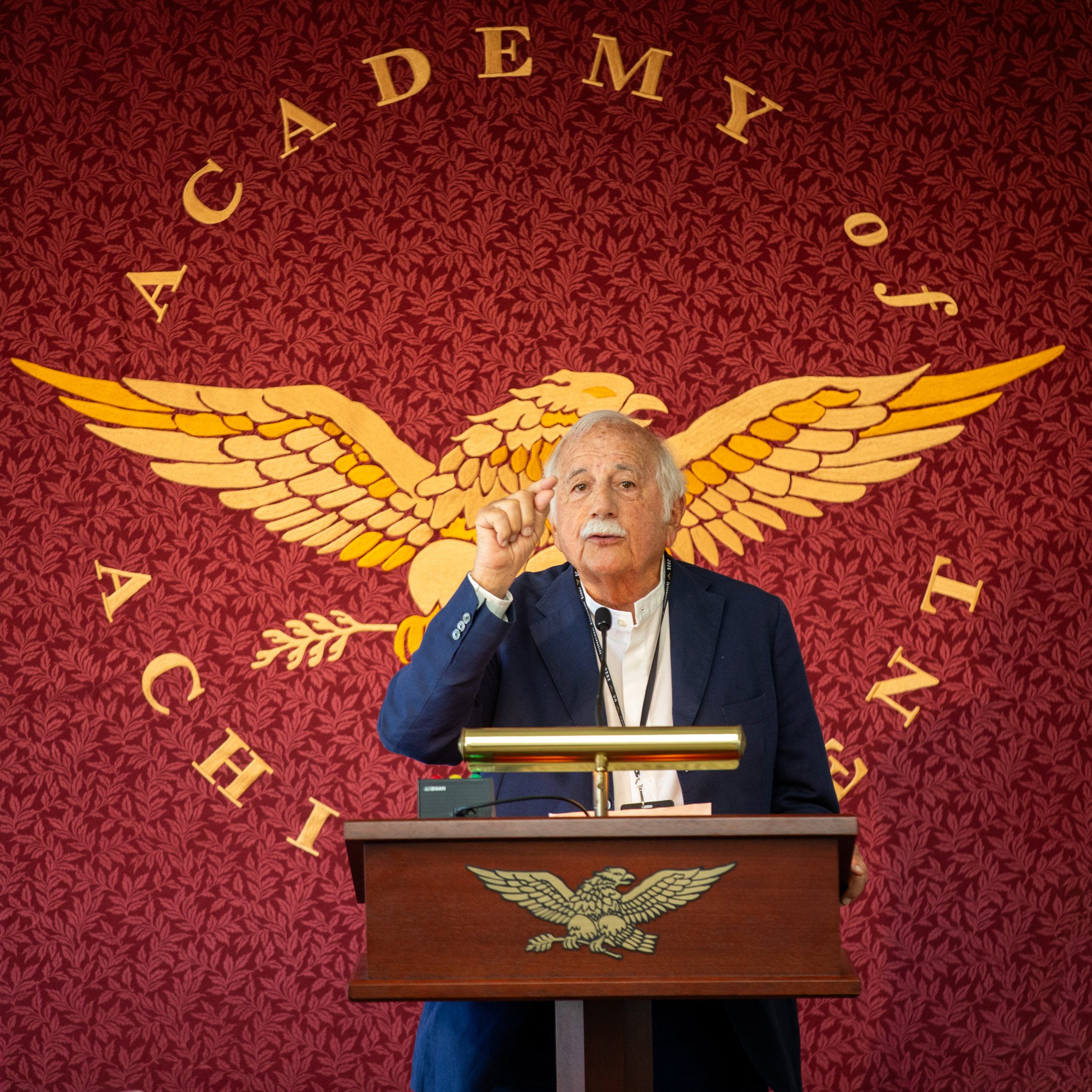
The Summit’s last speaker was Moshe Safdie, who confessed that a day among scientists, humanists and artists had left him inspired and intimidated. Arriving in Montreal from Israel at fifteen, he found the winters and the buildings equally somber. As a student, he toured public housing with small windows, no balconies and prison-like corridors, then wrote that apartments should offer the garden and street life of a house. Habitat 67 was the result; he was not yet thirty. At Yad Vashem, Safdie cut through the mountain rather than building upon it, carrying visitors through darkness toward light and forest. That work later led him to India, where he studied Sikhism and designed a fortress rising from the sand hills. At eighty-eight, he warned that unless nature is integrated into the city on a massive scale, life in the megacity will not be a life people want.
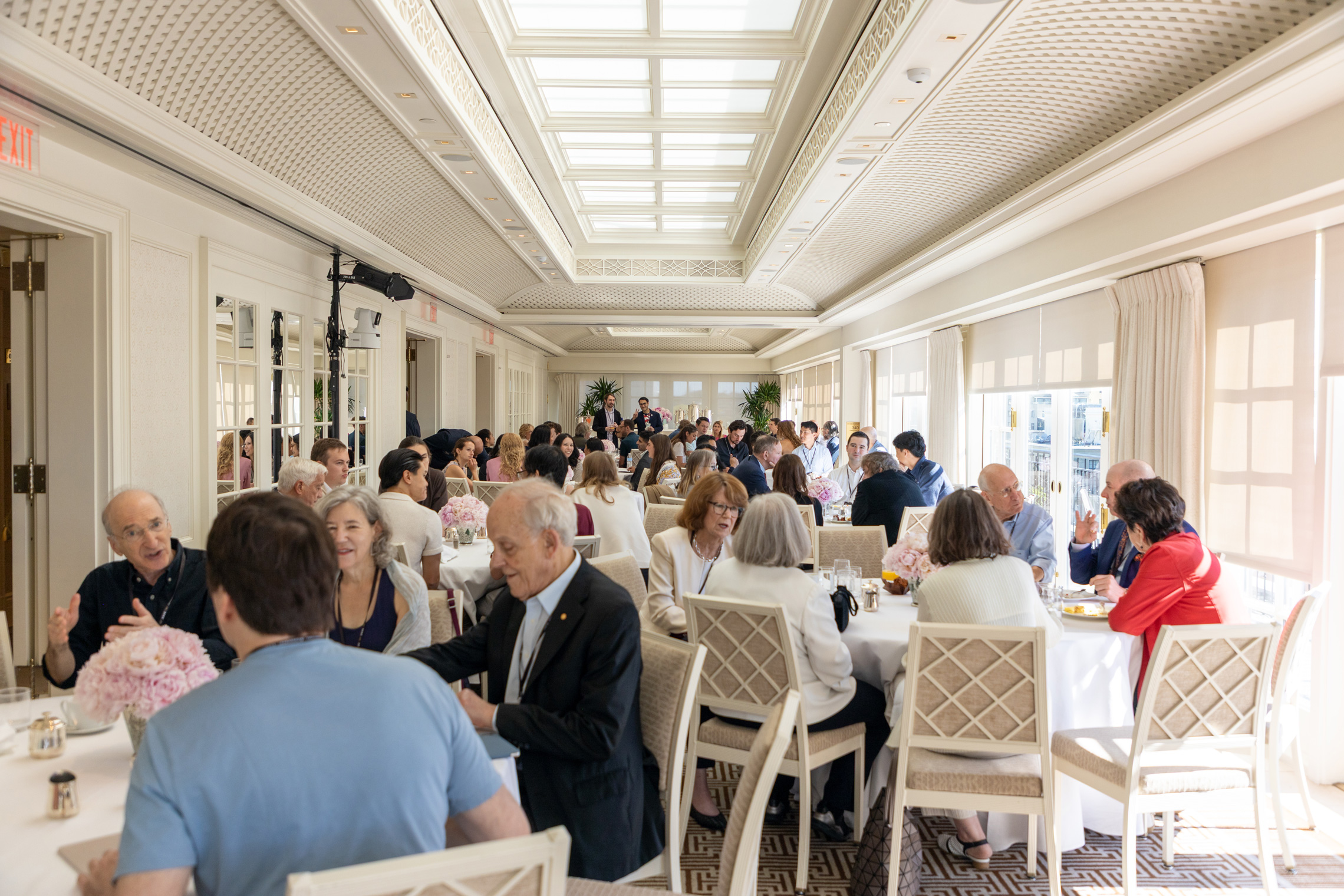
Between the morning and afternoon symposium sessions, guests gathered at the Hay-Adams Hotel for the Summit luncheon, featuring the presentation of the Golden Plate Award and gold medal to two new members of the Academy’s Class of 2026.
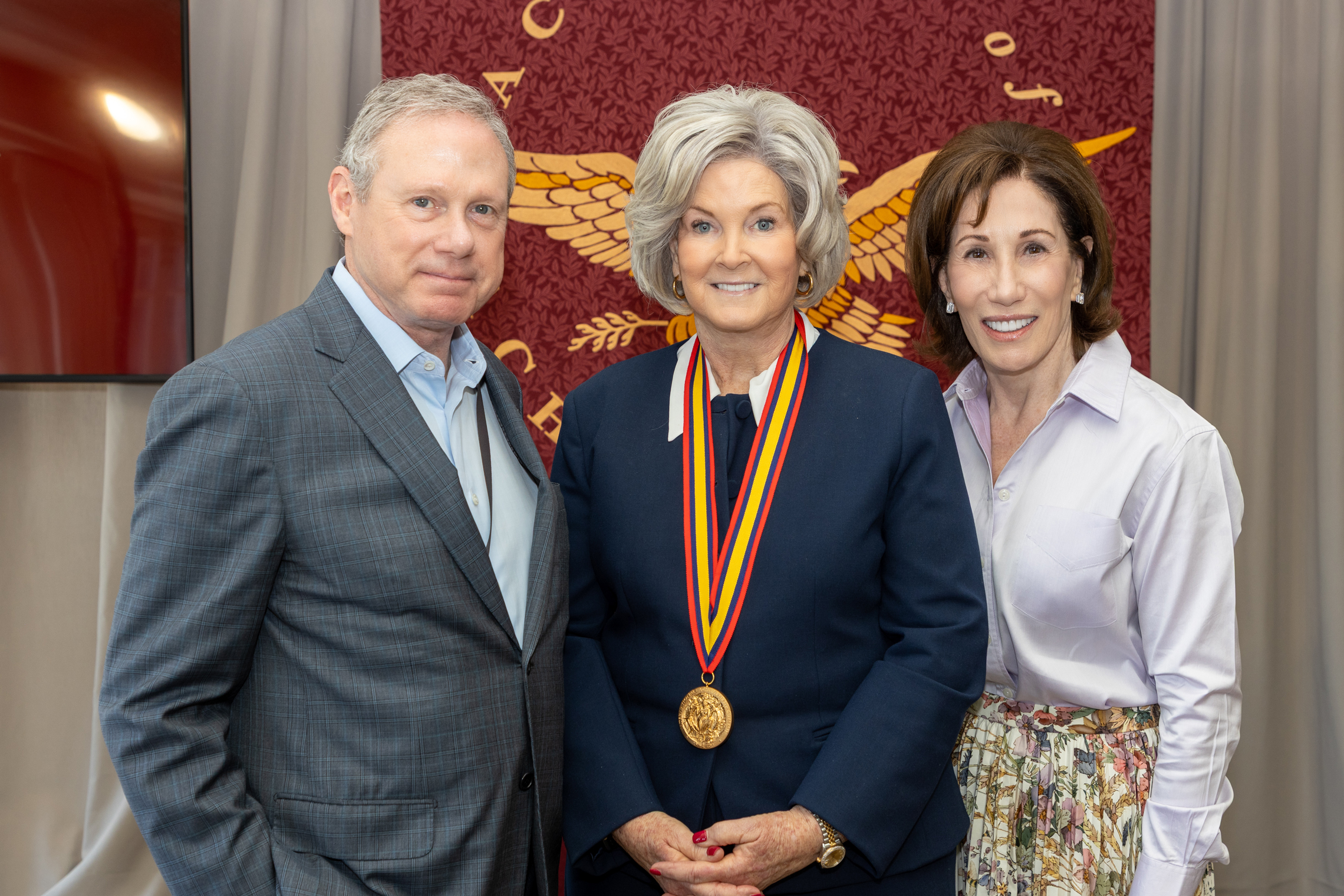
The first presentation was to The Honorable Susie Wiles, the 32nd and current White House Chief of Staff, the first woman to hold that influential position. A former Girl Scout, the Academy noted, she learned early the fundamentals of politics: know the territory, knock on doors, track the numbers and make the pitch before the dog runs out. Political consultant, campaign manager and now Chief of Staff, she is among America’s most effective and tireless political strategists.
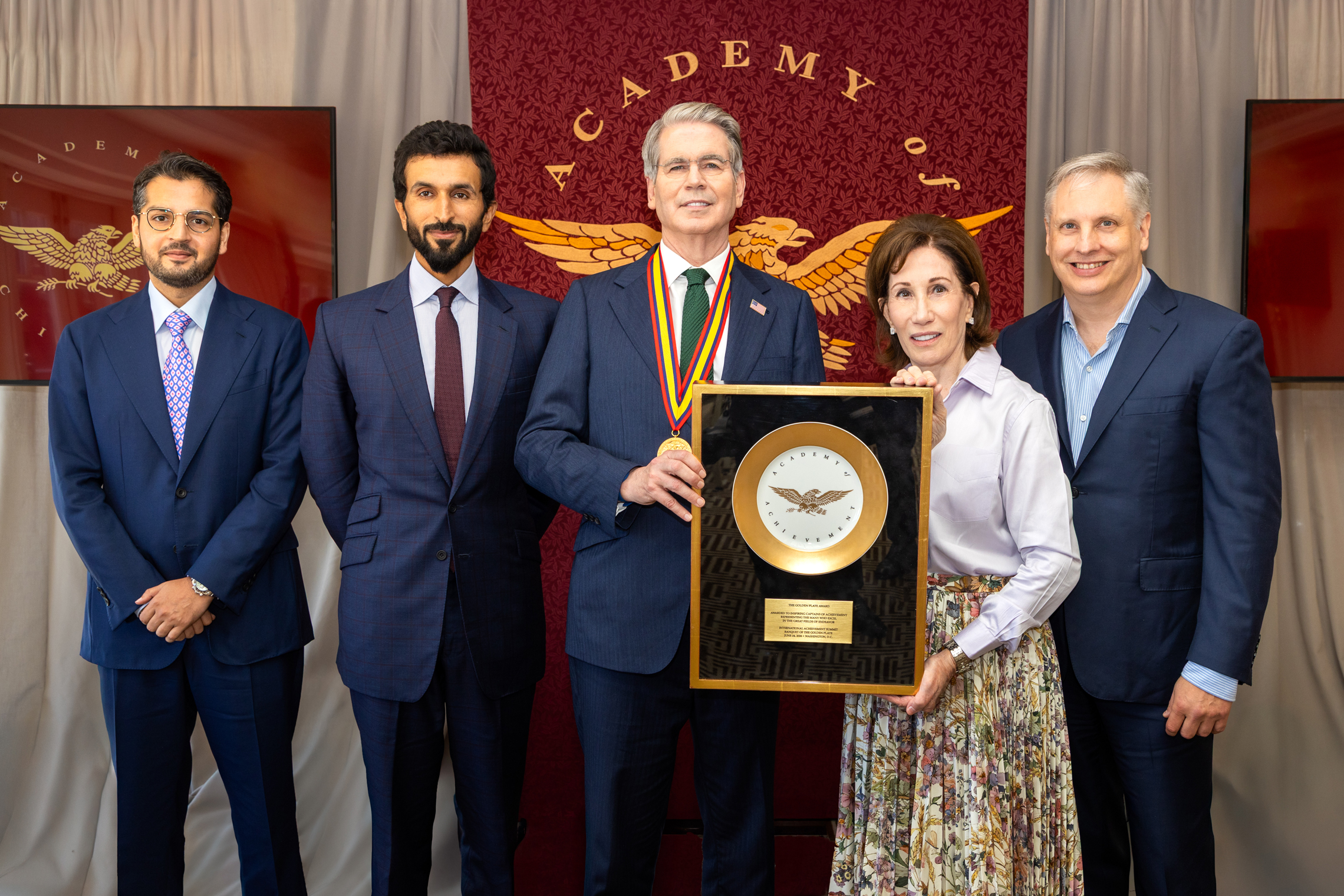
The second award was presented to The Honorable Scott Bessent, the United States Secretary of the Treasury. Secretary Bessent’s remarks at the Summit luncheon, stated, in part: “My life has been the “only in America” story that I am determined to preserve for this and future generations. Yet, I mention that story not because it is unique, but because it is familiar. Because it could be anyone’s Because ours is a country that has staked itself on the proposition that the circumstances of one’s upbringing are never the boundaries of one’s life.
That is why I find such hope in this Academy as you connect extraordinary young people with individuals who have excelled in every field of human endeavor. In convening men and women of accomplishment with young scholars of promise, the Academy perpetuates possibility. It transforms achievement from something to be admired into something to be emulated. More than commemorate the American Dream, the Academy works to extend its reach.”
The 56th International Achievement Summit concluded with the black-tie Banquet of the Golden Plate dinner and awards ceremony at the historic Andrew W. Mellon Auditorium, the site of the 2003 and 2007 American Academy of Achievement award ceremonies. As the Washington Chamber Orchestra sounded Aaron Copland’s Fanfare for the Common Man, the Class of 2026 was called forward.
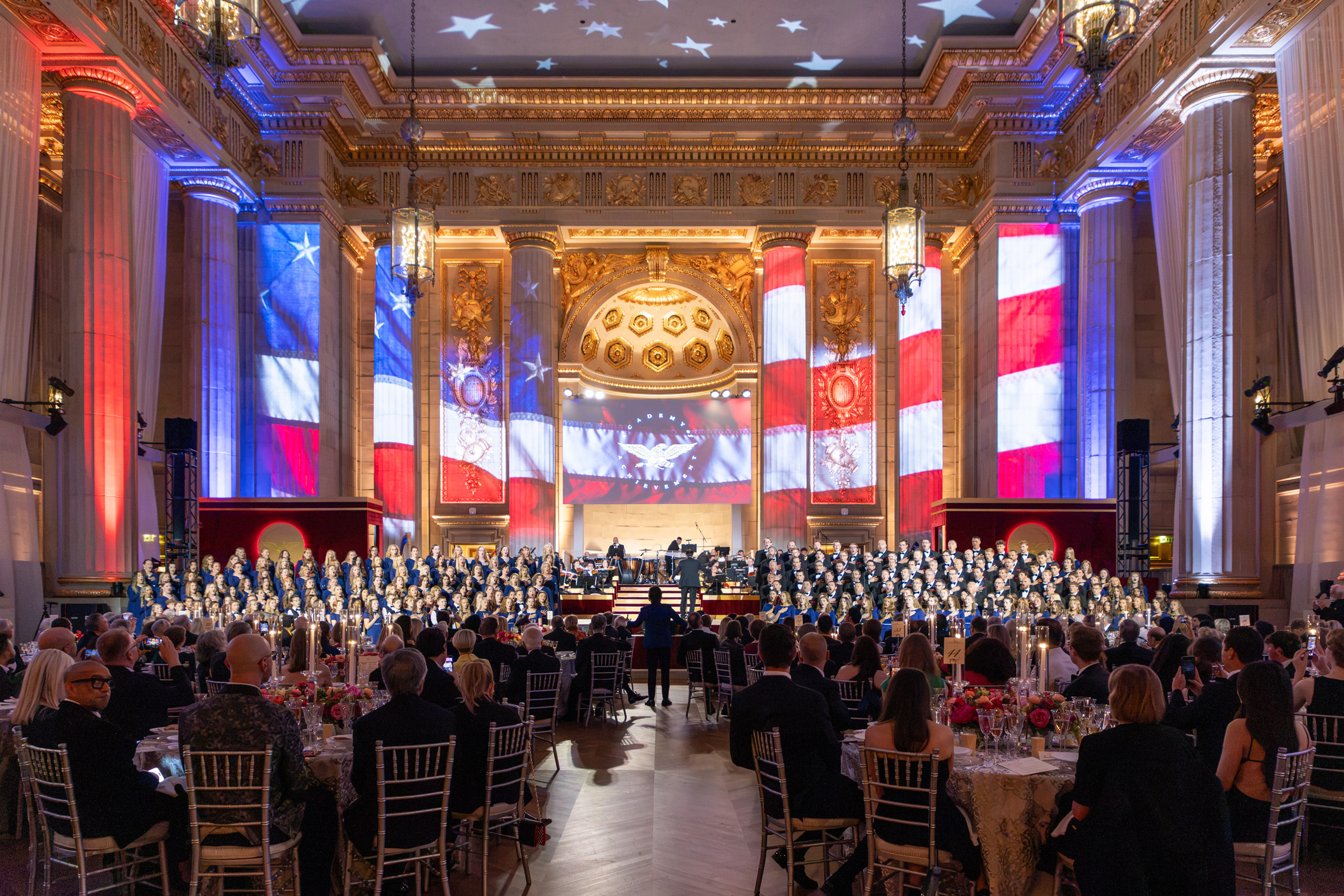
The Academy bestowed its Golden Plate Award upon 25 preeminent achievers as members of the Class of 2026. The dinner menu was prepared by celebrated chef Patrick O’Connell, proprietor of the Inn at Little Washington.
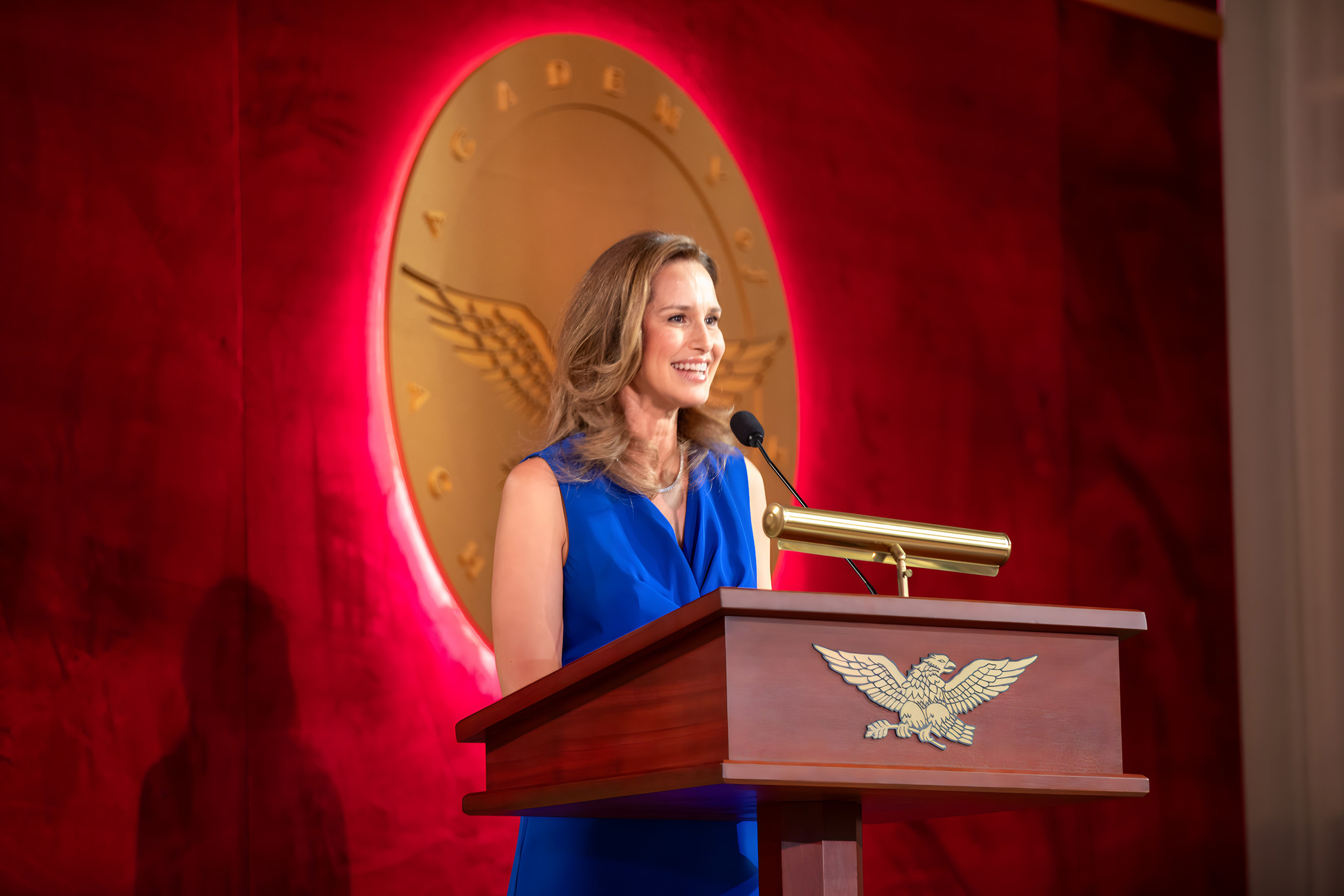
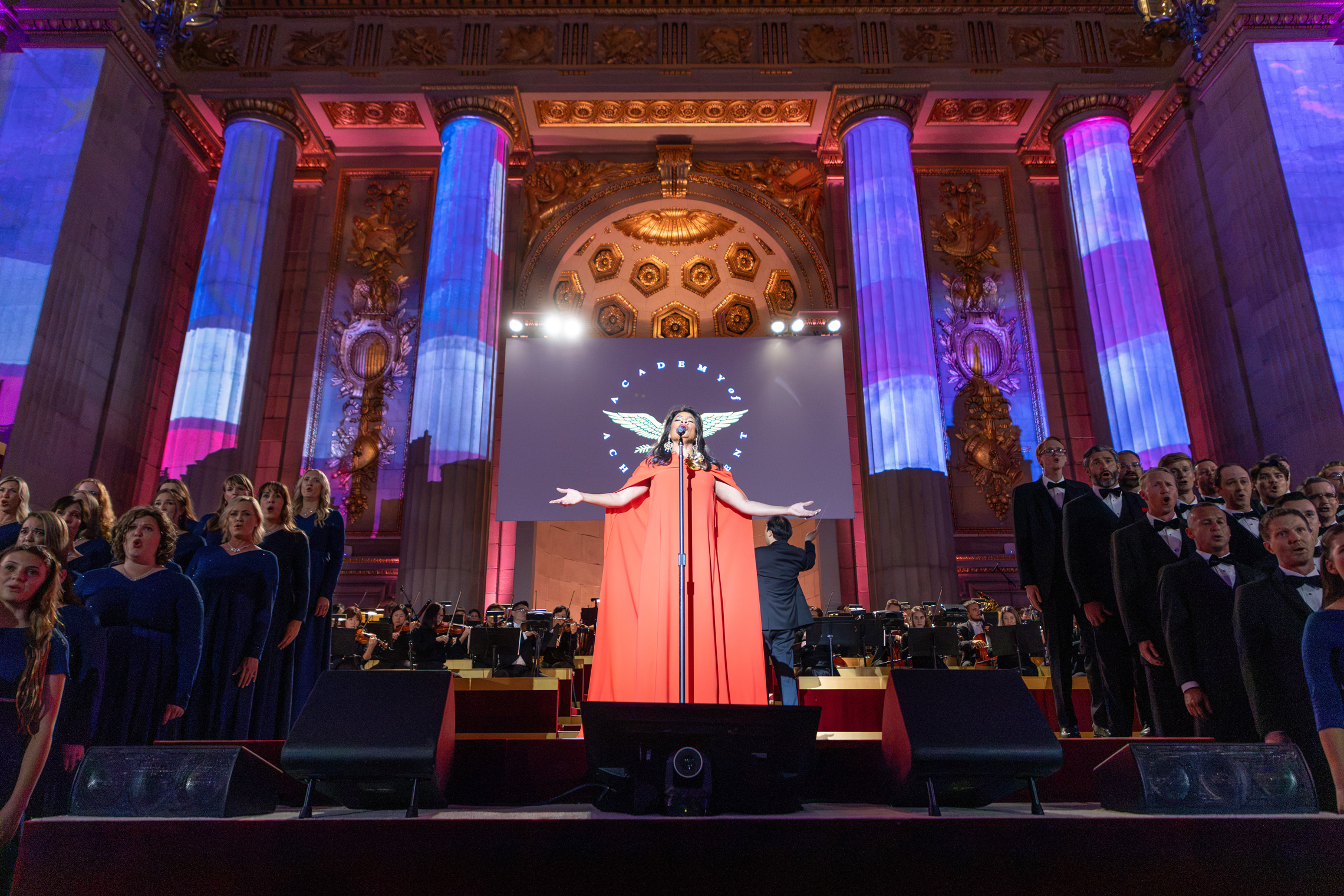
The awards program featured performances by Academy member, violinist, and conductor Joshua Bell; mezzo-soprano and cultural ambassador Denyce Graves; and Grammy Lifetime Achievement Award recipient, singer, and songwriter Carole King. They were accompanied during the Banquet program by the Washington Chamber Orchestra and the Millennium Choir.
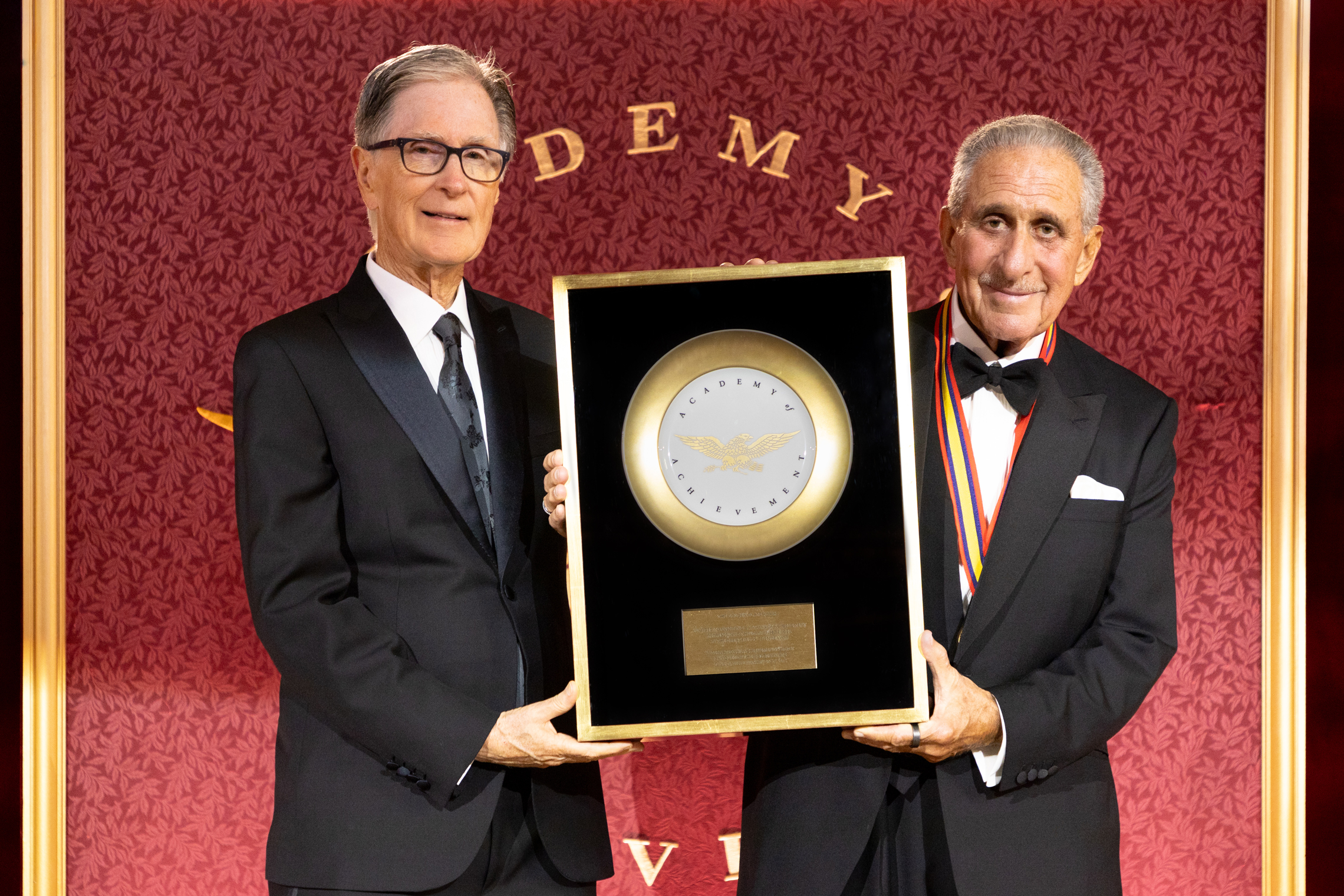
Academy member John W. Henry made the first presentation to Arthur M. Blank. No homeowner, the Academy observed, has ever declared that nothing remains to tighten, sand, patch, paint, replace or unclog. Blank recognized a business model and co-founded Home Depot. His attention later turned from do-it-yourself to what he calls do-good-yourself — as entrepreneur, sportsman, philanthropist and owner of the Atlanta Falcons.
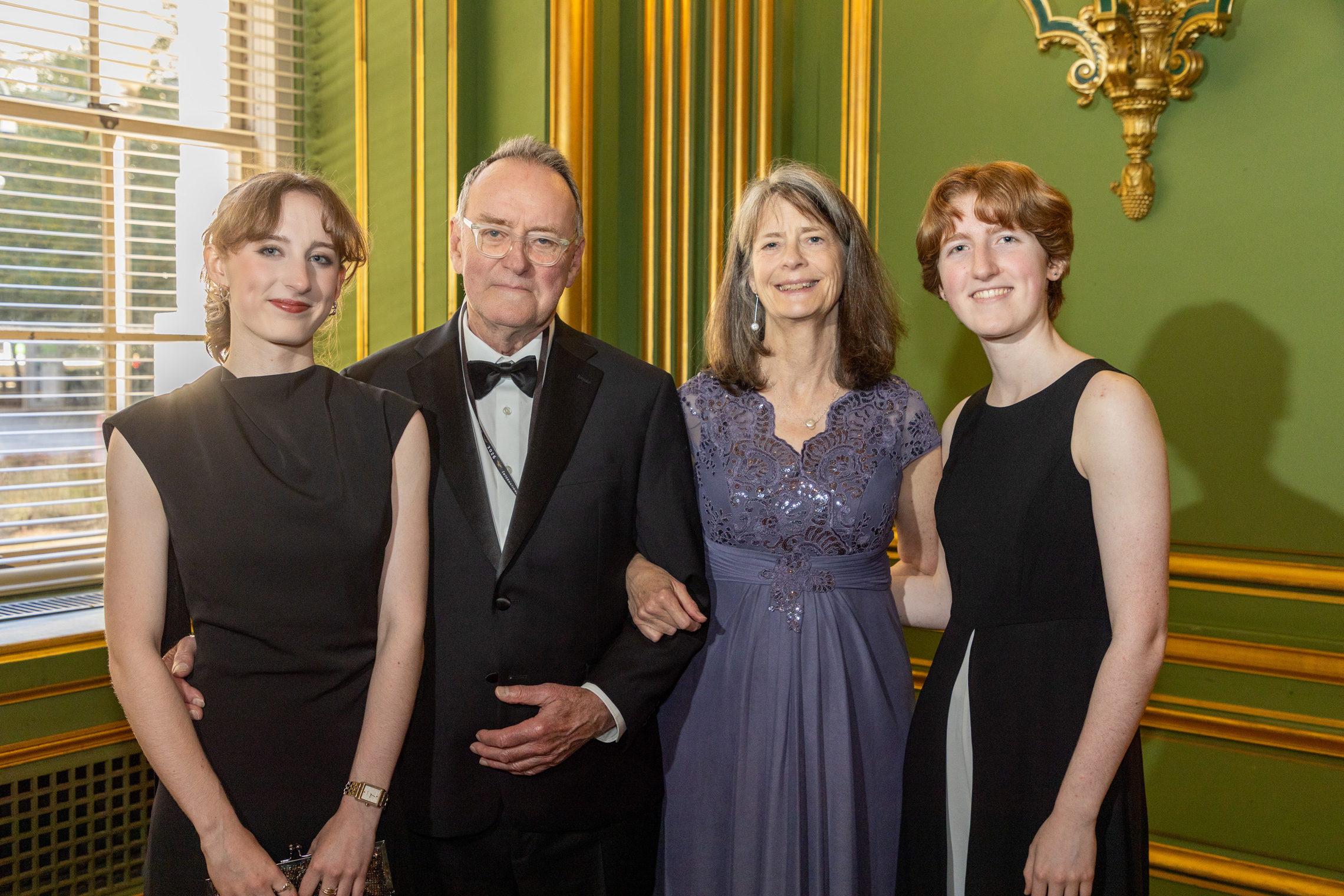
Dr. Frances Arnold and Dr. Lotte Knudsen presented the award to Dr. Mary Brunkow, a microbiologist who finds her greatest creativity in baking. Genes resemble baking instructions, the Academy noted: one typo in Grandma’s recipe can produce a strange result. Brunkow found the crucial line that keeps the immune system from sabotaging its own soufflé — the recipient of the 2025 Nobel Prize in Medicine.
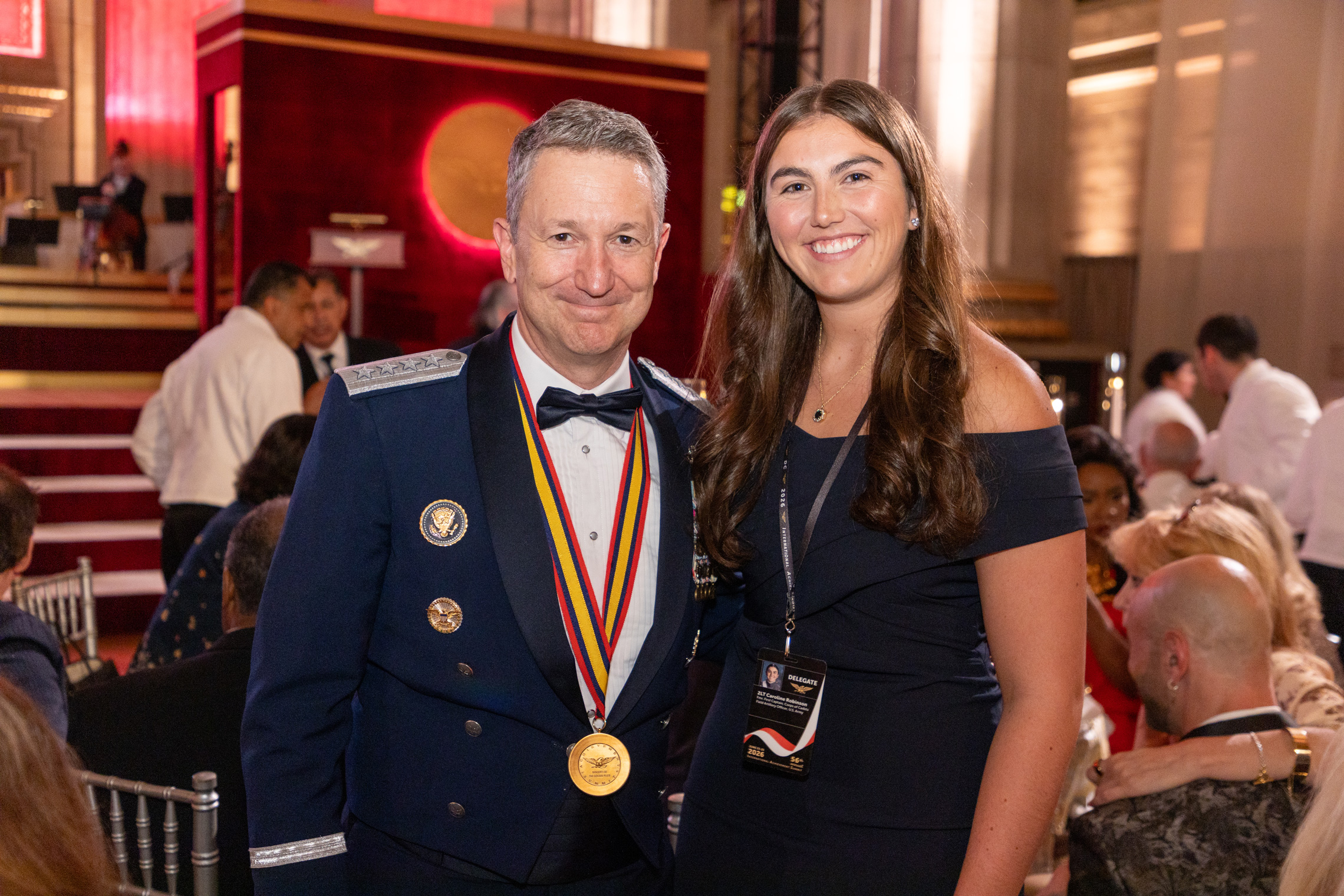
Dr. Benjamin Carson presented the award to General Dan “Razin” Caine, USAF, who first attended the Academy as a delegate in the Summit Class of 2006. The son of an Air Force fighter pilot and an F-16 pilot himself, he has logged more than 2,800 flight hours, including more than 150 in combat over Iraq. He now surveys the whole of the American military as Chairman of the Joint Chiefs of Staff.
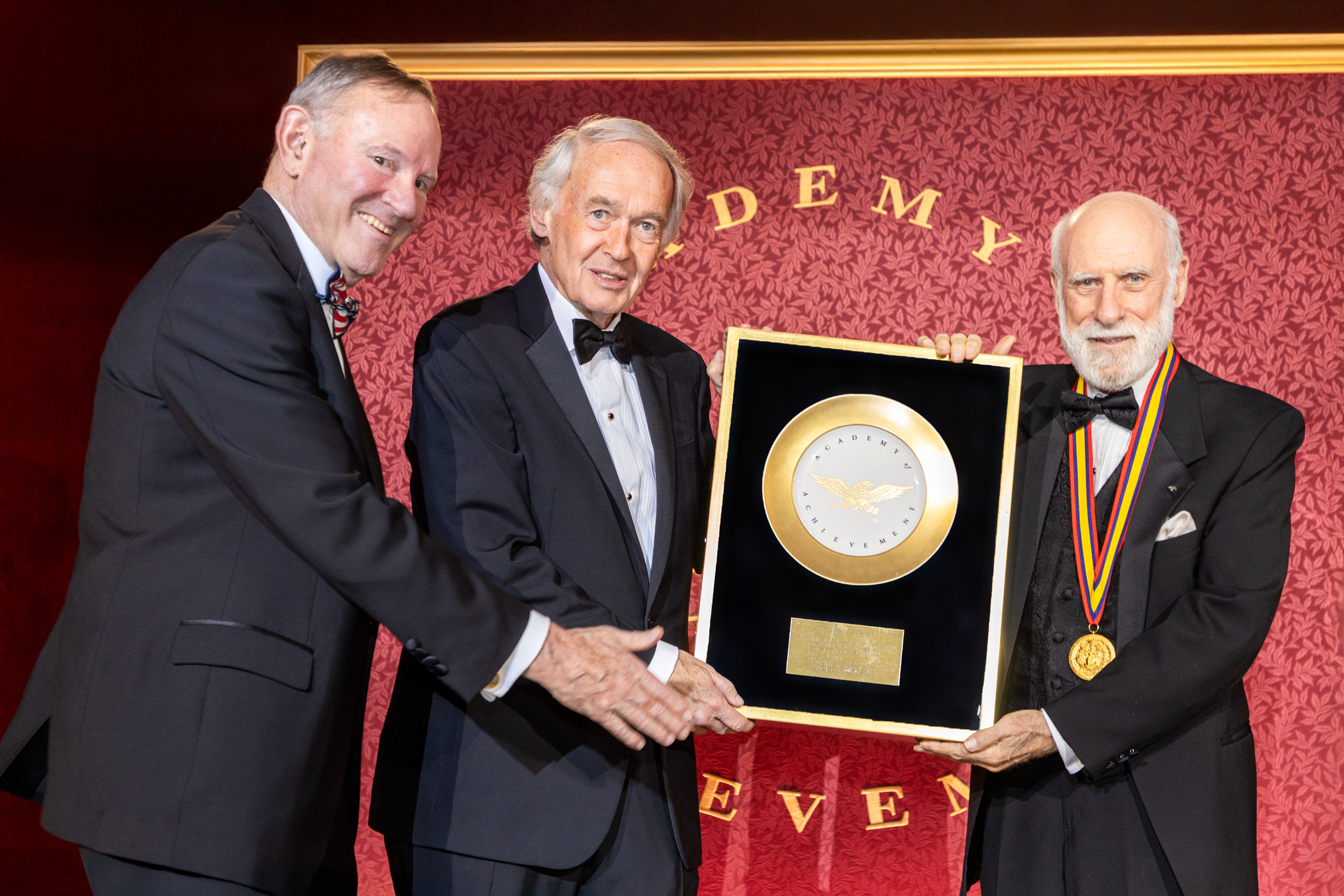
Senator Edward Markey and Donald Graham presented the award to Dr. Vinton G. Cerf, the Father of the Internet, whose infrastructure transformed how humanity communicates, learns and works. Even geniuses cannot control what their children become, the Academy observed, making him also, in a sense, the grandfather of spam and the pop-up ad. Not content with revolutionizing life on Earth, he is now developing the Interplanetary Internet.
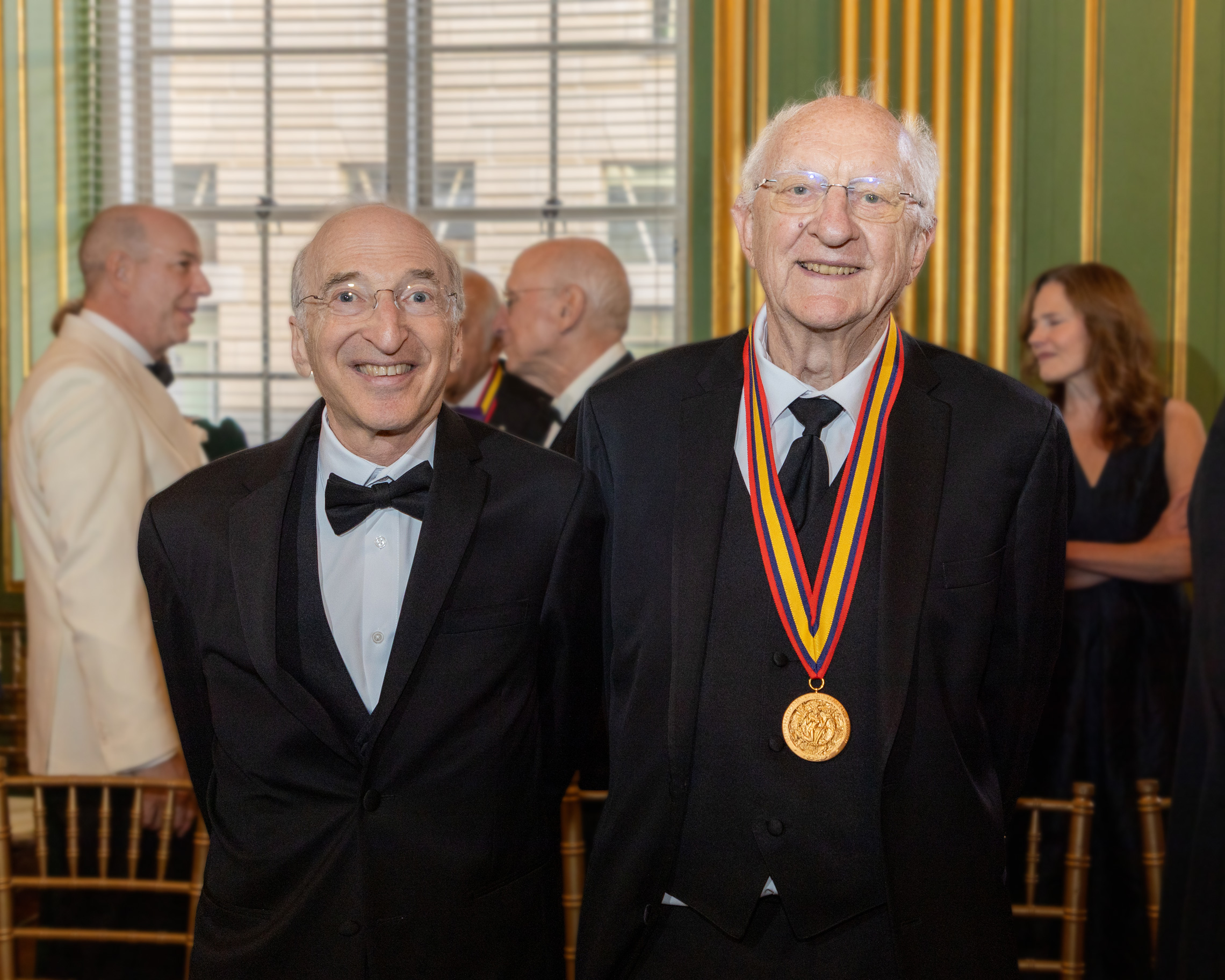
Dr. Saul Perlmutter presented the award to Professor John Clarke. The universe does not surrender its secrets easily, and a Nobel Prize means it has grudgingly admitted that you were right. Clarke demonstrated that the quantum world can be engineered into circuits, and his superconducting devices gave science instruments capable of hearing whispers at the edge of the measurable world — the recipient of the 2025 Nobel Prize in Physics.
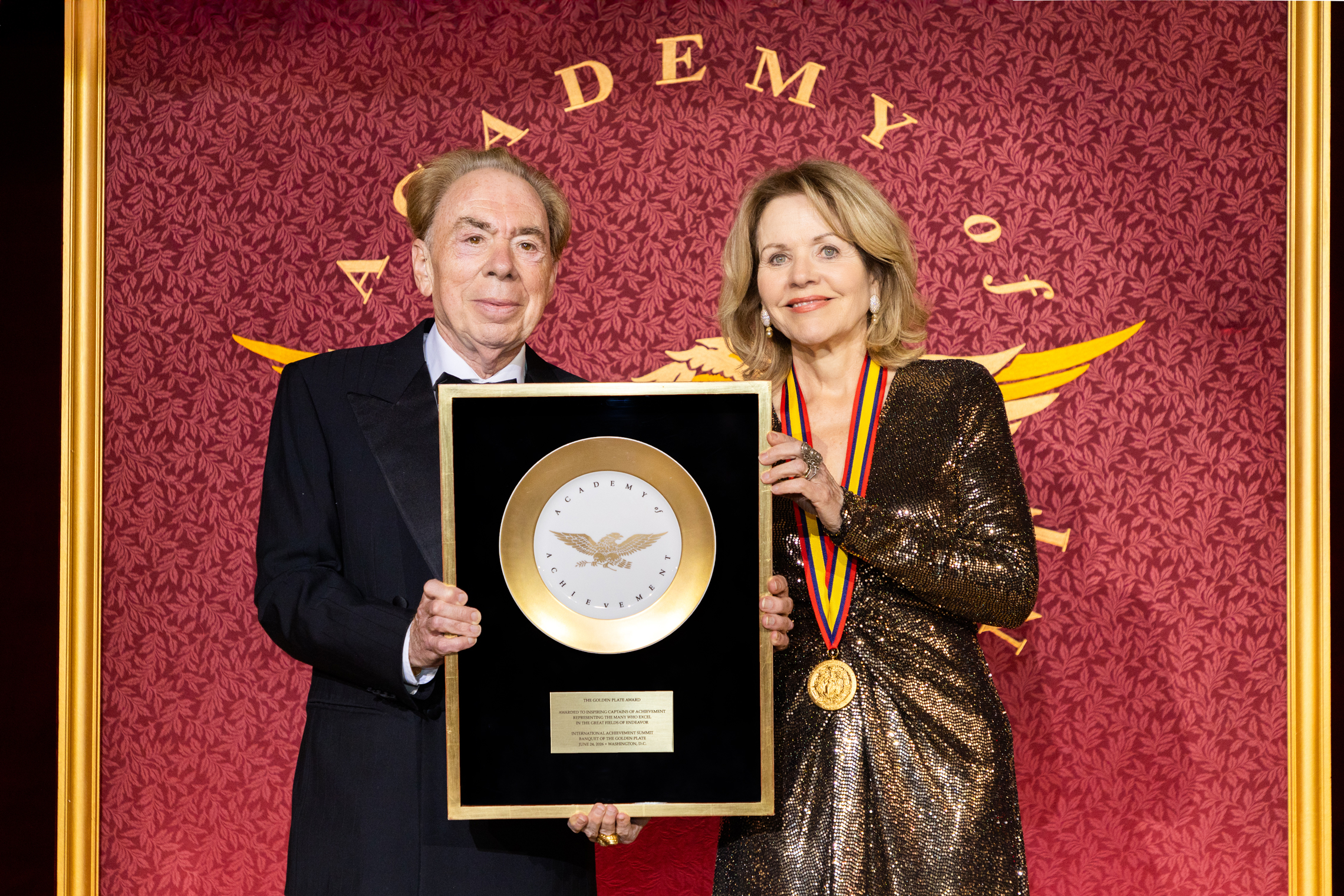
Lord Andrew Lloyd Webber presented the Golden Plate Award to Renée Fleming. The voice of this daughter of two music teachers first sounded in a small Pennsylvania town, then carried to the Beijing Olympics, the Super Bowl, the Brandenburg Gate, Buckingham Palace and the great concert halls of the world.
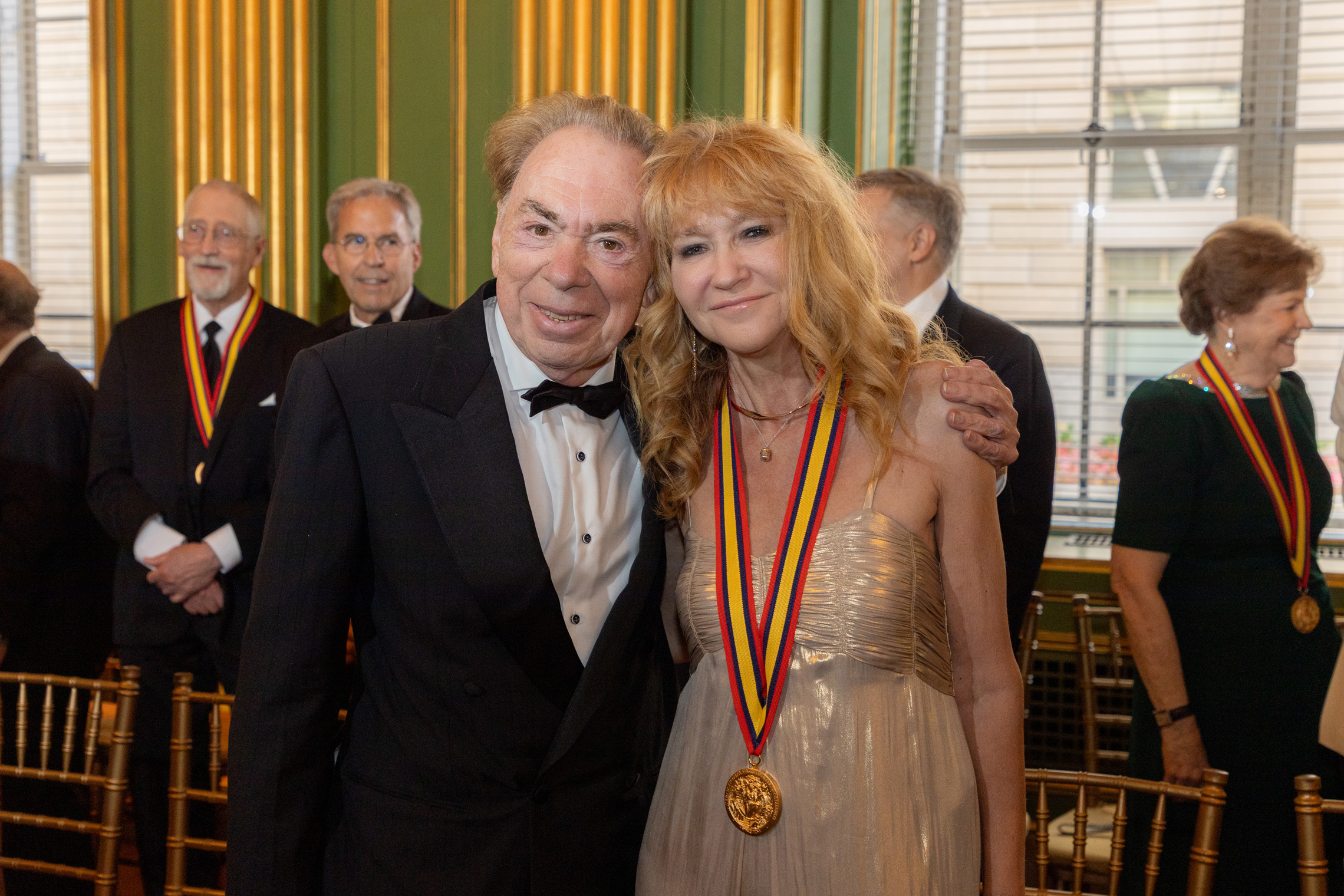
He next presented the award to Sonia Friedman CBE. The critic Alexander Woollcott once wrote that a play surviving overnight should be considered not a long run but a revival; theatrical producing is not easy. Friedman has brought hundreds of productions to Broadway and the West End and has been called the most powerful producer working in theatre.
He returned moments later to present the award to Ashley Gorley, whom the Songwriters Hall of Fame calls the most commercially successful songwriter of all time, with 83 number one hits and more than 400 recorded songs. His secret is making heartbreak sound better than it felt — finding human truth in three minutes, a bridge and a chorus.
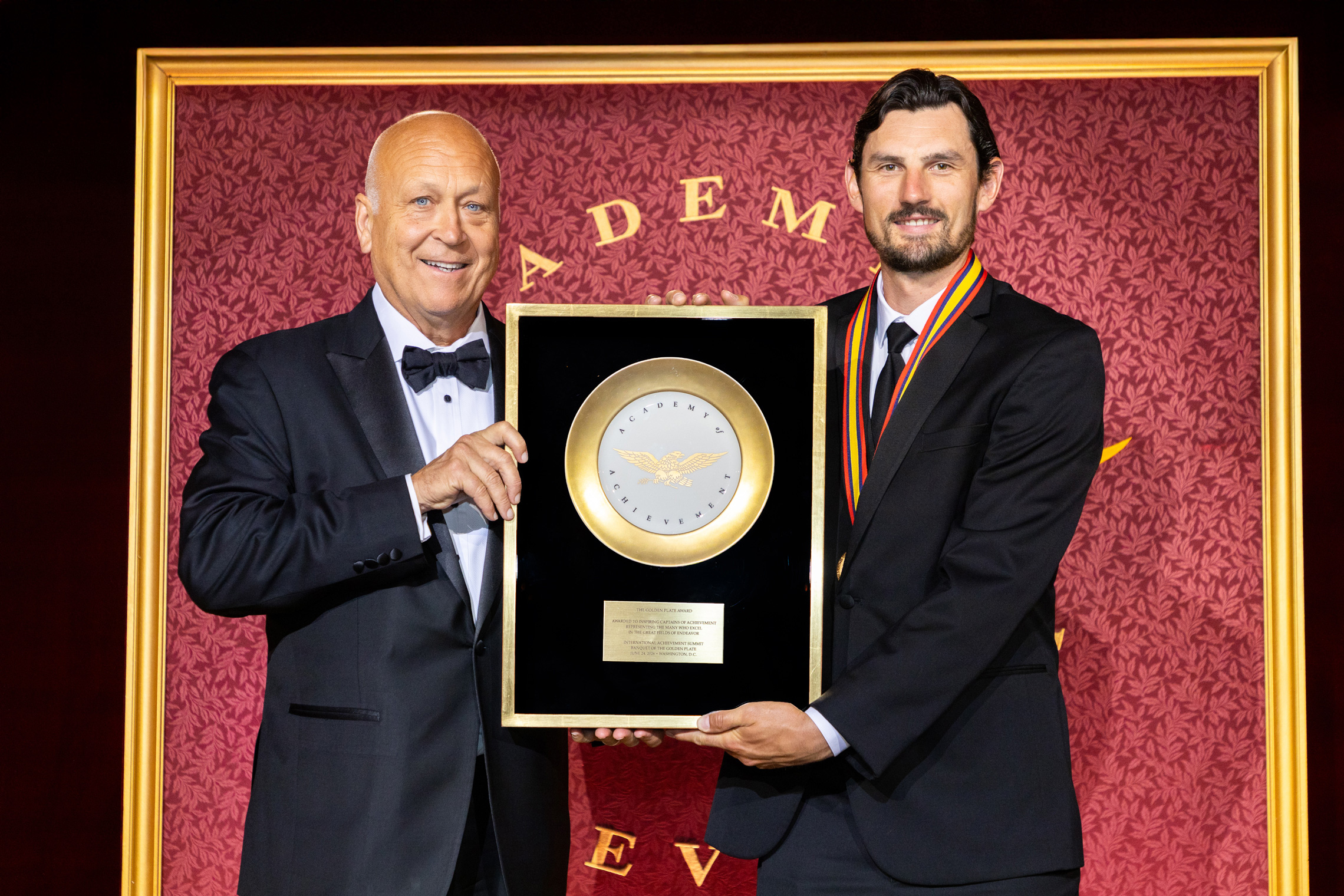
Cal Ripken, Jr. presented the award to Connor Hellebuyck. For a goaltender, pressure is a three-inch disc traveling 100 miles an hour; 18,000 people notice the one thing he misses, and mistakes arrive with sound effects and a red light. The position demands quick reflexes and indifference to public judgment. An NHL Most Valuable Player, Hellebuyck received the Presidential Medal of Freedom for his 41 saves in the United States men’s gold medal victory at the 2026 Olympics.
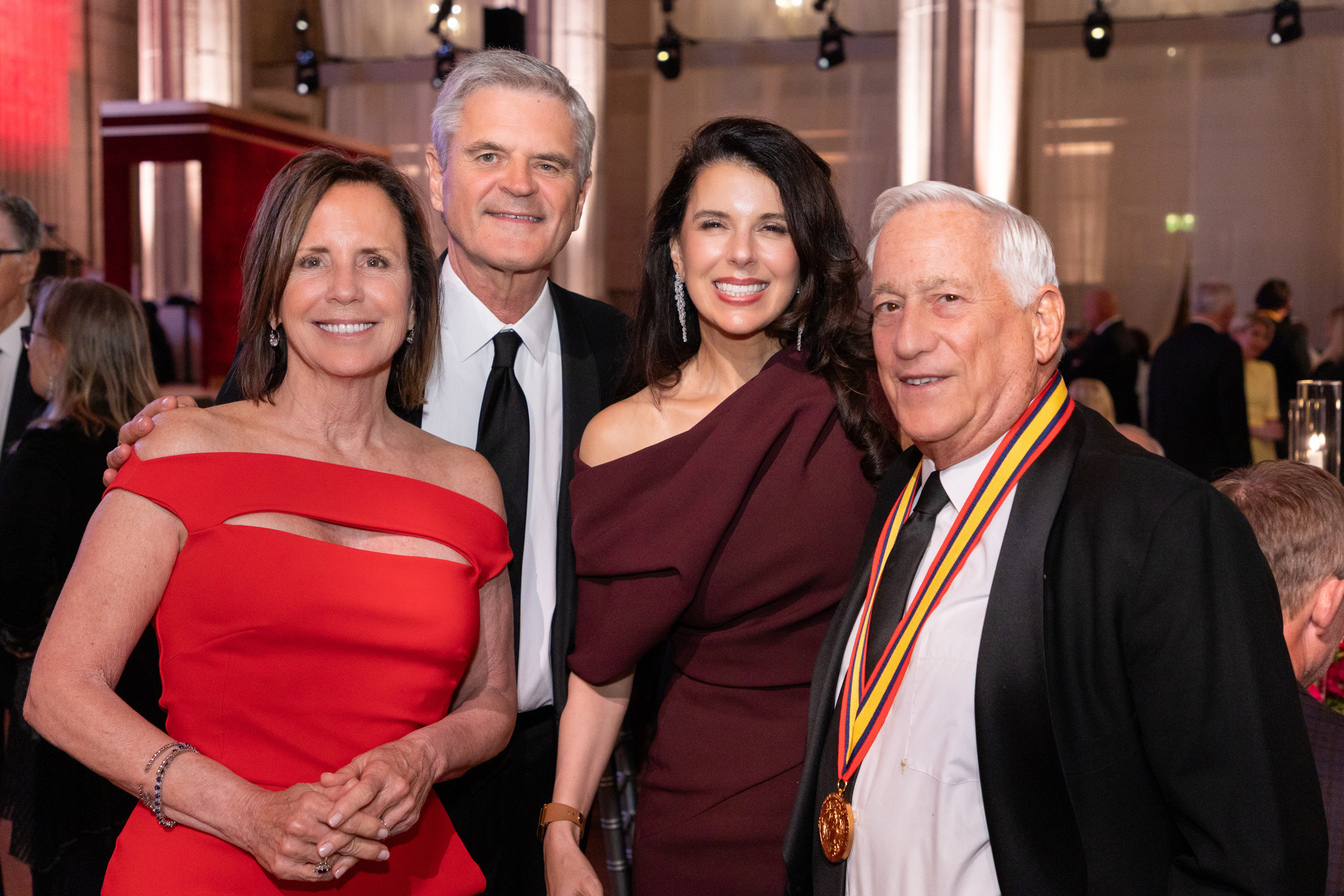
General David Petraeus presented the award to Walter Isaacson. Writing biography, the Academy observed, is a little like stalking, but with footnotes. Isaacson has given the appearance of order to the lives of Einstein, Franklin, Kissinger, Leonardo da Vinci, Steve Jobs and Elon Musk — to enduring popular acclaim.
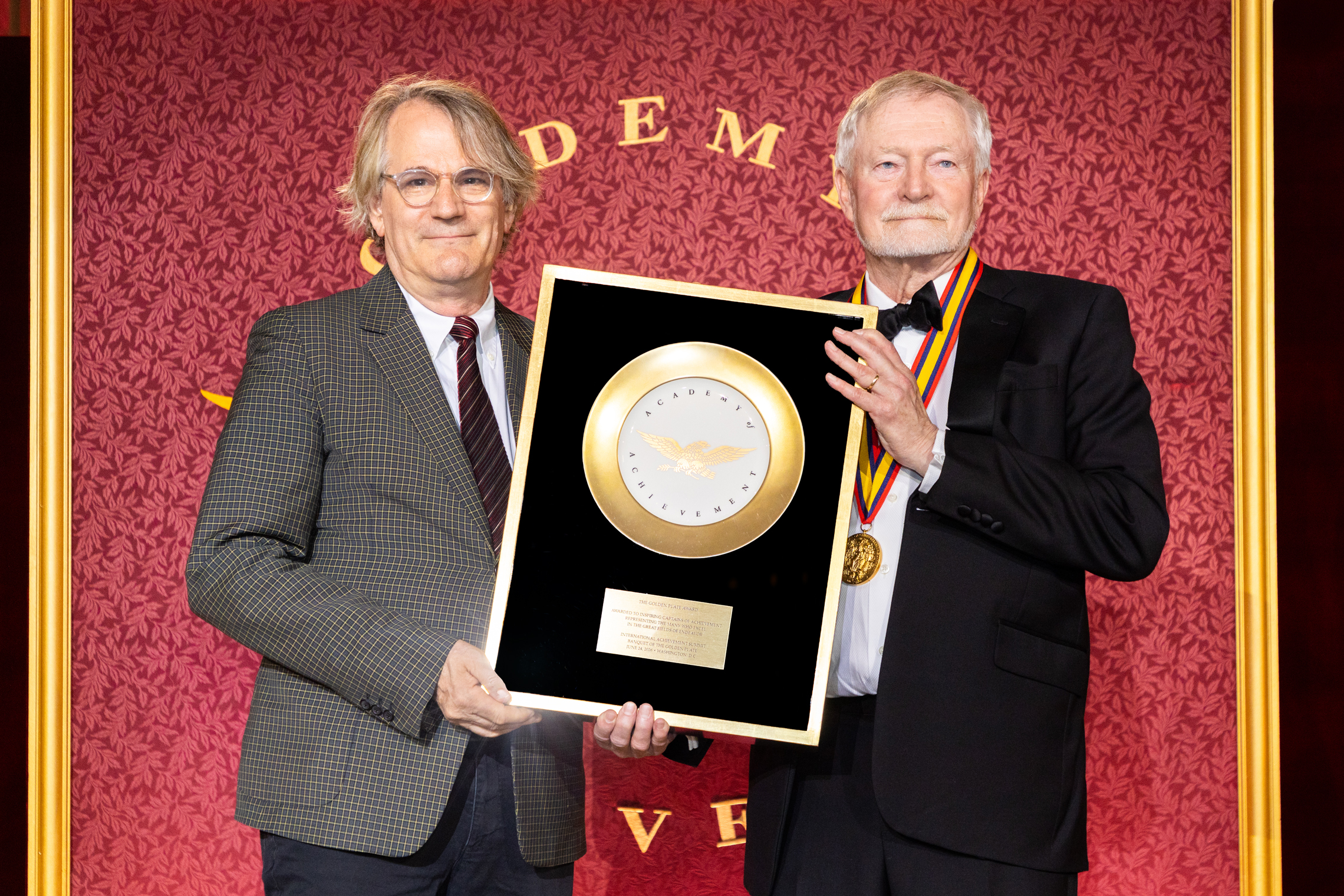
Bartlett Sher presented the award to Erik Larson, who graduated summa cum laude from Penn in Russian history, language and culture — an education designed more for a cultivated mind than an income. From a Bucks County newspaper, he rose to write seven bestsellers; The Devil in the White City remained on bestseller lists for nearly a decade.
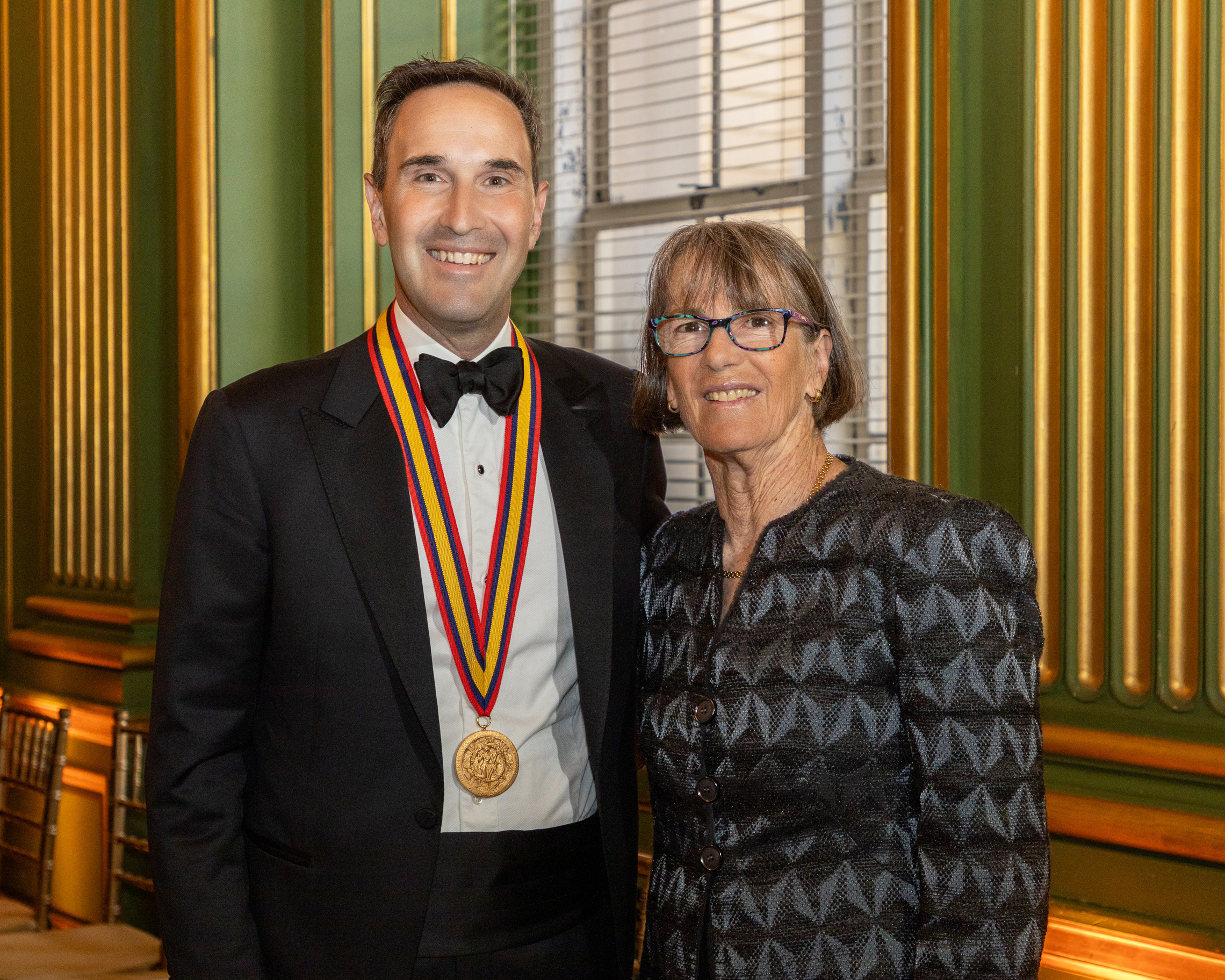
Tara VanDerveer presented the award to Dr. Jonathan Levin, a microeconomist and recipient of the John Bates Clark Medal for the young economist making the most significant contribution to the field. As academia often rewards distinction, the Academy observed, he was promptly given administrative responsibilities: professor, department chair, dean and now president of Stanford University.
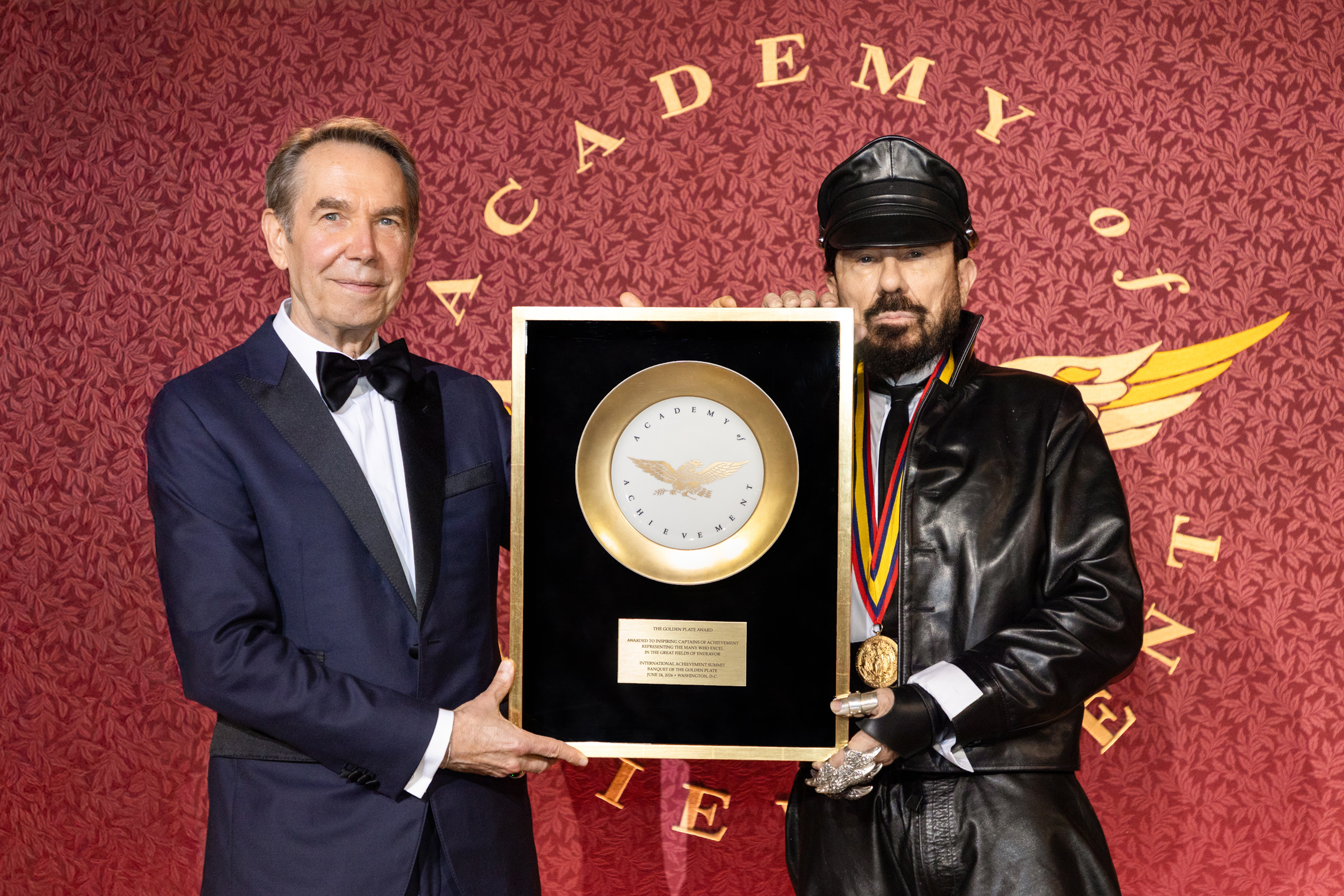
Jeff Koons presented the award to Peter Marino. The typical architect wears khakis and a blue oxford shirt; Marino’s uniform is black leather, studs and straps. The commanding presence suits designs that likewise master space, materials and attention, as anyone entering his rooms for Louis Vuitton, Tiffany, Chanel or Bulgari can attest.
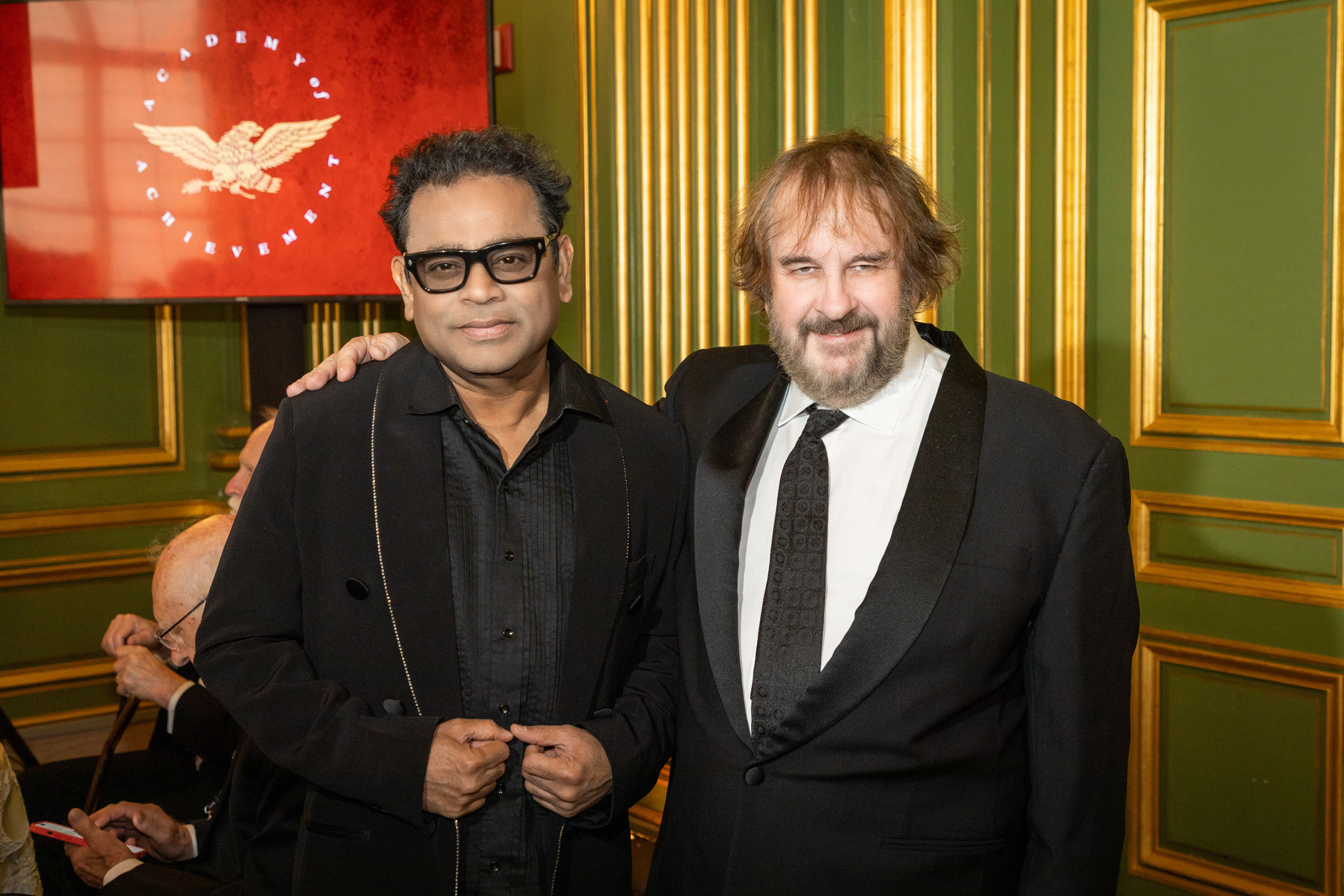
Sir Peter Jackson presented the award to A. R. Rahman, the Mozart of Madras. When his father died, the nine-year-old still had music, and he routinely missed school to help support his family. Today he holds Oscars for Slumdog Millionaire, Grammys and honors beyond counting — Bollywood’s best-known composer, producer, singer, songwriter, instrumentalist and philanthropist.
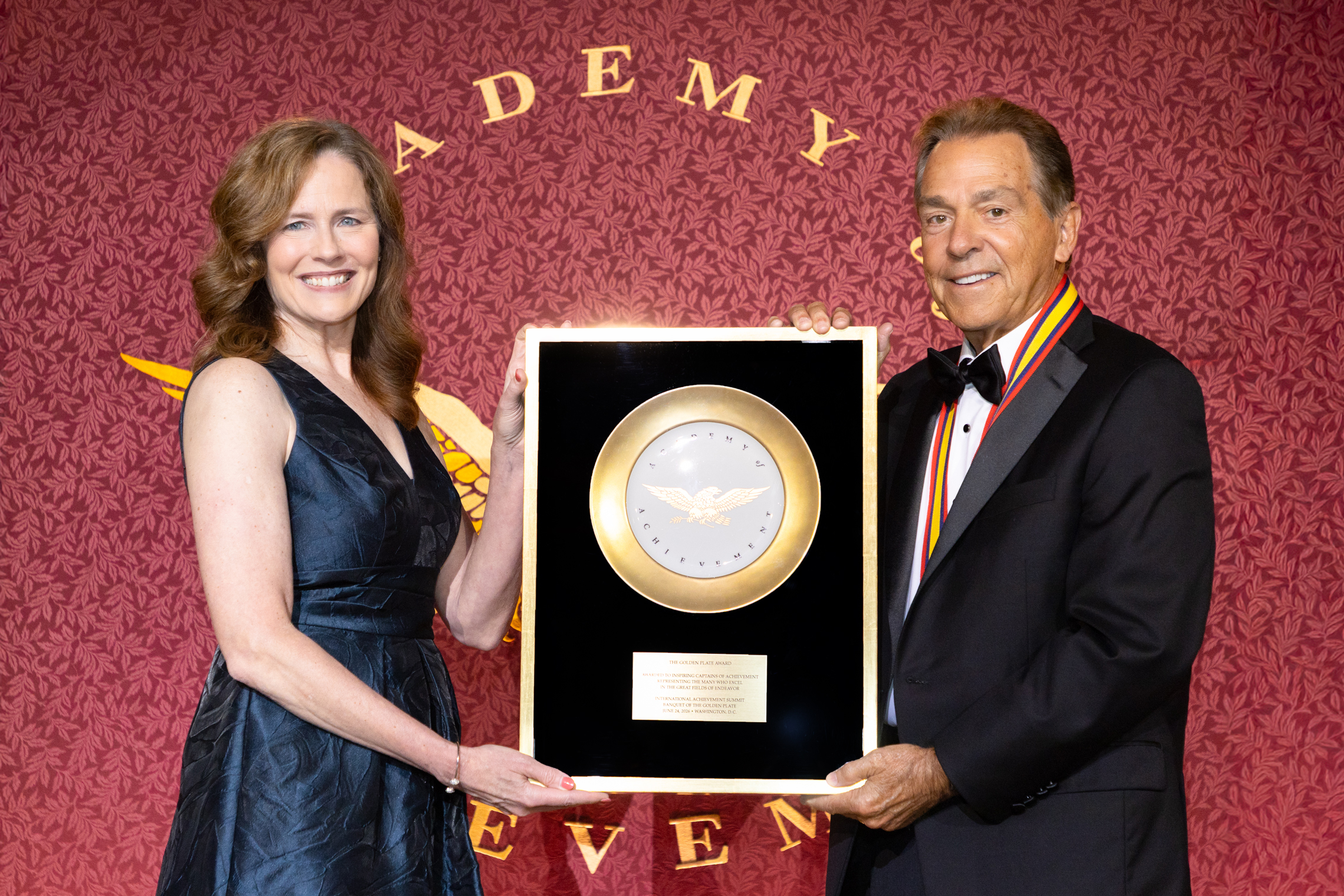
Justice Amy Coney Barrett presented the award to Nick Saban, demanding, intense and relentless, yet profoundly committed to preparing his players not only for the next game but for life afterward. At Alabama, he built the most dominant dynasty in college football history, winning a record seven national championships and becoming nearly as famous for his meltdowns as for his touchdowns.
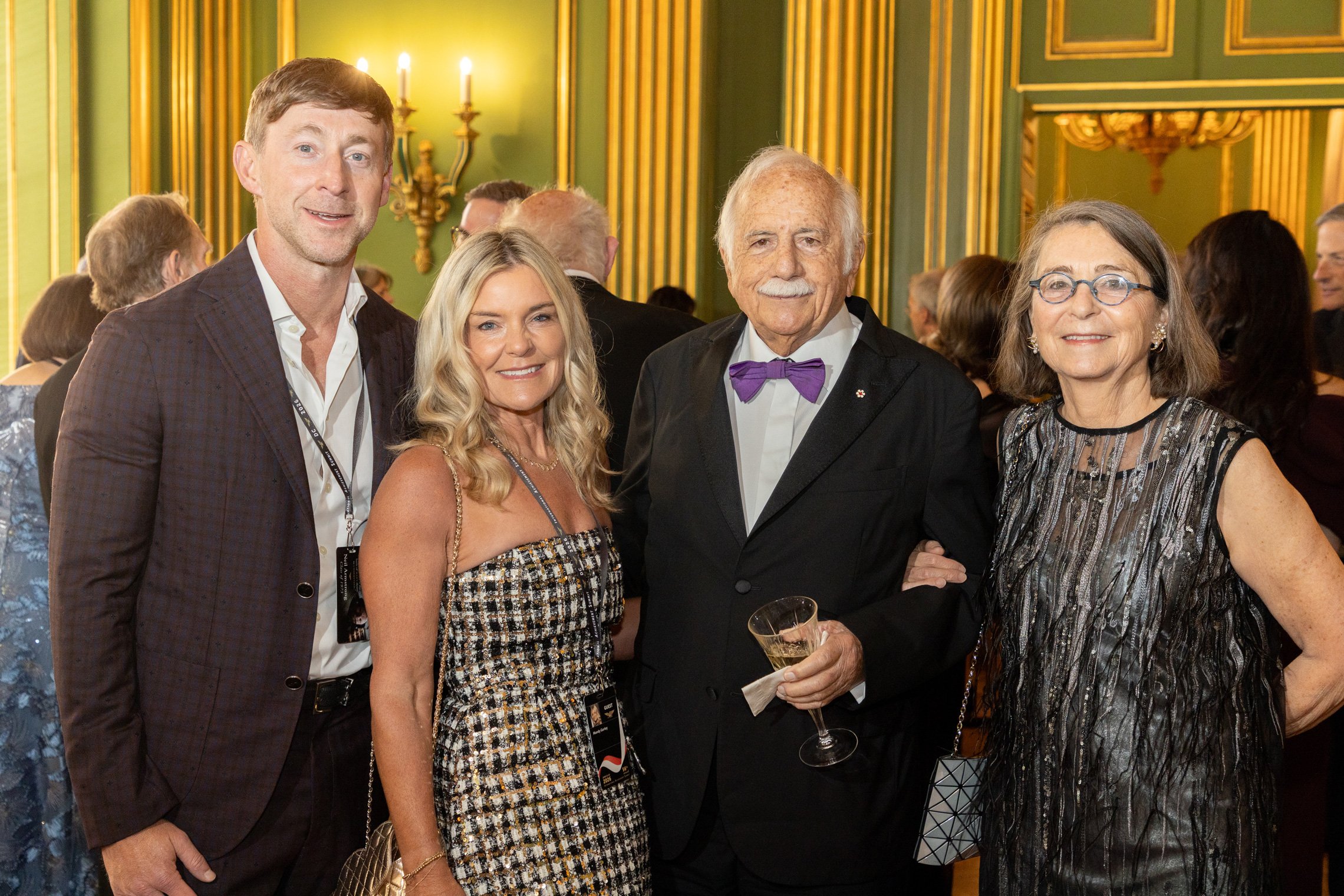
Dr. Steven Rosenberg presented the award to Moshe Safdie. Born in Haifa to a family of Syrian Jews, he learned that cities are human arrangements — places where families seek privacy, community, beauty and culture. His practice rests on the phrase For Everyone a Garden: architecture as a generous act that embraces nature and animates public life.
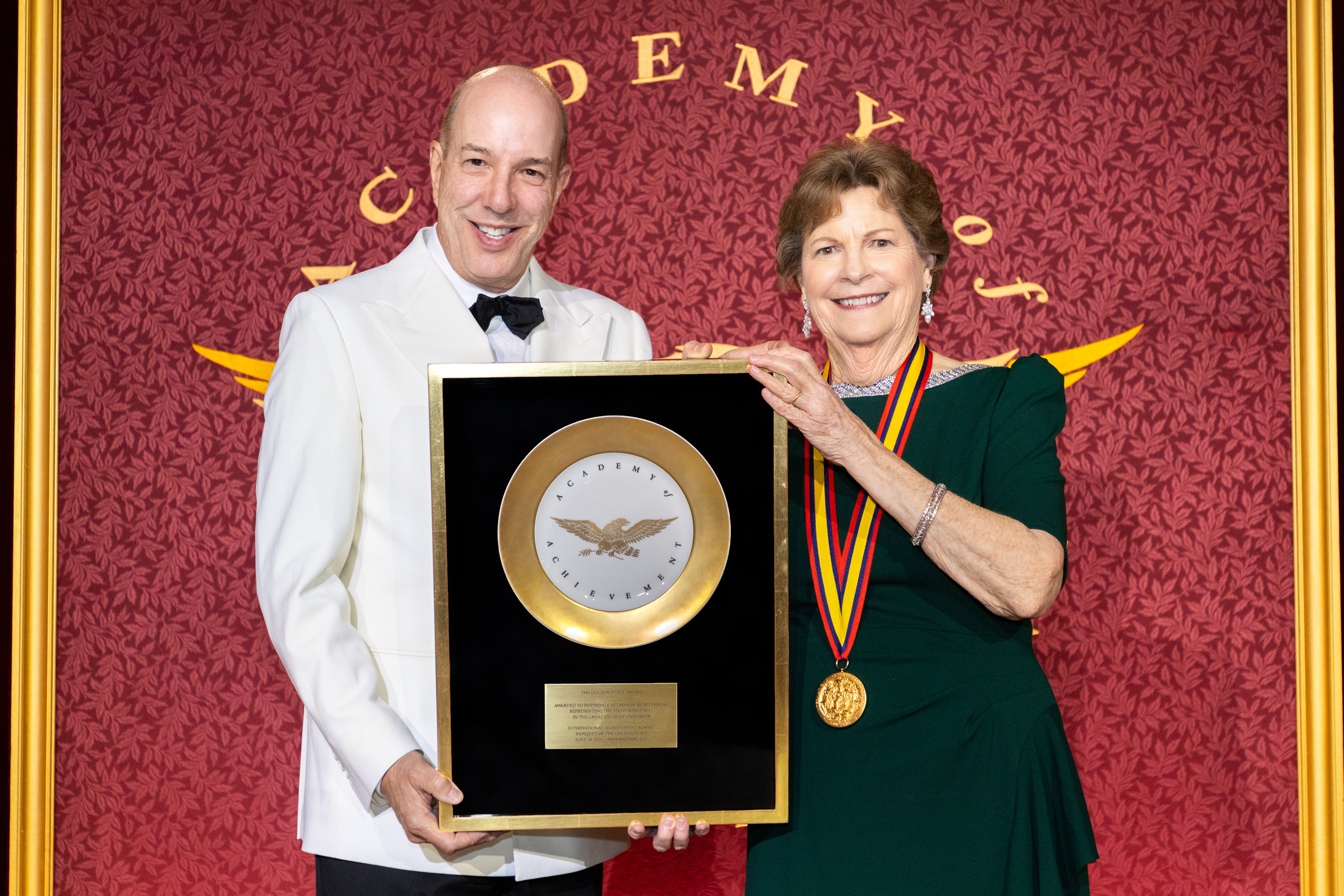
Anthony Romero presented the award to Senator Jeanne Shaheen of New Hampshire, land of maple syrup, apple cider and donuts. A former high school teacher, she now applies those classroom skills to the considerably more unruly United States Senate. A leading voice for NATO and the transatlantic alliance, she was the first woman elected both a governor and a United States senator.
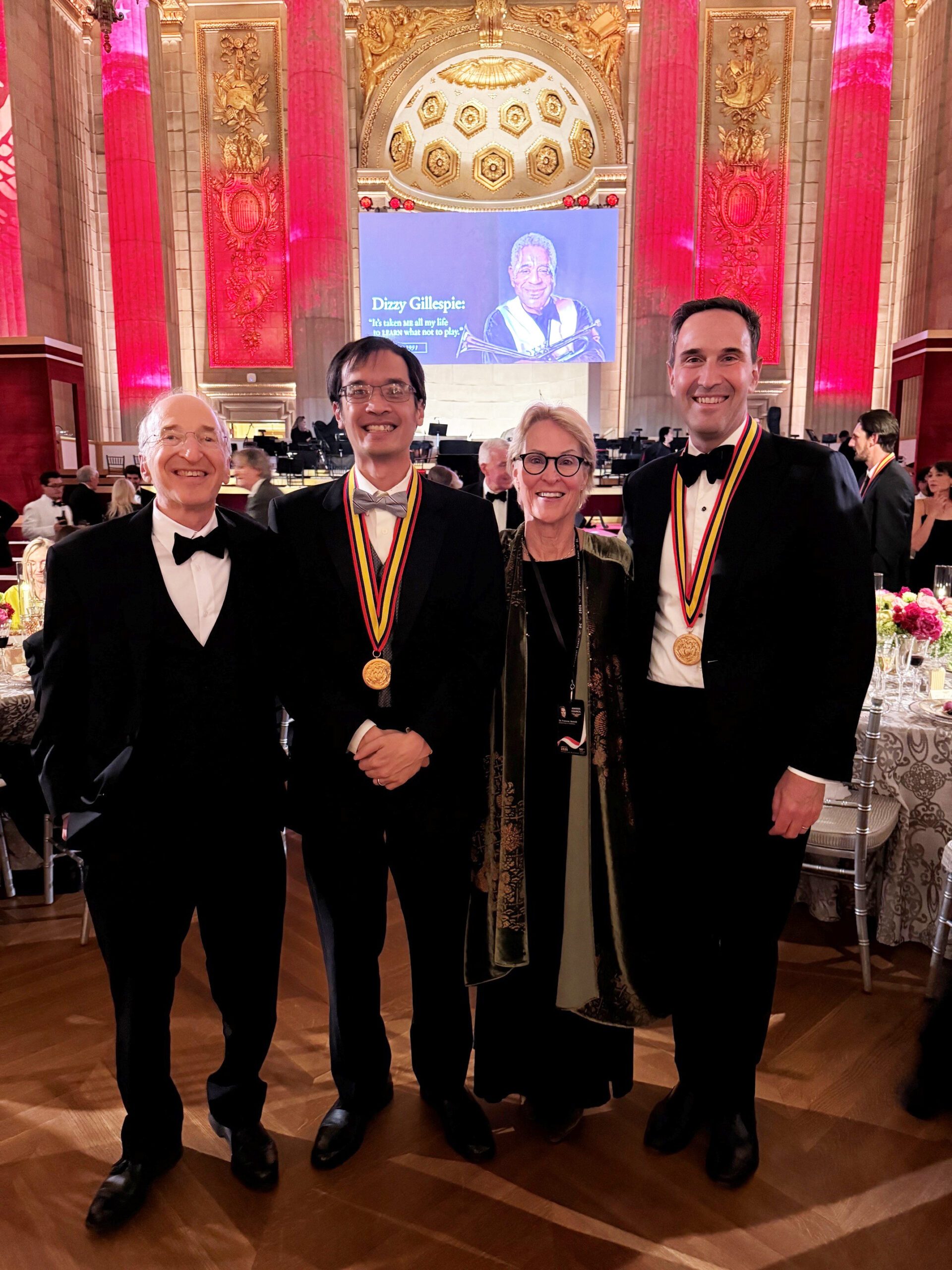
Summit Co-Host John Overdeck presented the award to Dr. Terence Tao. A child prodigy, he began making adults feel inadequate at an early age. Mozart composed at five; Tao studied university mathematics at nine. The youngest gold medalist in International Mathematical Olympiad history, a Fields Medalist and Royal Medalist, he is widely heralded as the greatest living mathematician.
Rick Atkinson presented the award to Professor Alan Taylor. In the nation’s 250th anniversary year, Taylor is much in demand — not only because he can pronounce “semiquincentennial,” a public service in itself, but because he is among the foremost scholars of colonial America and the Revolution, and a two-time recipient of the Pulitzer Prize for History.
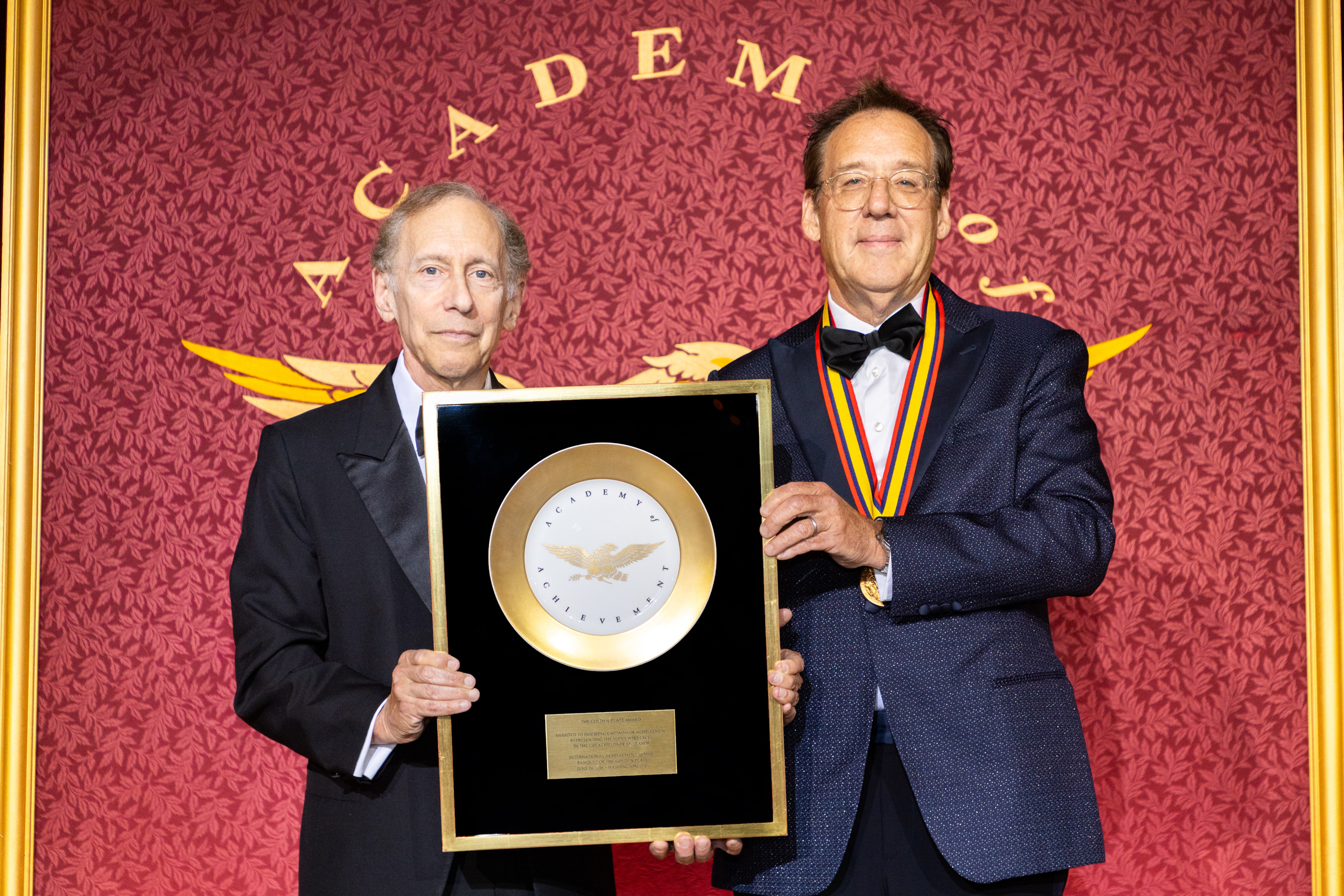
Dr. Robert Langer presented the award to Dr. Gregory L. Verdine. Chemical elements, the Academy observed, react more simply than human families. His quadriplegic and embittered father made the boy his arms and legs, then stopped speaking to him when he received full college tuition. Education carried Verdine to a Harvard professorship, and his research has now produced the greatest advances in pancreatic cancer treatment in decades.
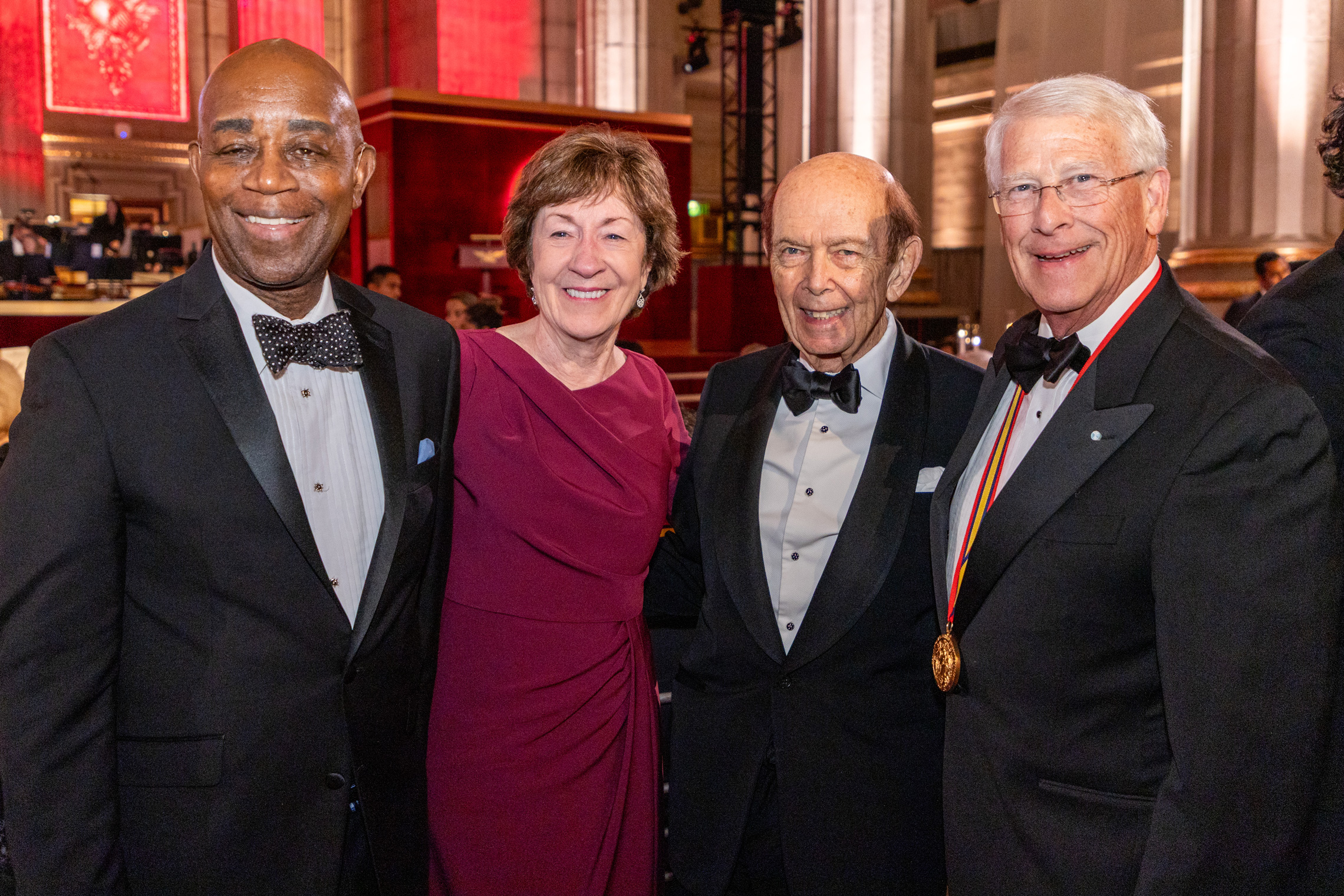
Senator Susan Collins presented the award to Senator Roger Wicker, shaped by Pontotoc, Mississippi, where the United States signed a treaty with the Chickasaw nation in 1832. A childhood steeped in that history taught him that the world is moved by forces larger than his hometown. As Chairman of the Senate Armed Services Committee, Mississippi’s senior senator works to keep hostile forces abroad from endangering the United States.
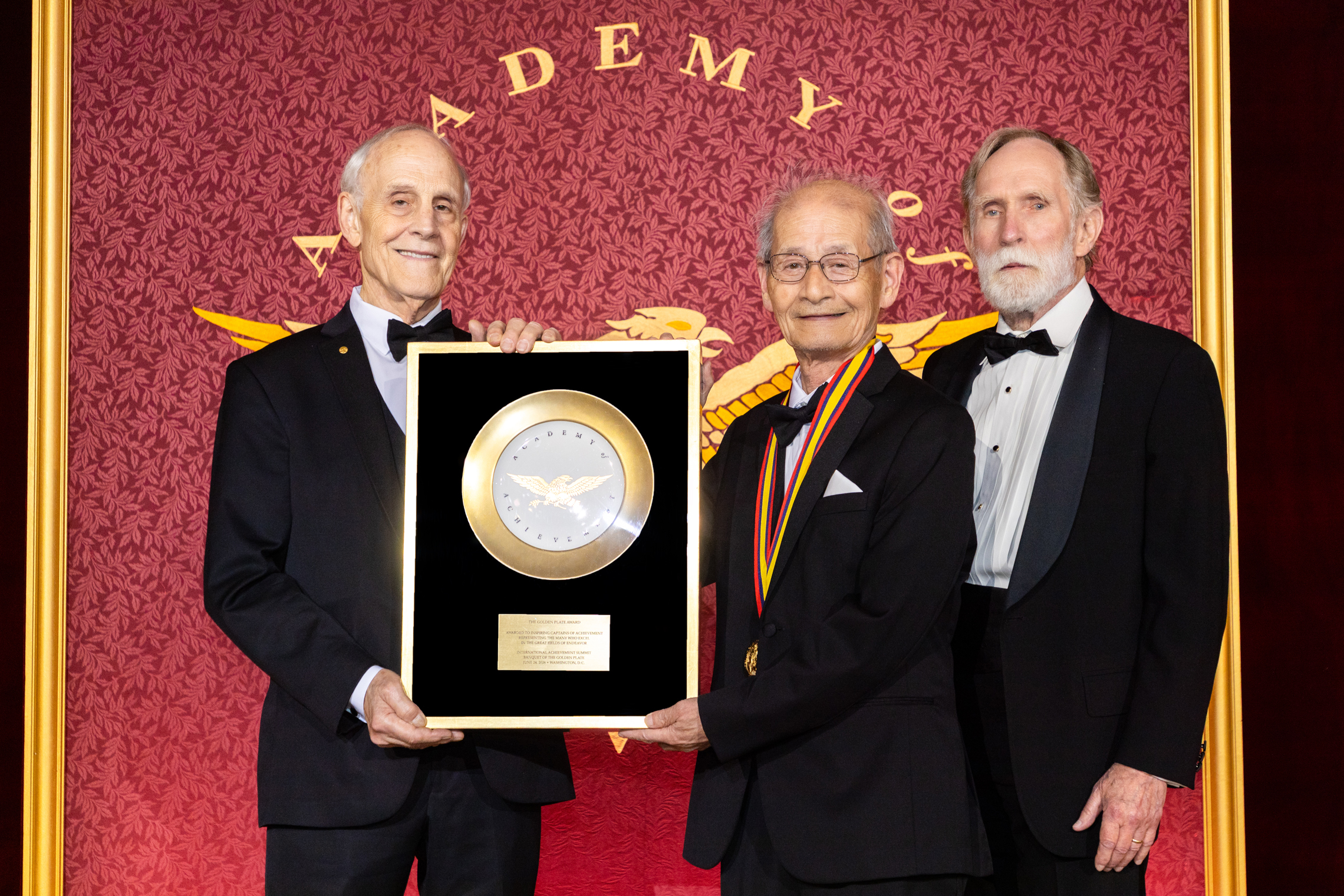
Dr. David Gross and Dr. Peter Agre presented the final award to Dr. Akira Yoshino. His career began with a child gazing at a candle and wondering why it burned. That small flame led to a technology that transformed energy storage and now powers cellphones, laptops and electric vehicles — the inventor of the lithium-ion battery and recipient of the 2019 Nobel Prize in Chemistry.
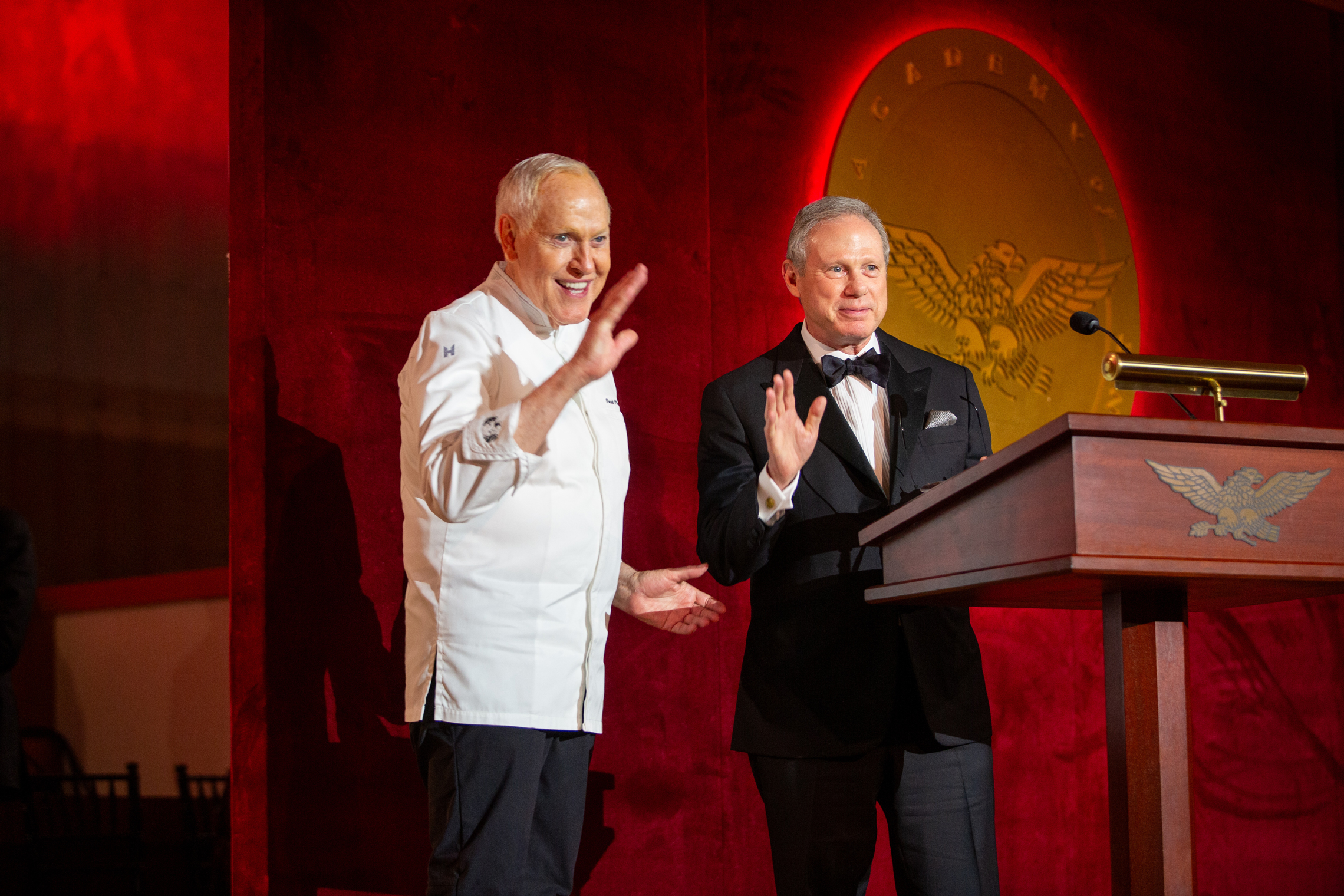
Between courses, Catherine B. Reynolds welcomed the assembly. Gatherings like this begin with titles — Nobel laureate, Pulitzer, Oscar, Emmy, Tony, gold medalist, founder, inventor, senator. The titles are impressive and deserved, she said, but incomplete: they tell what was achieved, not what was risked, endured or overcome.
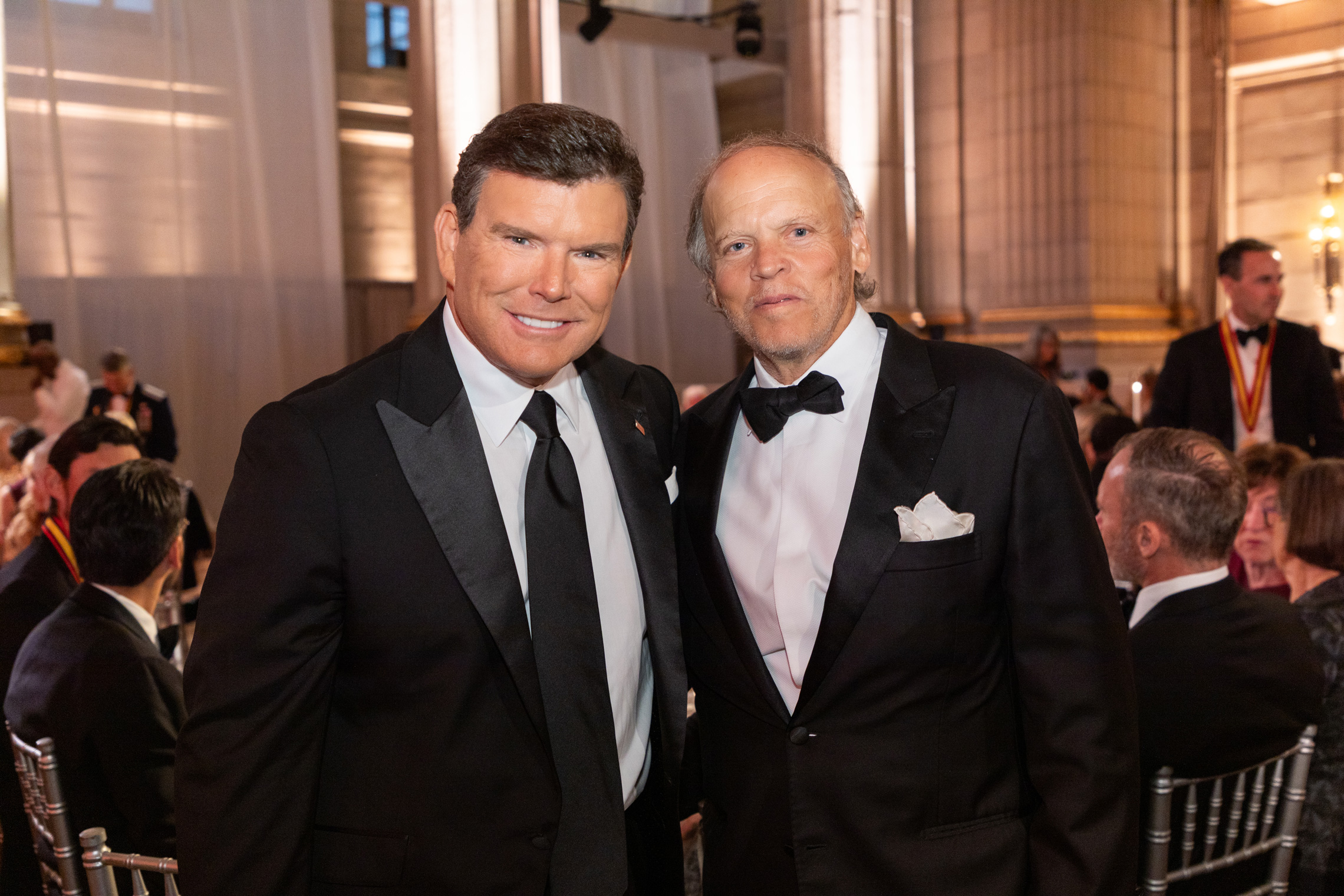
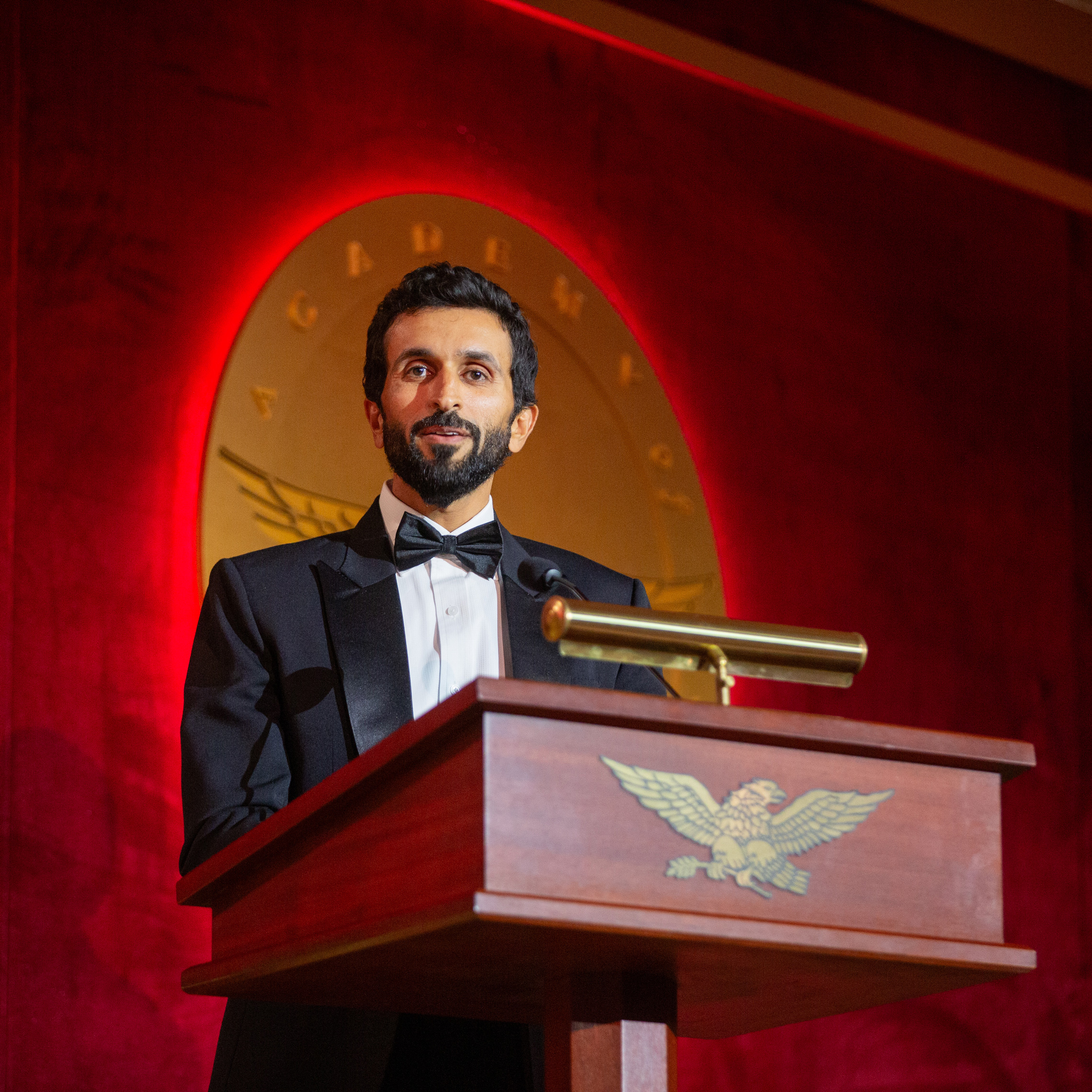
Tonight, the Academy recognized not only the honors but the people behind them, and the years of work that made them possible. She then introduced fellow Co-Host HH Sheikh Nasser bin Hamad Al Khalifa, who offered his welcome.
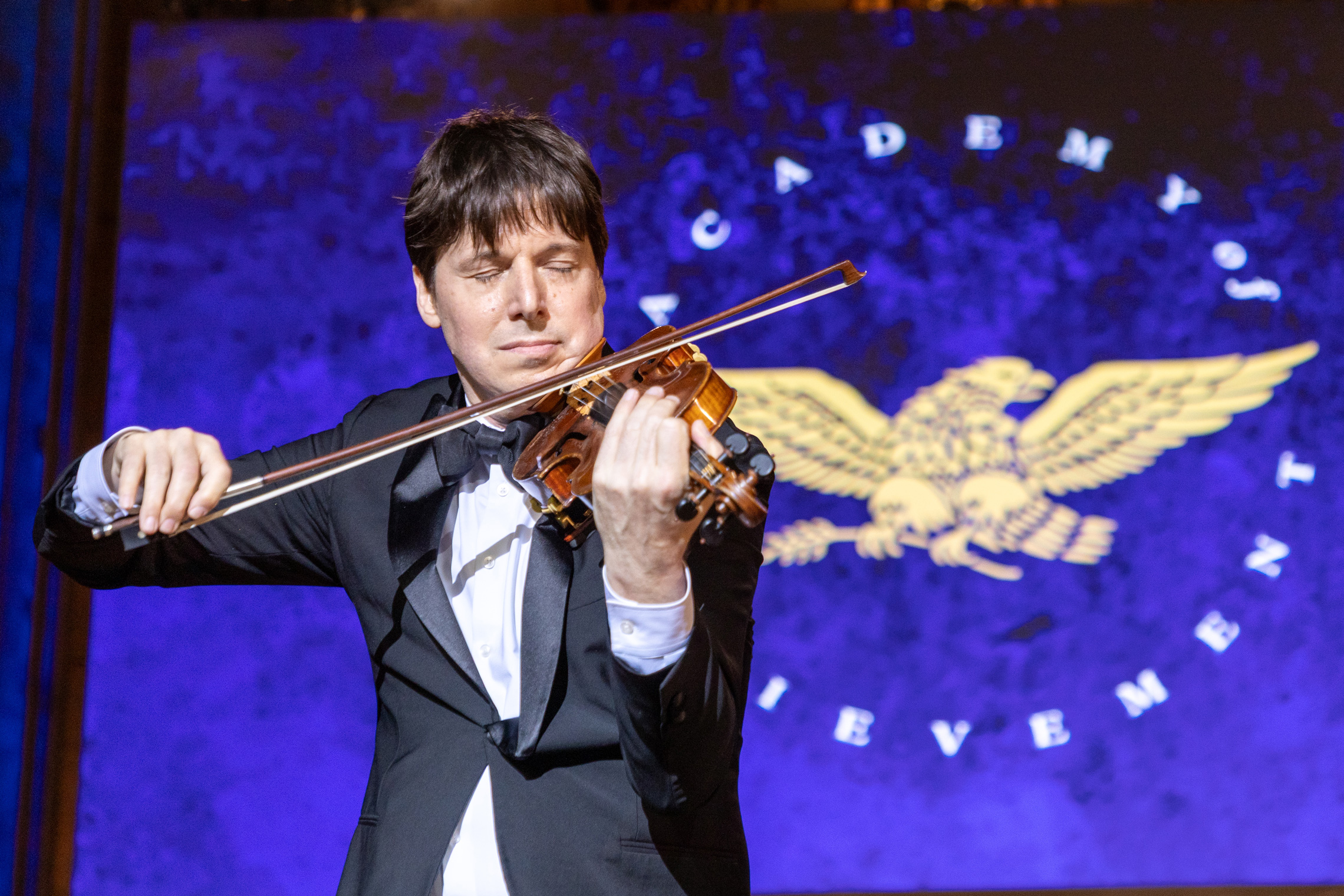
The Washington Chamber Orchestra accompanied every performance, beginning with Joshua Bell, the internationally acclaimed violinist of the Class of 2008, who played to a hushed auditorium.
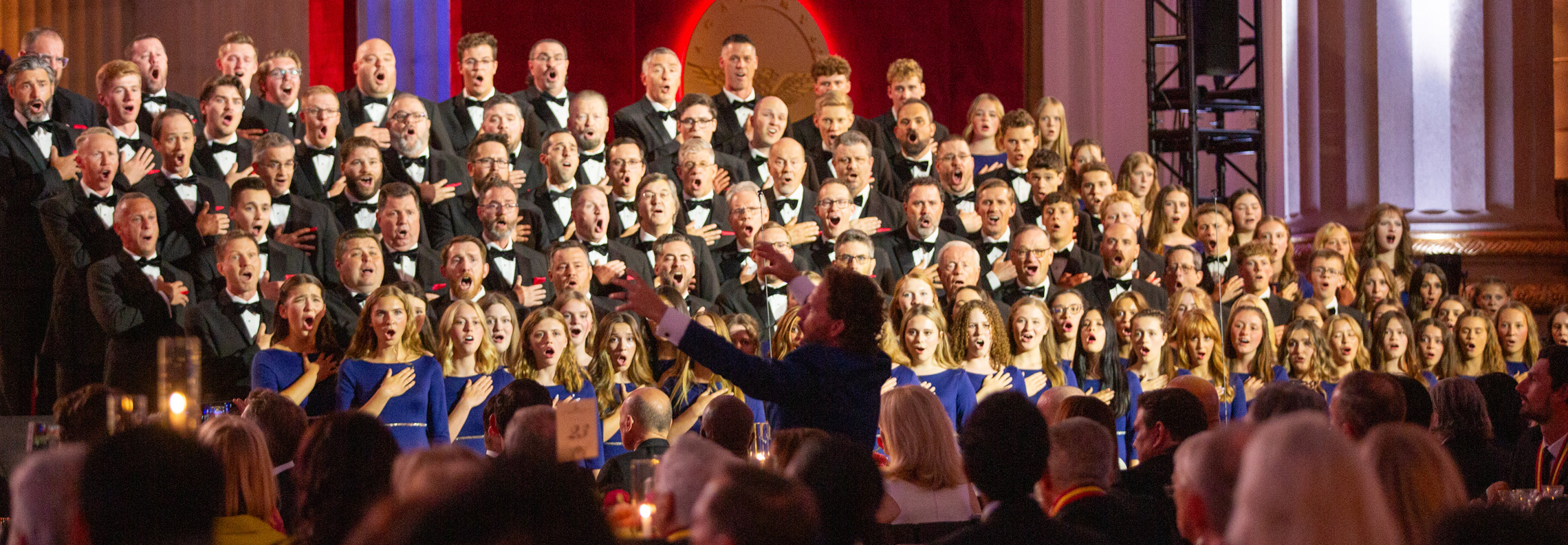
Later, the hall filled with the 250 voices of the Millennial Choirs & Orchestra singing “America the Beautiful” and “God Bless America.” The second brought Academy members, delegates, and guests to their feet in a standing ovation. Mezzo-soprano Denyce Graves, Class of 2019, then joined the choir and orchestra for the “Battle Hymn of the Republic.”
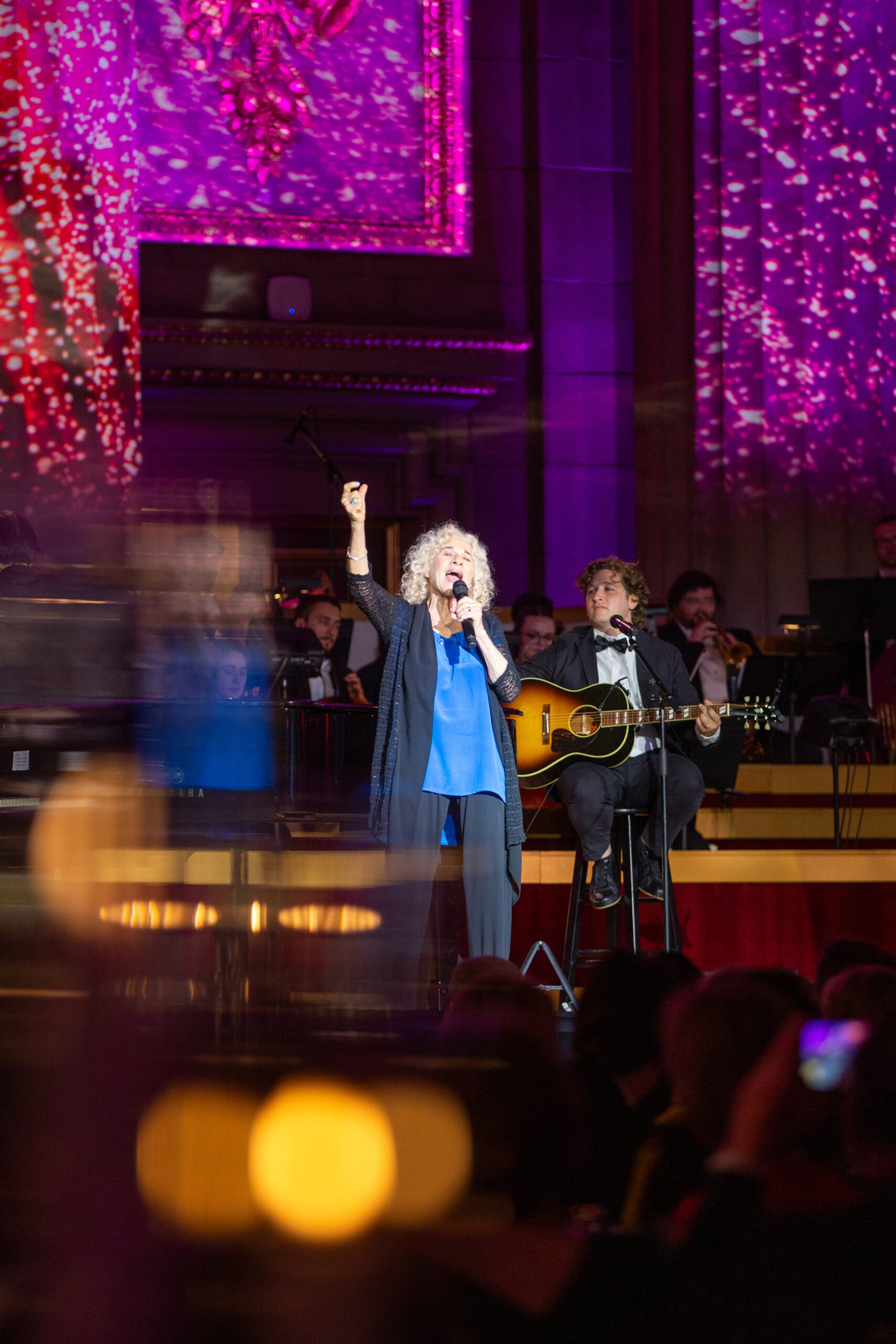
Wayne Reynolds, Chairman and CEO of the American Academy of Achievement, introduced the final performer. Carole King — whose songs have become the soundtrack to countless American lives — brought the room to its feet with “I Feel the Earth Move,” “It’s Too Late,” “(You Make Me Feel Like) A Natural Woman” and, at last, “You’ve Got a Friend.”
The delegates departed Washington the following morning carrying memories of a Nobel laureate teaching them to sing a chord, an eighty-eight-year-old architect describing a tunnel cut through a mountain toward the light, and a scientist announcing a 300,000-year-old discovery only four and a half hours old.
In a city entering the 250th year of the nation, they had heard from two dozen vantage points a single argument: the sentence written here in 1776 was never a description but an assignment, and the work of making it true has been handed down once again to generations yet unborn.
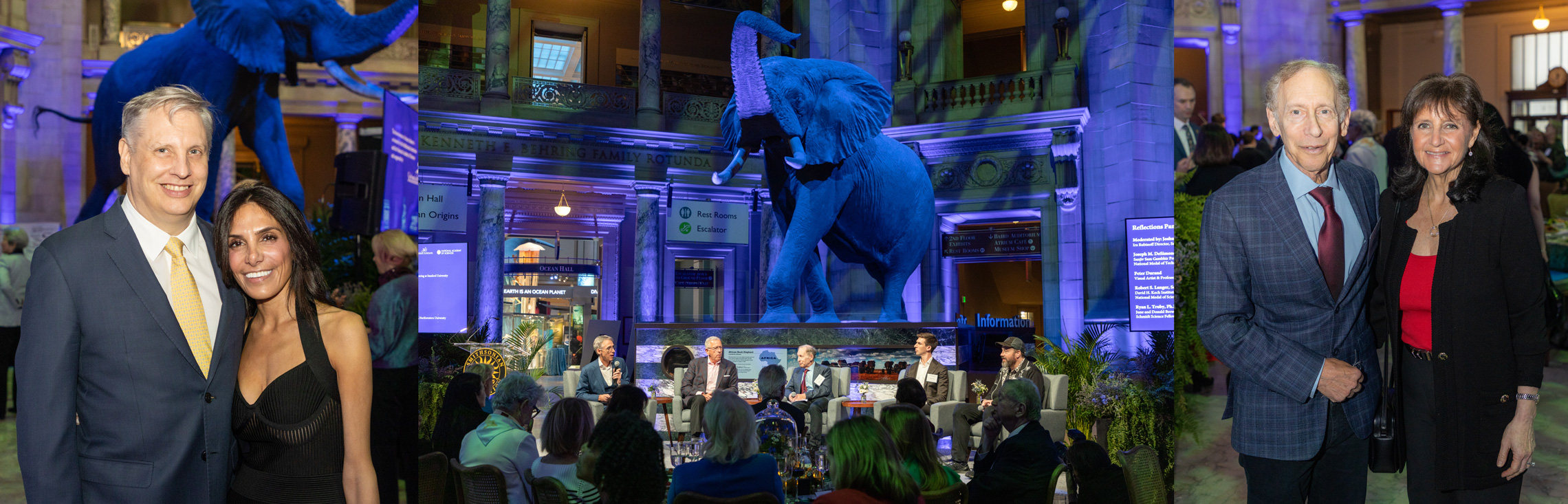
A select group of distinguished Academy members and delegates from the worlds of science and technology remained in Washington for one final event. On Thursday evening, June 25, the Academy joined with the National Academy of Sciences and the Smithsonian Institution to honor the nation’s most acclaimed scientists and technologists at the National Museum of Natural History, gathering for a reception and dinner in the Rotunda beneath the museum’s African bush elephant.
June 24, 2026: The Banquet of the Golden Plate ceremonies held at the Andrew W. Mellon Auditorium in Washington, D.C. The evening program celebrated achievement, innovation, creativity, and leadership as part of America’s 250th anniversary year.
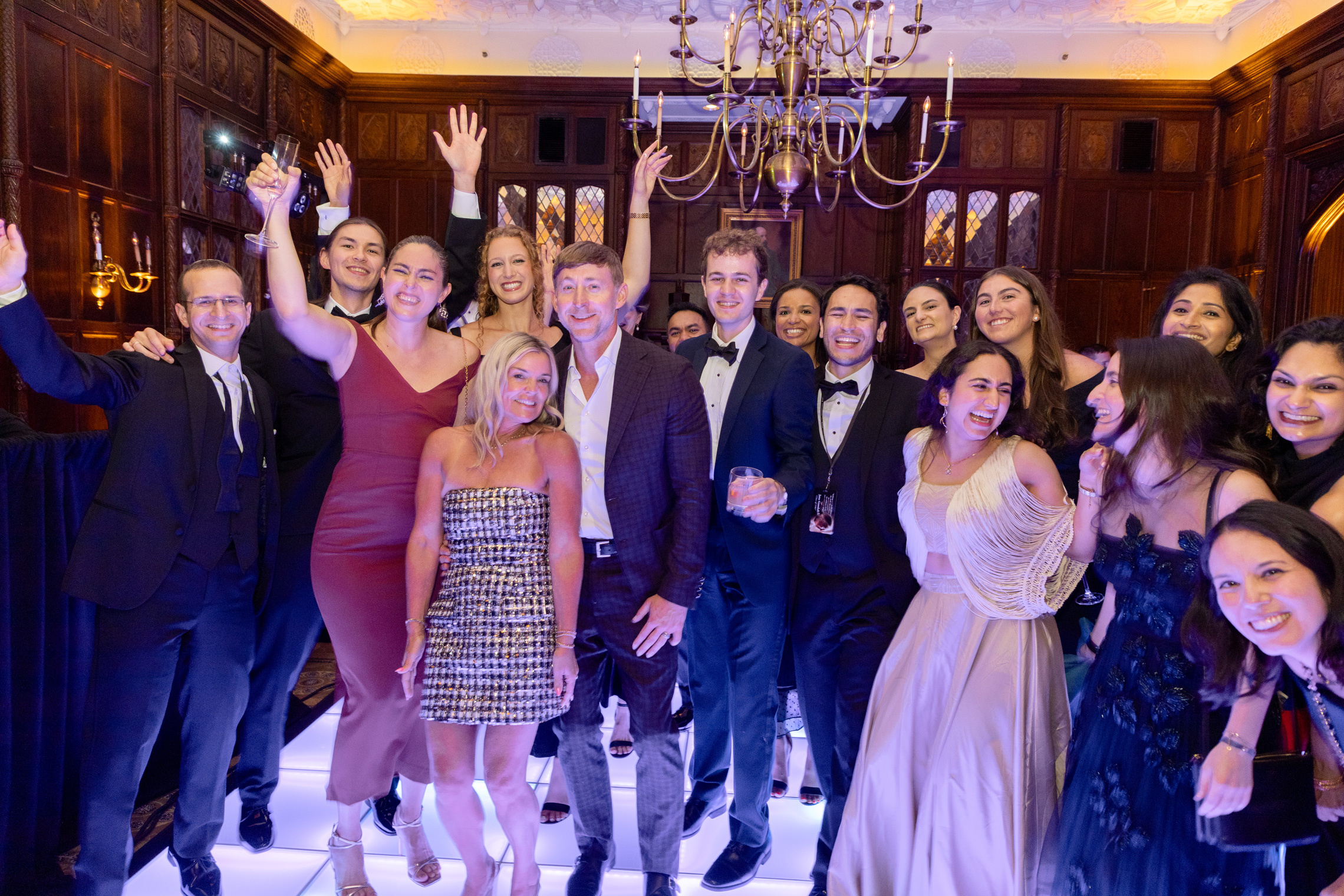
The heartfelt enthusiasm and genuine, unaffected gratitude of the student delegates are among the most rewarding aspects of the International Achievement Summit. We invite you to share in their close encounters with Academy members and fellow delegates, as described in their own words.
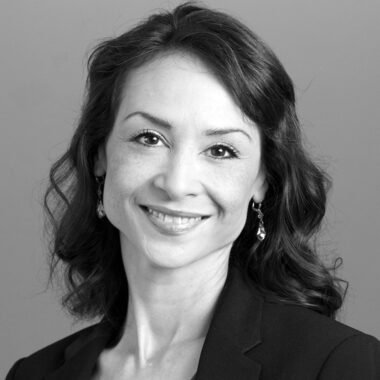
Dr. Likolani Arthurs
Surgical Resident
NYU Langone Health
Thank you so much for having me at the International Achievement Summit. When I received the invitation, I thought it sounded too good to be true — and honestly, the reality surpassed even my highest expectations. The symposium was extraordinary. I could have listened to every speaker endlessly. It was truly inspirational.
Beyond this incredible event, which I still cannot believe I was fortunate enough to be a part of, I also want you to know that I am in awe of the work you have done and continue to do. The world is a better place because of it.
I have always aspired to do something meaningful that benefits others, and I feel incredibly lucky to pursue that through my two greatest passions: ballet and medicine.
I know that the experience at the International Achievement Summit will enrich and guide my future as a breast surgical oncologist, and through that work, I hope to make a meaningful difference in the lives of many.
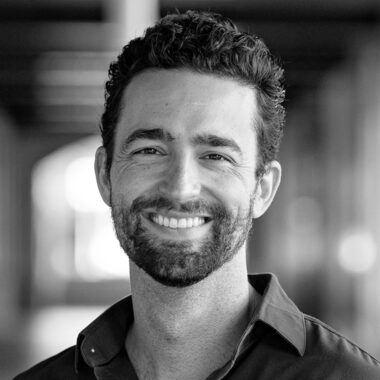
Jasper Burns
Knight-Hennessy Scholar
Stanford University JD/MBA Program
Dear Mr. and Mrs. Reynolds,
This thanks is a month late while I moved abroad, but no less sincere despite the delay. Thank you for hosting me, and all of us, at the Academy dinner this year.
I attended as one of your delegates, a former military aviator now doing a JD/MBA and Knight-Hennessy scholarship at Stanford, still working out my exact career trajectory.
The Summit made that question of direction feel even larger, which is the best thing it could have done. Among all the MBAs I’m surrounded with at Stanford, many are optionality-chasing machines.
What felt super salient with all the high achievers you brought together was that each of them appeared to have picked a lane and committed hard to it for a decade. That was a really good lesson I could pattern-match and verify up close as each honoree spoke.
Beyond the honorees, the other delegates were so impressive and humbling to talk with, and I hope some will remain friends in the months to come.
In my years helping run events at the White House, no State Dinner or Congressional Ball measured up to the evening you put on for us this year. Thank you, sincerely, for placing me in such great company. I hope to have the opportunity to interact with the Academy again — hopefully having done something meaningful enough to be an honoree in the next decade or two.
Jasper Burns